
Tag

Replication Errors

All articles tagged with #replication errors

Clonal expansion unmasks hidden mtDNA mutations as blood ages
science3 days ago

Clonal expansion unmasks hidden mtDNA mutations as blood ages

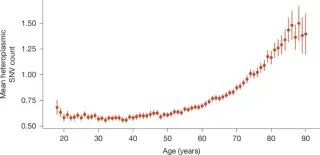
Analysis of ~736,000 UK Biobank and All of Us genomes shows that age-related mtDNA mutations in blood mainly arise from replication-errors that create low-level, cryptic heteroplasmy, which becomes detectable as people age due to clonal hematopoiesis (CH) expanding certain blood cell clones. The mutations are heavy-strand biased (C>T and A>G), occur at low heteroplasmy, and appear neutral with little evidence of positive selection. GWAS highlight CH-linked loci near TERT, TCL1A and SMC4, and rare-variant analyses implicate CH driver genes; Mendelian randomization indicates CH increases mtSNV burden, not vice versa. CH carriers have more age-accumulating mtSNVs and higher risk of hematologic cancers, suggesting mtSNV burden is a marker of somatic mosaicism. The study proposes a two-step model: random replication errors generate cryptic mtDNA variation, which becomes detectable when CH-driven clonal expansion reveals these variants with age.
"Breakthrough Discovery: DNA's Ability to Generate New Genes Unveiled"
science2 years ago

"Breakthrough Discovery: DNA's Ability to Generate New Genes Unveiled"

Scientists from the University of Helsinki have discovered a mechanism by which DNA can rapidly create new genes for quick adaptation to changing environments. They found that certain single mutations can produce palindromes in DNA, which can evolve into microRNA (miRNA) genes. These miRNA genes play a significant role in regulating other genes and have been found to emerge in some animal groups, including primates. The process, called template-switching mutations (TSMs), allows for the creation of new miRNA genes from previously noncoding DNA sequences. This mechanism is much faster than the evolution of new functional proteins. The findings suggest a universal miRNA gene creation mechanism and have implications for understanding the impact of miRNA genes on human health.