Total US margin debt reached an all-time high of approximately $1.5 trillion in June 2026, driven by a surge in retail borrowing. Robinhood’s margin book hit a record $21.6 billion in Q2, up 127% year-over-year. While this leverage amplifies gains, it also increases the risk of forced selling during market downturns.
Take-Two Interactive stock fell about 7% after last week’s GTA VI rally cooled, with Bank of America saying the extended GTA VI reveal is unlikely to change the investment case and maintaining a Buy rating with a $368 target; retail investors on StockTwits bought the dip, signaling a split sentiment between bullish buyers and cautious traders.
Retail investors reportedly sold SpaceX shares for the first time in 59 days, per Reuters citing Vanda Research, wrapping a period of strong retail buying; the SPCX stock then reclaimed its $135 IPO price for the first time since mid-July, signaling a cooling in retail enthusiasm after the IPO surge.
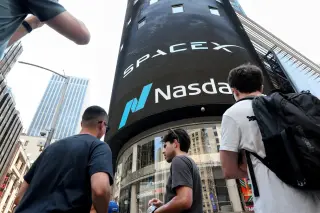
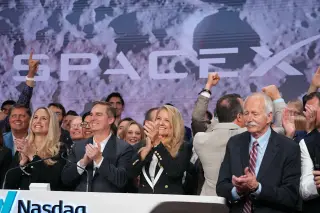
Retail investors have piled into SpaceX (SPCX) since its IPO, with a net $22.7 million bought in the first hour of trading on Wednesday—one of the largest opening-hour hauls in 37 sessions—even as SPCX has more than halved from its peak and sits below its IPO price. According to Vanda Research, retail buyers have not been net sellers since the debut, and they bought about $405 million over the first five sessions after earnings, versus $103 million in the prior five sessions. A key near-term risk is that up to 912 million shares held by employees and other pre-IPO backers could become eligible to sell when the first major lockup expires, potentially doubling the public float, though expirations don’t force sales. SpaceX posted revenue and earnings that beat expectations, but its AI and data-center spending underscored expansion costs, which investors have treated as a down payment for future growth.
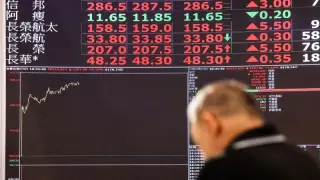
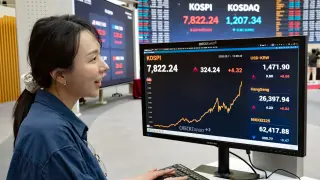
An AI boom has driven Asia’s stock markets—especially Taiwan and South Korea—to record highs as data-center demand and chipmakers like TSMC, Samsung, and SK Hynix surge. Thousands of first-time investors have piled into tech stocks, with new trading accounts and rising leverage boosting profits but also amplifying risk as losses mount when prices swing. The frenzy has global spillover and spurred regulators to consider tighter controls on leveraged ETFs and other speculative tools, while personal stories of fortune and ruin illustrate the volatility of chasing AI-driven gains.
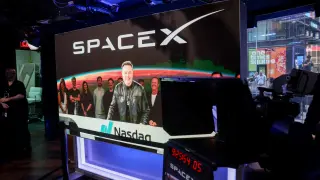
SpaceX priced its IPO at $135 per share and now trades around $114, roughly 22% below the IPO price and 49% below the post-IPO high, a pattern common for mega-IPOs as hype cools. Elon Musk and executives have stressed the company’s decade-long vision (Moon and Mars infrastructure) may mean missing quarterly profits, reinforcing a long-term, not near-term, payoff. The IPO explicitly reserved a sizable allocation for retail investors, underscoring Musk’s push for broad access even as markets digest the potential decade-long return.
SpaceX priced its IPO at $135 and, as of now, SPCX trades around $114—roughly 49% below its post-IPO peak. Elon Musk has warned that the company may miss quarterly earnings to fund Moon and Mars infrastructure, signaling a focus on decade-long returns rather than short-term profits. SpaceX also reserved a sizable portion of its IPO for retail investors, challenging Wall Street norms. Investors should weigh a long-term thesis over near-term price moves.
South Korean retail investors chasing an AI-driven rally piled into single-stock leveraged ETFs tied to Samsung Electronics and SK Hynix, but a sharp reversal left them with steep losses. The KODEX SK Hynix Leverage ETF is down about 70% from its June peak and roughly 50% from its May debut, after retail buying reached about 14 trillion won since late May (vs. ~2 trillion won by foreigners). Regulators tightened rules to require a minimum cash of 30 million won to trade these products, and the Bank of Korea warned that rising leverage could magnify volatility, even as the long-term memory-chip outlook remains intact.
SpaceX’s stock has traded like a rollercoaster in its first weeks as a public company: initial surges after the IPO, followed by sharp daily declines and then steadier moves, driven by narrative-driven demand from retail investors and big bets on Musk’s future ambitions. Analysts warn the valuation and ongoing losses mean high risk, while few are willing to bet against SpaceX as the hype and fundamentals converge—at least for now.
Retail traders who bought SpaceX on its IPO say they remain bullish despite the stock’s post-IPO slide. Some took small profits on day one and plan to buy the dip, while others hold long-term positions, viewing SpaceX as a logistics or tech-enabled company with strong upside. Bets ranged from modest UK and UAE investors scaling in, to a Reddit user risking a large Roth IRA, all anchored by faith in Musk’s ability to navigate volatility and drive SpaceX’s long-term value, even as the current valuation appears rich.
Wendy's shares extended a two-day rally driven by social-media hype rather than fundamentals, jumping about 12% premarket after a 25.7% gain the prior session. The move followed the appointment of former Potbelly executive Steven Cirulis as CFO/CSO and a viral 'Save Wendy's' campaign on Reddit, highlighting the meme-stock phenomenon driven by retail traders rather than company fundamentals.
SpaceX's IPO rally is driven by fast-track index inclusion and a historically low float, but The Motley Fool warns a staggered insider lockup, ongoing dilution, and debt funding could drain retail investors as insiders begin selling and the stock's artificial lift fades.
SpaceX’s SPCX fell up to about 10% for a second day after breaking a three‑day win streak, as broader markets paused and reports emerged that the company’s bankers are preparing to discuss a potential $20 billion investment‑grade bond issue to refinance a 2027 bridge loan. The stock had surged on its IPO last Friday, fueling a retail‑led rally, and observers question whether the momentum can sustain the high valuation, with SpaceX being likened to a Magnificent Seven member.
SoFi Technologies (SOFI) rose about 3.4% after hours after CEO Anthony Noto disclosed an additional purchase of 13,888 shares at a roughly $18.06 average, bringing his total stake to about 11.96 million shares. The move comes as SoFi pursues catalysts like the launch of SoFiUSD, the end of the Pattern Day Trader rule, and broader rotation into financials, with retail interest rising on Stocktwits. Despite being down ~46% from its 52-week high, SOFI has posted two straight weeks of gains amid improved sentiment and insider confidence.
SpaceX's options began trading with strike prices from $25 to $380; traders expect a chaotic session with wide spreads and high implied volatility, driven by retail investors who are likely to buy calls and sell puts. Weekly expirations may boost near-term volumes, and SpaceX could become one of the most-traded options, a pattern some compare to Tesla.