Tag

Retrocomputing

All articles tagged with #retrocomputing

Space Cadet Pinball Gets a Real-World 3D-Printed Cabinet
technology18 hours ago

Space Cadet Pinball Gets a Real-World 3D-Printed Cabinet

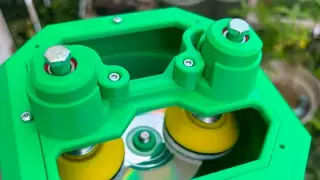
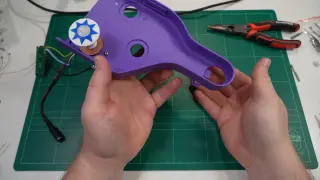
A maker is converting Space Cadet Pinball into a real pinball table using mostly 3D‑printed parts for the body and playfield components, with the flippers still needing work. Because the 1995 game lacks high‑resolution artwork, he’s seeking collaborators to create suitable art and print-ready assets via his YouTube page, even joking about paying contributors with playtime.

Tracing the First DOS: Transcribing IBM PC’s 86-DOS and MS-DOS from Printed Listings
technology26 days ago

Tracing the First DOS: Transcribing IBM PC’s 86-DOS and MS-DOS from Printed Listings

Hackaday reports on a community project to transcribe printed source listings of 86-DOS 1.00, MS-DOS 1.25, and PC-DOS 1.00-dev, including handwritten notes; eight of ten bundles have been transcribed and are ready for compilation with the SCP assembler, with scans on Archive.org and related write-ups linked on the GitHub project, inviting others to contribute.

NostOS Emerges: A ROM-Based Z80 OS for RC2014
technology1 month ago

NostOS Emerges: A ROM-Based Z80 OS for RC2014

Scott Baker has created NostOS, a brand-new ROM-only operating system for the Z80-based RC2014 retrocomputer. Described as CP/M-like but not compatible with CP/M, NostOS fits in 64KB of ROM with banking to extend memory, and includes native support for serial devices, the WD37C65 floppy controller, compact flash, and even Intel Bubble Memory, plus a text-to-speech feature and a Zork port; the project is open-source on GitHub.

Voodoo Reborn: 3DFX GPU Recreated in FPGA
retrocomputing2 months ago

Voodoo Reborn: 3DFX GPU Recreated in FPGA

Francisco Ayala Le Brun has recreated the 3DFX Voodoo 1 GPU in SpinalHDL for FPGAs, detailing the fixed-function hardware architecture and the timing/bug challenges of mapping a classic GPU onto modern programmable logic, with a GitHub repository for curious readers; the piece nods to Nvidia’s late-90s acquisition of 3DFX and notes the option of upgrading real Voodoo memory for those who own original hardware.

DR-DOS Returns as a Clean-Room 9.0 Beta
retrocomputing2 months ago

DR-DOS Returns as a Clean-Room 9.0 Beta

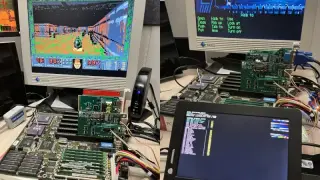
A Reddit user has created a clean-room reimplementation of DR-DOS, calling it version 9.0 and placing it in beta after purchasing the trademark. The project aims for full compatibility with DOS, currently runs DOOM, and is free for non-commercial use for now, though the author has not open-sourced the code due to IP/licensing considerations tied to DR-DOS' history with Novell and Caldera.

Windows 98 in 2026: Nostalgia Meets Modern Web Realities
technology2 months ago

Windows 98 in 2026: Nostalgia Meets Modern Web Realities

A Hackaday retrospective tests Windows 98 SE on a Dell Dimension 2100 in 2026, finding it workable for basic office tasks and some 2000s-era software, but modern internet use is painful due to TLS and browser support, often requiring proxies or plugins; gaming is limited to era-appropriate titles; overall, it's a nostalgic curiosity rather than a viable daily driver.

DIIS: A 1990s Hybrid Upgrade for Chornobyl NPP
technology2 months ago

DIIS: A 1990s Hybrid Upgrade for Chornobyl NPP

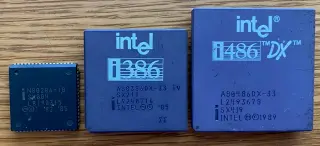
In the 1990s, the Chornobyl Nuclear Power Plant modernized its remaining RBMK reactors not by a full rebuild of the Soviet-era mainframe, but by wrapping a new auxiliary information-measurement system (DIIS) around the 1970s SKALA mainframe. The upgrade linked a Ukrainian SM-1210 minicomputer and an ARCnet-connected 80386 PC to run real-time reactor-core modeling and visualization via the PRIZMA program, letting data stay local instead of being sent to Moscow. Unit 2 operated until 1991 (turbine fire), Unit 1 until 1996, and Unit 3 until 2000, yielding a pragmatic, hybrid upgrade that pushed the plant toward 21st-century capabilities.

Windows 98 Gets a Second Life on a 2020 ThinkPad With UEFI-CSM and Adapters
technology3 months ago

Windows 98 Gets a Second Life on a 2020 ThinkPad With UEFI-CSM and Adapters

A 2020 ThinkPad P14s Gen 1 can run Windows 98 SE alongside Windows 11 and Linux from the same NVMe drive by booting in UEFI-CSM mode and using a USB‑2.0 expansion chain via Thunderbolt to compensate for Win98’s drivers. The setup requires disabling Secure Boot, enabling CSM, and using workarounds like the CREGFIX DOS driver and Rudolph Loew RAM patch to bypass 512 MB RAM limits; ACPI is faked with a S3 power state, and graphics are limited to basic VESA due to lack of Win98 drivers. Disk access goes through BIOS rather than NVMe, but overall the experiment demonstrates surprising backward compatibility on modern hardware.