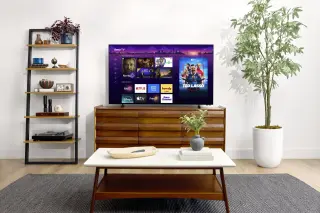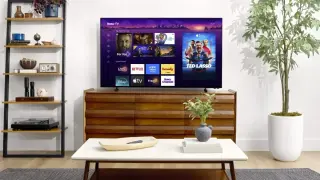
Kotaku reports widespread user backlash after Roku's June UI overhaul, which replaces a fast, simple home screen with a cluttered, ad-heavy layout driven by recommendations, introduces bugs, and prompts calls to revert or offer an old-interface option.
Roku can route audio to Bluetooth headphones through the Roku mobile app, letting you watch late at night at full volume without waking others; most Roku devices require the phone as a bridge, while some newer models support direct Bluetooth. Google TV and Amazon Fire TV also support direct Bluetooth connections.
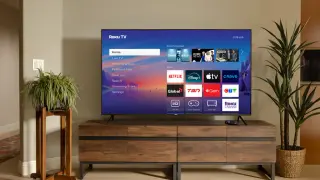
Roku is standardizing the home screen across Roku TVs, replacing brand-specific designs with a single Roku City purple backdrop and a small brand logo, bringing consistent navigation, easier software updates, and potential for deeper cross-device features as more manufacturers like TCL adopt the approach.
A Fox-Roku deal worth about $22 billion, paired with David Ellison’s bid to merge Paramount with Warner Bros. Discovery, signals a shift toward billionaire-led control of how Americans access streaming content, giving Fox influence over distribution and discovery on Roku’s platform and raising alarms about concentrated gatekeeping and reduced media pluralism.
Roku now lets eligible devices manually switch to the company’s redesigned home screen via Settings > Home Screen > Home Screen Update, enabling early opt-in before the automatic rollout. The switch is one-way and cannot be undone, though users can customize the new UI to resemble the old layout. The update brings features like Top Picks for You, a customizable Quick Access area, Destinations hubs, a unified view of subscriptions, improved search, and a collapsible side menu, along with new widgets such as Your Daily Scoop and Roku City. Availability is staggered by device and account, with some users seeing a “coming soon” indicator; international expansion is anticipated. Those who wait will receive the update automatically as the rollout progresses, and users are advised to ensure a stable internet connection and latest software before updating.”,
With Fox's $22 billion bid to acquire Roku, many users are exploring replacements. The piece highlights three strong upgrades: the Google TV Streamer 4K as the best all-around option with faster hardware, 32GB storage, Matter/Thread support, and Gemini AI; the Amazon Fire TV 4K Max for Alexa-centric homes with built-in ambient display features and ongoing sales; and the Apple TV 4K for premium performance and seamless integration with Apple devices. Budget-friendly alternatives include onn Google TV sticks from Walmart and the option to buy a smart TV with Google TV, Fire TV, or other platforms built in. The takeaway: which way you go depends on your ecosystem and budget, but Roku isn’t the only or always best choice.
Netflix's stock drifts lower after reports it lost bids for Roku and Warner Bros. Discovery, with 2026 revenue guidance below street estimates and higher content costs; chairman Reed Hastings is stepping down, and while a $25 billion buyback offers potential upside, investors await Q2 results and the scaling of Netflix's advertising business.
Netflix is edging into mega-merger territory after talks with Roku (which did not result in a bid) and a high-profile pursuit of Warner Bros. Discovery, with eyes now on assets like Lionsgate. The company emphasizes a disciplined M&A approach centered on strong deal execution and early integration, while navigating antitrust considerations as it shifts from building to buying growth.
Netflix closed at $78.72, down about 3.6%, as investors weighed reports that it explored media acquisitions such as Roku but was outbid by Fox, alongside headlines about a defamation lawsuit involving Tyra Banks and rising streaming competition, raising questions about its cash deployment and strategic bets.
Netflix shares fell about 4% after Fox Corporation disclosed a $22 billion acquisition of Roku, a deal that reportedly drew Netflix’s bids and a later Semafor report that Netflix’s offer was below Fox’s $160-per-share price. The news underscores ongoing media consolidation and potential regulatory hurdles for big mergers, while Netflix denied Lionsgate rumors and continues exploring growth opportunities.
Fox to buy Roku in a $22 billion cash-and-stock deal, uniting Fox networks, the Tubi platform and Roku under one umbrella while keeping Roku as a separate offering and aiming for roughly $400 million in run-rate synergies; separately, Rangers Sports Network is pursuing local NBA broadcast rights with an 85/15 revenue split amid NBA moves toward centralized local rights; the DOJ reportedly closed its Paramount-WBD merger probe with no lawsuit, though Paramount could end up with CBS Sports and TNT Sports if the deal closes.
Netflix stock fell after reports that Fox won a $22 billion deal to acquire Roku, a move seen as part of a broader consolidation in streaming and distribution. The outcome underscores Netflix’s shift from internal growth to potential acquisitions, following a recent Warner Bros. Discovery pursuit and with Lionsgate eyeing interest, while regulators would scrutinize such a merger for antitrust concerns.
Fox plans to buy Roku for about $22 billion, aiming to make the merged entity the third-largest U.S. TV player and give Fox direct access to Roku’s 100 million users; Fox intends to feature more Fox-branded content on Roku’s homescreen to boost ad revenue, while regulators review the deal for approval.
Fox Corporation will acquire Roku in a cash-and-stock deal valued at about $22 billion, paying $160 per Roku share and creating a combined company with FOX’s live sports, news and Tubi content alongside Roku’s The Roku Channel and streaming platform. On a pro forma basis, the merged entity would be among the largest U.S. TV players by share of viewing, with FOX shareholders owning roughly 73% and Roku holders about 27%. The transaction is expected to close in the first half of 2027, funded by debt and cash, and is anticipated to yield about $400 million of run-rate cost synergies and accrete free cash flow by year two. Anthony Wood will join FOX’s board, and FOX emphasizes maintaining an open Roku platform and uninterrupted capital returns, though closing is subject to regulatory and shareholder approvals and other customary conditions.
Fox Corp. has agreed to buy Roku for $22 billion in a cash-and-stock deal valued at $160 per Roku share, with about $400 million in expected annual cost savings. The union would give Fox a 100-million-household streaming footprint and bolster its ad-supported and live-news/sports strategy via its portfolio, including Tubi, as traditional pay TV declines. Roku shareholders receive cash and Fox stock, while investors reacted with Fox shares tumbling and Roku moving little on the announcement.