An FCC filing lists an unreleased Bluetooth over-ear headphone with model A3577 prepared for Apple. With most details sealed, observers speculate whether it’s Apple-branded or a Beats product, but there’s no official confirmation yet.
Logitech is reportedly developing a compact, foldable wireless mouse that folds in half like a clamshell and features an adaptive touch-scrolling area between its buttons. The device is said to pair with up to three devices via Bluetooth, work across multiple operating systems, and reduce muscle strain compared to using a laptop trackpad. It resembles Microsoft's Surface Arc and Lenovo's Yoga mice but offers a true fold, not a flat fold—though official specs, price, and release timing remain undisclosed.
Boox unveiled the Tappy, a palm-sized Bluetooth page-turner with two keys to flip pages, scroll content, or skip tracks; priced at $25.99, it works with Boox devices and other hardware, lasts weeks on a 95mAh battery, and has a ~33‑foot Bluetooth range, with interchangeable keycaps for customization.
CNET finds the Anker Soundcore Space 2 ($130) a strong value, delivering a sleeker design, improved sound, and better adaptive noise canceling versus the Space One, plus long battery life (up to 50 hours with ANC on, 70 hours with ANC off) and useful features like multipoint Bluetooth, ear-detection, AI voice commands, and HearID EQ. Call quality is mostly good for the wearer but some callers report muffled voices, and the ANC isn’t quite at the level of Sony’s XM6 or Bose QC Ultra Gen 2. Still, at about a quarter of flagship prices, it’s a compelling budget option and even earned a CNET Editors’ Choice.
Gizmodo reviews the $299 Sonos Play, a portable speaker that also serves as a Wi‑Fi hub for a Sonos ecosystem and can pair with other Plays for stereo or multi‑room playback. It delivers surprisingly big sound for its size, competes with Bose’s SoundLink Plus, supports on‑the‑fly Bluetooth linking, Trueplay tuning, and voice assistants, and boasts IP67 durability with a replaceable battery that lasts about a day. Still, it’s pricey, lacks Dolby Atmos, and rearranging from a stereo pair back to a single speaker isn’t entirely seamless. Overall, it’s a strong comeback for Sonos, blending home and on‑the‑go listening.
A versatile $299 portable speaker that works on Wi‑Fi like other Sonos speakers (Auto Trueplay, AirPlay 2, stereo pairing) and also serves as a rugged Bluetooth option with up to 24 hours of battery, USB‑C charging, and a base dock; it can pair two Plays for a wider soundstage on Wi‑Fi and group with other Sonos speakers while away from Wi‑Fi via Bluetooth, making it a strong gateway into Sonos for on‑the‑go use—though its sound leans bright and it isn’t as compact or polished as some rivals or a stationary Era 100 setup.
Denon's new DP-500BT is a premium belt-drive turntable with Bluetooth streaming, a switchable built-in MM phono preamp, a semi-automatic tonearm, and 33/45/78 RPM support, priced at $899 and designed to work with both analog and wireless hi‑fi setups; it follows the DP-3000NE's premium aesthetic and is available now in black.
A BBC feature explains that wired headphones are making a surprising comeback as listeners seek better sound quality and simplicity. After years of Bluetooth dominance, data from Circana show a surge in wired-headphone sales in late 2025 and early 2026, driven by price-per-sound advantages, reliability, and a retro/anti-tech mood. Experts note that, for mainstream products, wired options can outperform Bluetooth on value, while adapters and USB/Lightning connections keep the format versatile; the trend also frames wired headphones as a fashion statement among celebrities and in-brand aesthetics.
Sonos unveils Play, a $299 portable speaker designed to live at home yet travel-ready, with Wi‑Fi and Bluetooth connectivity, physical controls, Trueplay tuning, IP67 dust/water resistance, up to 24 hours of playback, and USB‑C power bank support; it can be grouped with up to three additional Play or Move 2 speakers over Bluetooth (a first for Sonos) and has a battery replacement kit for $69. The company also introduces Era 100 SL at $189 as part of a refreshed lineup, with preorder now and general availability on March 31.
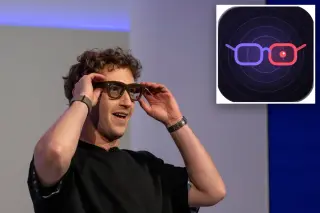
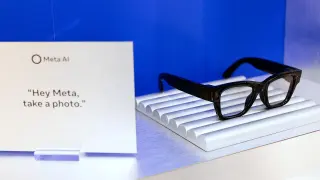
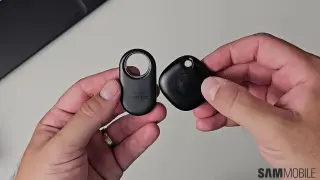
A new Android app, Nearby Glasses, scans for Bluetooth IDs from makers like Meta and Snap to alert users when nearby smart glasses are detected. Users can add IDs to widen detection; real-time scanning requires a foreground service. The developer frames it as a privacy-driven response to wearable surveillance and concerns about smart glasses, noting the app is Android-only for now with a potential iPhone version in the future.
Bluetooth SIG outlined Channel Sounding to enable centimeter‑level device positioning with encrypted pairing, HDT to raise data rates up to 8 Mbps and unlock high‑res/lossless audio and Auracast, and an ultra‑low‑latency effort to cut game‑controller lag to about 1 ms; Channel Sounding is already shipping on some devices such as Google Pixel 10, but feature support depends on hardware and vendor updates, and Bluetooth version numbers don’t guarantee what features are present; in the longer term, there are ambitions to move Bluetooth LE operation toward 5 GHz (and possibly 6 GHz), though that will require chipset support and regulatory approval, so shoppers should note that feature availability isn’t always clearly indicated by product specs.
An open-source Android app called Nearby Glasses scans Bluetooth SIG codes to flag nearby smart glasses, indicating brands (e.g., Meta’s Ray-Ban) but not identifying individuals or precise locations. Range is about 32–50 feet outdoors and 10–32 feet indoors; the project is an early proof-of-concept reflecting growing privacy concerns around wearable eyewear.
A new Android app called Nearby Glasses scans Bluetooth advertising signals to alert users when camera-enabled smart glasses from Meta, Snap, and others are nearby, aiming to counter covert filming in public. The developer notes the system can produce false positives and an iOS version is in development; Meta and Snap didn’t comment. The story frames the tool within broader concerns about wearable surveillance and potentialMeta features like facial recognition.
Nearby Glasses is an app that alerts you when smart glasses are nearby by detecting their Bluetooth signal (including Meta's Ray-Bans). It aims to address privacy concerns around surveillance tech and potential facial-recognition features, though false positives from VR headsets are possible; it's available on Google Play and GitHub.
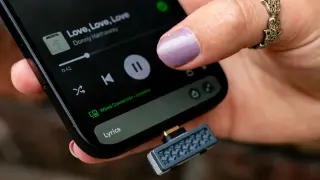
Tamron has unveiled the Tamron-Link, a Bluetooth 5.4 dongle that plugs into USB‑C on compatible Tamron lenses and lets you control focus features from a smartphone app. Features include preset focus markers, focus-time-lapse, astro focus lock, aperture/focus ring stopper, and a night-vision mode, all without cords. The dongle works up to about 5 meters, requires updated lens firmware, and is priced at $50 / £59 / CA$70, with availability from February 19 alongside an app update for iOS and Android (desktop software is not supported).