Poll results from LinkedIn and X ahead of Google I/O show about two-thirds of SEOs believe Google's AI Mode will not replace Google Search, suggesting AI will augment rather than overhaul the core search experience.
Google will start enforcing its malicious practices policy against back-button hijacking on June 15, 2026, potentially demoting affected sites in search rankings; sites have about two months to remove the tactic, which can arise from ad networks or third-party libraries, to avoid penalties.
Google is testing AI-generated headline rewrites in Search, echoing the earlier Discover experiment. The tests are described as small and narrow, not yet approved for broader rollout, and could reduce publishers’ control over how their headlines appear without disclosed rewrites.
Google search rankings remained highly volatile over the weekend as another wave of unconfirmed updates rocked SERPs; trackers show swings and publishers report traffic and revenue fluctuations, with Google not commenting on the changes and the volatility seeming separate from the February 2026 Discover core update, fueling ongoing industry chatter.
An SEO expert deconstructs the three most persistent GEO myths—llms.txt, schema markup, and freshness—arguing that there’s little proof these practices boost AI citations and that many ‘AI’ SEO claims are unsupported. He champions evaluating advice with the ladder of misinference, seeking dissenting views, and testing on your own data, while warning against AI workslop and the spread of AI search misinformation. Practical takeaways: use schema markup as a hygiene factor, emphasize genuine freshness where it matters, and verify claims before adopting them.
Google warns against creating 'bite-sized' content for large language models (LLMs) as it may harm search rankings, emphasizing that content should be focused on human readers rather than trying to game the system with artificial content segmentation, which may not be effective long-term.
Google's Danny Sullivan advises against creating bite-sized content specifically for AI and LLMs, emphasizing that such strategies are temporary and that content should primarily be written for humans, as search systems evolve to favor human-centric content.
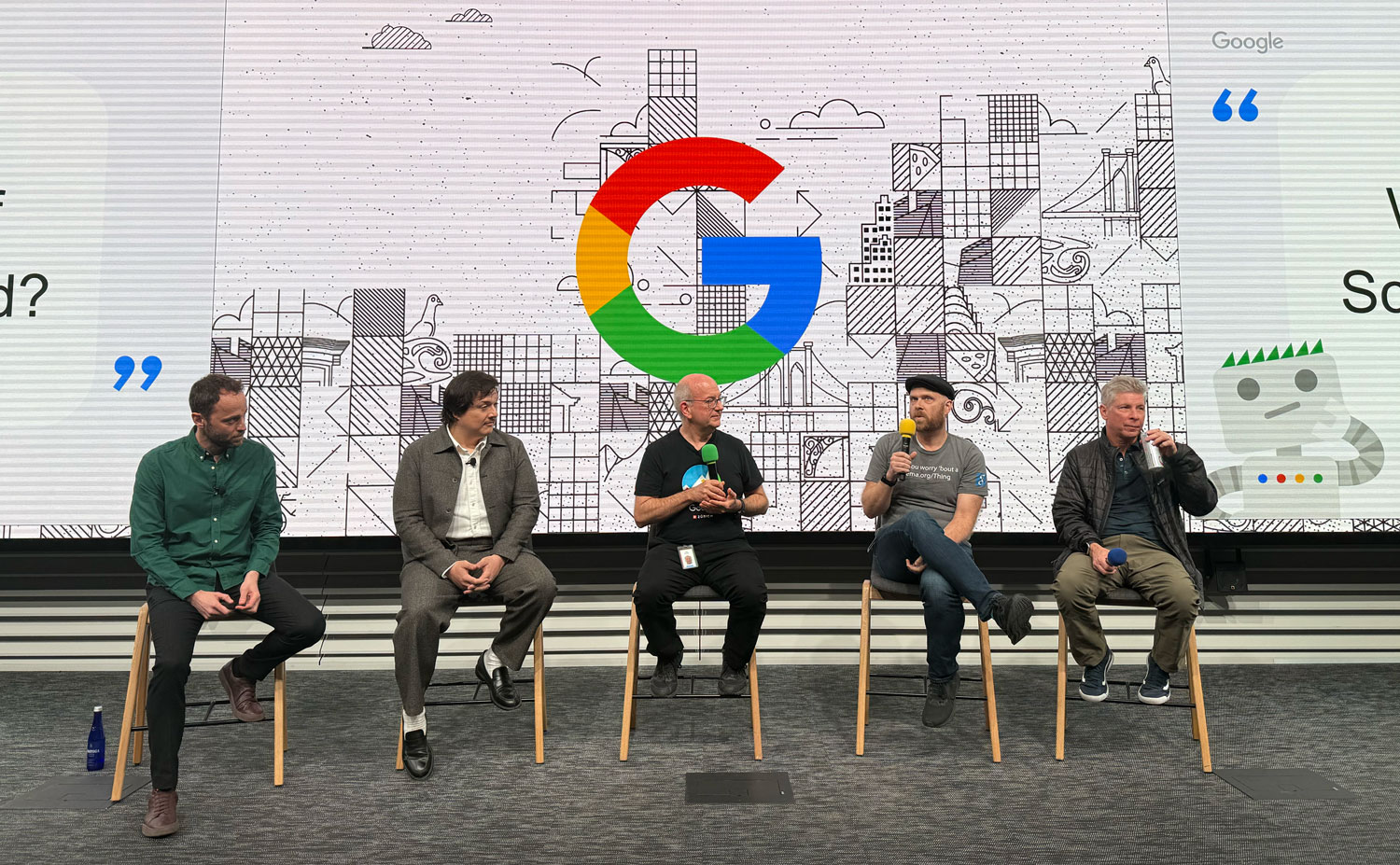
Google's Danny Sullivan and John Mueller emphasized that hiring an AEO/GEO or purchasing AI-optimization tools is similar to hiring or buying SEO tools, with the key being understanding SEO principles and Google's guidelines first. They advise focusing on creating content for humans rather than solely optimizing for rankings, and caution against tools or practices that go against Google's guidance, as these can lead to penalties. The overall message is that SEO knowledge is crucial, whether doing it yourself or hiring others.
Google's Danny Sullivan advises content creators not to optimize their content into bite-sized chunks specifically for large language models (LLMs), emphasizing that content should be written for users first. He warns that strategies tailored for current LLMs may not work in the long run as search systems evolve, and focusing on human-centric content is the best approach for sustainable success.
Google's John Mueller emphasizes that traditional SEO remains relevant and that understanding actual audience behavior is crucial, especially as AI and generative engine optimization (GEO) become more prominent. He advises marketers to focus on real usage metrics rather than labels, noting that AI is here to stay and impacts how online businesses should strategize their search and traffic efforts.
Google's John Mueller criticized certain SEO content as 'digital mulch,' emphasizing that blogs solely created to rank are unsustainable, and highlighted the importance of genuine, valuable content over superficial SEO tactics.
Google experts Danny Sullivan and John Mueller emphasize that SEO for AI is fundamentally the same as traditional SEO, focusing on creating authentic, original content across various formats like video and audio. They advise against over-optimization for specific search engines, highlighting that AI search prioritizes quality, engagement, and user-centric content. The key is to produce genuine content that resonates with users, as AI systems are increasingly capable of understanding and ranking original material, making the core principles of SEO still relevant.
Google updated its JavaScript SEO guidelines to emphasize that the canonical URL should be set in HTML whenever possible, and if JavaScript is used, it must set the canonical URL to match the original HTML to ensure proper indexing. Testing with Google Search Console is recommended to verify correct implementation.
Google's Danny Sullivan advises SEOs to focus on traditional SEO practices and content quality rather than dramatic changes for AI search, emphasizing that technical SEO has become less critical due to advanced CMSs, and that prioritizing AI-specific SEO efforts currently offers minimal returns.
Google's VP of Product for Search highlights the growing importance of PR and high-quality content for AI-driven recommendations, emphasizing that AI search behaves similarly to human research, and that understanding user intent through multimodal and specific queries is crucial for ranking success in the evolving AI landscape.