Former prime minister Alexis Tsipras launched the Elas party to unite Greece’s splintered left and present a broad progressive alternative to the ruling New Democracy, as polls show the governing party ahead but the opposition seeking to consolidate support amid ongoing scandals.
Trump's job disapproval in RealClearPolitics' average rose to a fresh low of 58.3%, eclipsing his previous post–Jan. 6 low of 57.6%, with an unfavorable rating of 55.9%. Recent polls—including Fox News and Reuters/Ipsos—show disapproval above 60%, and in 21 major polls his disapproval remains 55% or higher while his approval sits around 39.8%, signaling a difficult path for him and the GOP this November.
A Fox News poll of 1,002 registered voters finds Trump’s overall approval at 39%, the lowest of his second term and 10 points lower than at the start of his term; Republicans show rising disapproval of his handling of the economy, with 51% disapproving of his inflation handling and only 24% overall approving of his ability to slow inflation, while independents and non-MAGA Republicans are wavering, reflecting broader concerns about affordability and inflation.
Emerson College Polling/PIX11 surveyed NYC Democratic primary voters May 16-17, 2026. In NY-07, Valdez leads 23% to Reynoso 21% and Won 13% with many voters undecided. In NY-10, Lander leads 57% to Goldman 23% with 20% undecided. In NY-12, Lasher 22% leads Bores 20%, with Schlossberg 11% and Conway 10% and 32% undecided. Mayor Mamdani enjoys broad approval across the three districts (78% in NY-07, 79% in NY-10, 66% in NY-12); voters feel safe in their neighborhoods, and views on the economy skew poor among voters in NY-07 and NY-10, with NY-12 more mixed. The samples were about 350-450 likely Democratic primary voters per district, with MOEs around 4.6-5.2%.
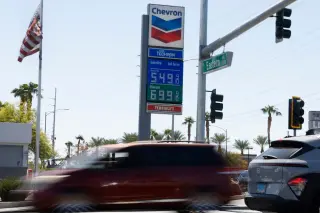
Facing slipping approval ratings, Trump told reporters that gas prices are “peanuts” and he isn’t focused on them, instead tying his agenda to stopping Iran from obtaining a nuclear weapon while recalling cheaper gas days amid a noisy East Wing construction backdrop.
A state Democratic Party poll shows Republican Steve Hilton and Democrat Xavier Becerra effectively tied heading into the June 2 California primary, boosted by Hilton’s Trump endorsement and Becerra’s surge after Rep. Eric Swalwell dropped out amid misconduct allegations; billionaire Tom Steyer’s heavy advertising hasn’t toppled Becerra, and with California’s top-two primary system, either Democrat or Republican could reach the November ballot as voters increasingly focus on the race.
Poll results from LinkedIn and X ahead of Google I/O show about two-thirds of SEOs believe Google's AI Mode will not replace Google Search, suggesting AI will augment rather than overhaul the core search experience.
CNN and other polls show President Trump losing ground with White voters without a college degree, with disapproval rising across multiple surveys (roughly in the 51–54% range) and voters citing economic concerns, tariffs and the Iran war as factors. While this group has formed the backbone of his base, the slide raises potential risk for Republicans in the 2026 midterms, though the GOP still leads this demographic in recent averages.
A surge of AI skepticism is evident in the United States, especially among young people, with polls showing about 70% think AI is moving too fast and more than half hold negative views, while only 18% of young people feel hopeful—driven in part by concerns about AI disrupting the job market and notable public booing of executives who spoke about AI.
Trump now dominates the GOP, but his waning public support—about 37% approval and 63% disapproval per CBS/YouGov and NYT/Siena—threatens Republican prospects in the 2026 midterms. The Bulwark urges Democrats to tie GOP incumbents to Trump and his unpopular policies to blunt his influence, noting Cassidy’s Louisiana primary defeat as a sign Trump’s grip persists. The piece also critiques MAGA-aligned Christian nationalism, highlighted by a National Mall event, warning that merging faith with Trumpism could backfire if the movement collapses.
Trump's approval drops to about 37% in the NYT/Siena poll, a second-term low, with independents disapproving 69% as economic concerns and the Iran war backlash bite his standing ahead of the 2026 cycle; 64% disapprove of his handling of the economy and 69% dislike his handling of the cost-of-living issues.
CNN chief data analyst Harry Enten highlighted that Donald Trump has been underwater in every poll for 413 consecutive days, with no poll since March 29, 2025 showing a positive net approval rating. He ties this slide to Trump’s stance on the Iran war and rising gas prices, citing a CNN/SSRS poll where only 8% see a positive effect from the Iran conflict while 75% view it negatively, and 76% say the cost of living is their top economic problem. Enten argues the second-term dynamics haven’t shifted voters’ views despite various political events.
Emerson College Polling finds Xavier Becerra leading the California governor primary at 19%, with Steve Hilton and Tom Steyer each at 17%, Katie Porter at 10%, and Matt Mahan at 8%, with 12% undecided; when undecided leaners are included, Becerra rises to 20%, Steyer to 19%, Hilton to 18%, and Porter to 13%. In the Los Angeles mayoral race, Bass leads with 30% over Pratt (22%), Raman (19%), and Miller (7%). The economy is named as the top issue by Californians.
German Chancellor Friedrich Merz’s nationwide tour to shore up his flagging popularity is backfiring, with voters perceiving him as out of touch and doubting his ability to deliver economic reforms. Polls show 86% of Germans unhappy with the coalition, Merz’s own numbers are weak (about 24% think he can turn the economy around, 14% say he communicates effectively), and the far-right AfD is gaining ground in eastern Germany ahead of elections, complicating the government’s path forward. His emphasis on gradual reforms and business-focused outreach has not yet translated into broad public support.