
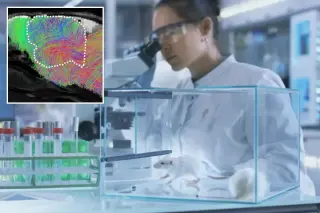
Stanford Researchers Create Mice with Human Cortical Tissue to Model Brain Disorders
Stanford University researchers have successfully transplanted human brain tissue into mice genetically engineered to lack a cerebral cortex, creating 'xenocortical' animals that integrate human neurons with mouse nervous systems. Published in Nature, the study demonstrates that these hybrid mice can model human neurodevelopmental disorders like cerebral palsy and schizophrenia, offering a new platform for testing therapies that was previously impossible due to the inaccessibility of living human brain tissue.