Tag

Solar System History

All articles tagged with #solar system history

The Giant-Impact Hypothesis: How a Mars-Sized Collision Shaped the Moon
space1 month ago

The Giant-Impact Hypothesis: How a Mars-Sized Collision Shaped the Moon

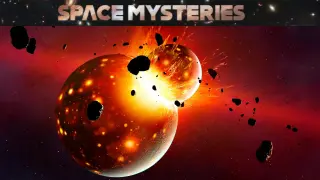
Astronomers widely accept the giant-impact hypothesis, which posits that a Mars-sized protoplanet named Theia collided with Earth within the first 100 million years of the solar system's existence. This catastrophic event, potentially lasting only a few hours, ejected material into orbit that eventually coalesced to form the Moon. While this theory explains the Moon's current state, significant questions remain regarding the exact timing and composition of the impact.
Early Outer Solar System Planetesimals Were 92% Heat-Forged Rock, Not Ice-Rich Dust
science2 months ago

Early Outer Solar System Planetesimals Were 92% Heat-Forged Rock, Not Ice-Rich Dust

New research published in Nature Astronomy suggests that the first planetesimals in the outer Solar System were composed of up to 92% heat-processed chondrules, with only 8-17% fine, volatile-rich matrix. This indicates that gas dynamics in the young solar nebula selectively filtered out icy dust, allowing larger, denser rocky particles to accrete first. The findings, based on chemical reconstructions of carbonaceous iron meteorites, push evidence for selective planet building back to the Solar System's first million years, challenging the assumption that early outer worlds simply accumulated all available local material.

Cassini Data Suggests Saturn’s Rings Are Too Young to Have Existed During the Dinosaur Era
science2 months ago

Cassini Data Suggests Saturn’s Rings Are Too Young to Have Existed During the Dinosaur Era

New analysis of data from NASA’s Cassini spacecraft indicates that Saturn’s iconic rings are significantly younger than previously assumed, likely forming only a few hundred million years ago. This timeline suggests the rings did not exist during the majority of the non-avian dinosaur era, challenging the long-held belief that they were primordial features formed alongside the planet 4.5 billion years ago.

Victorian Meteorite Reveals 7-Billion-Year-Old Stardust
science3 months ago

Victorian Meteorite Reveals 7-Billion-Year-Old Stardust

A silicon carbide grain from the 1969 Murchison meteorite is dated to roughly 7 billion years old, making it the oldest solid material ever found on Earth. This grain condensed in the atmosphere of a dying star more than 2 billion years before the Sun formed. The discovery supports the theory that star formation in our galactic neighborhood occurred in bursts rather than steadily.

science3 months ago

Hillsborough Meteorite Analysis Reveals Ancient Brine Chemistry in Primitive Asteroid

An international team published the first detailed analysis of the Hillsborough meteorite, which crashed through a New Jersey roof in July 2024. The study, appearing in Science Advances, identifies the rock as a rare CM1/2 carbonaceous chondrite containing preserved evidence of ancient salty brines and complex organic chemistry from a primitive asteroid. This discovery suggests that concentrated fluids in early solar system asteroids may have facilitated prebiotic reactions, potentially delivering key ingredients for life to Earth.

science3 months ago

Chang'e-6 Rocks Suggest Slow Decline in Early Solar System Bombardment

Analysis of rocks from the Moon's far side, returned by China's Chang'e-6 mission, indicates that asteroid impacts in the early Solar System faded gradually over billions of years rather than occurring in a single catastrophic burst. This finding challenges the 'late heavy bombardment' theory and suggests the Moon's far side preserves a cleaner record of early planetary history than the near side.

Nereid: Neptune’s Last Moon After Triton’s Ancient Arrival
space6 months ago

Nereid: Neptune’s Last Moon After Triton’s Ancient Arrival

Using Webb telescope data and simulations, scientists propose that Neptune’s moon Nereid is the sole survivor of an ancient, Triton-triggered disruption of Neptune’s original moon system; Triton’s capture likely destroyed the other moons, while Nereid was hurled outward into a highly eccentric, distant orbit. Its water-rich surface and Uranian-like signature support its status as the last remnant of Neptune’s early lunar family.

Are Interstellar Objects a Threat to Earth?
science1 year ago

Are Interstellar Objects a Threat to Earth?

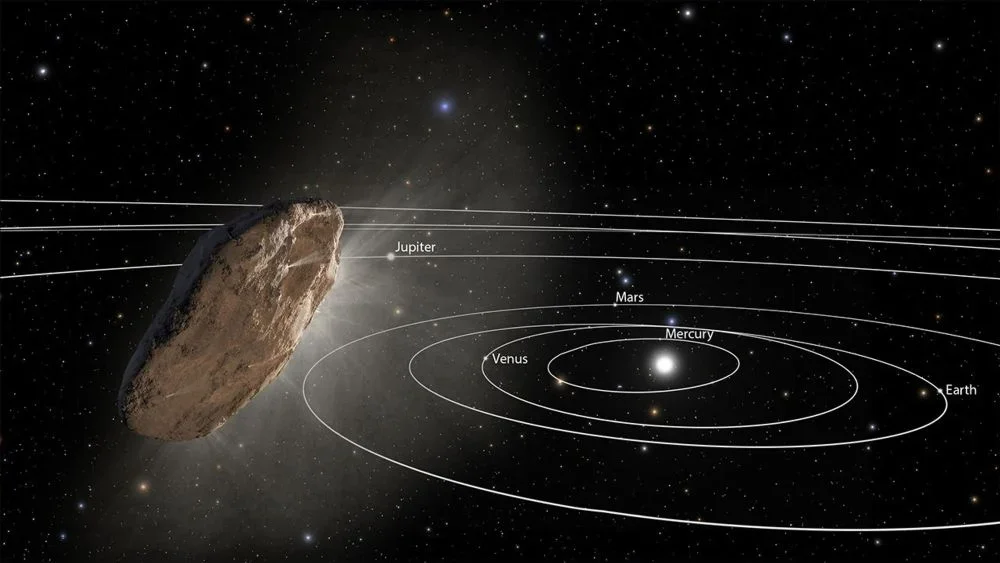
Recent research models the distribution and impact risk of interstellar objects (ISOs) on Earth, suggesting they are more likely to come from the solar apex and galactic plane, with impacts more probable at low latitudes near the equator. The study focuses on ISOs ejected from M-dwarf systems and highlights the importance of upcoming observations from the Vera Rubin Observatory to better understand ISO impact risks.

Unveiling Venus: Newly Discovered Impact Craters Change Our Understanding
science2 years ago

Unveiling Venus: Newly Discovered Impact Craters Change Our Understanding

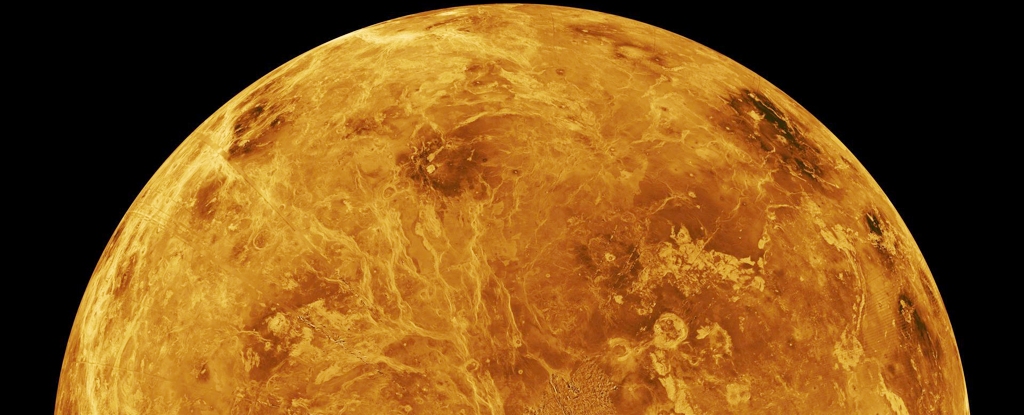
Scientists have discovered evidence of large impact craters on Venus, known as tessera terrain, which are concentric rings formed by two massive impacts on the planet's thin crust about 3.5 billion years ago. This finding challenges previous assumptions about Venus's geological history and suggests that not all impact structures resemble traditional craters. The study, published in the Journal of Geophysical Research: Planets, provides new insights into the early processes of planetary formation and evolution.