Tag

Synchrotron Radiation

All articles tagged with #synchrotron radiation

Mystery Radio Source VT J1906+0849 Defies Known Galactic Patterns
astronomy1 month ago

Mystery Radio Source VT J1906+0849 Defies Known Galactic Patterns

Astronomers have identified a bizarre radio source, VT J1906+0849, located 49,000 light-years from Earth, that behaves unlike any other known object in the Milky Way. Discovered in 2017 data from the Very Large Array Sky Survey, the object has remained radio-bright for approximately two decades while exhibiting an evolving spectral turnover frequency and minimal expansion. Its brightness and peak frequency have shifted unpredictably over time, defying standard models of expanding synchrotron radiation. Researchers suggest it may be a compact object, such as a black hole or neutron star, accreting material from a companion star, similar to the known object SS 433, but with obscured X-ray emissions.

Hubble Captures Crab Nebula’s Pulsar-Powered Expansion Over 25 Years
space7 months ago

Hubble Captures Crab Nebula’s Pulsar-Powered Expansion Over 25 Years

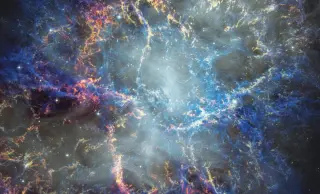
Hubble Space Telescope returns to the Crab Nebula after 25 years, documenting its rapid expansion (about 5.5 million km/h) and the evolving filaments driven by a central pulsar wind and synchrotron radiation, not just shock waves. The 2024 observations deepen our understanding of this supernova remnant, with findings published in The Astrophysical Journal.

Astronomers Uncover New Odd Radio Circle with MeerKAT Telescope
science1 year ago

Astronomers Uncover New Odd Radio Circle with MeerKAT Telescope

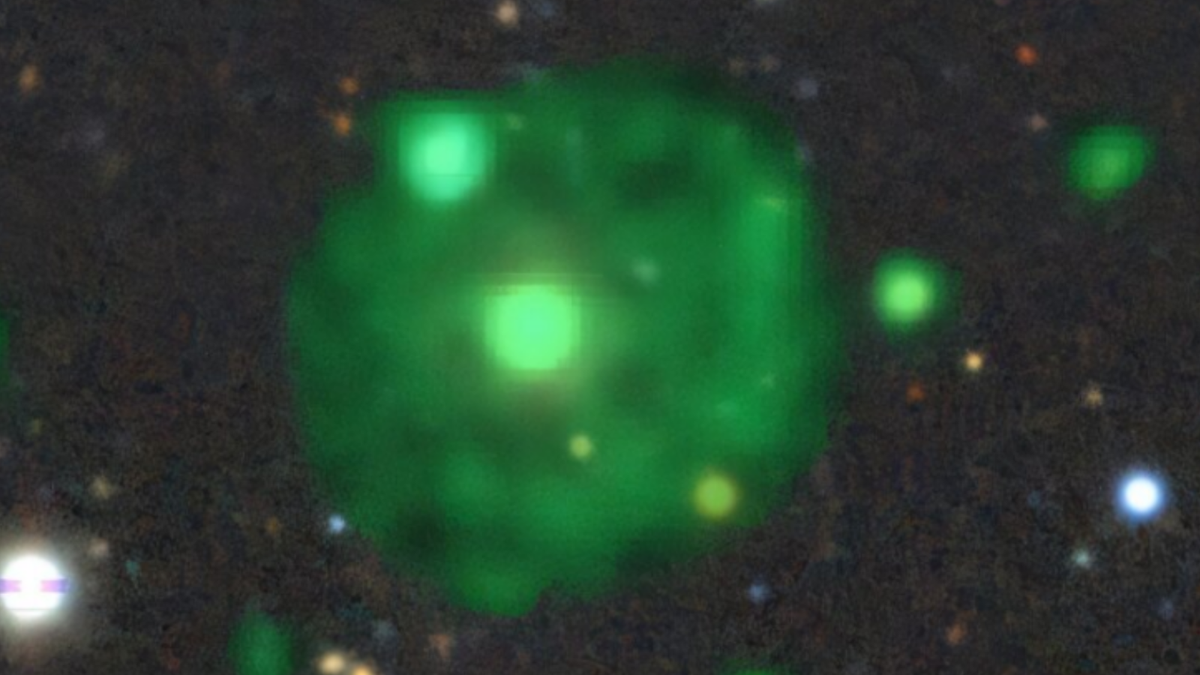
Astronomers have discovered a new Odd Radio Circle (ORC), ORC J0219–0505, using the MeerKAT radio telescope in South Africa. This massive circle of radio light, associated with the elliptical galaxy WISEA J021912.43–050501.8, is 371,600 light-years wide and differs from previously discovered ORCs, suggesting a selection bias in earlier detections. The origins of ORCs remain unknown, with theories suggesting they result from shockwaves caused by cosmic collisions or merging supermassive black holes. The discovery highlights gaps in current astronomical knowledge and the need for further research.