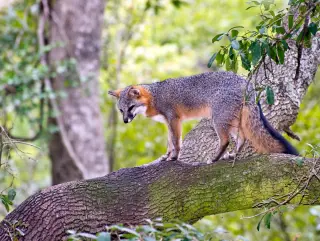
In the Sonoran Desert, the grey fox defies typical canid behavior by climbing trees with catlike grace, roosting in high cavities and even using skeleton trees as nightly social hubs, illustrating an ancient, highly adaptable lineage that shifts seasonally from fruits and insects to small prey while dodging threats from coyotes.
A nearly complete 30-million-year-old canid fossil from Oregon, Mesocyon coryphaeus, shows an animal built for climbing rather than running, with a rotatable elbow and a large dewclaw; the skeleton is among the most complete pre-Ice Age canids in North America and indicates this early dog sometimes climbed and grappled, not sprinting like modern dogs, and was identified as male by the preserved baculum. The discovery—initially misidentified as an oreodont—highlights how extinction erased a distinct early dog ecology that has no exact modern replacement.
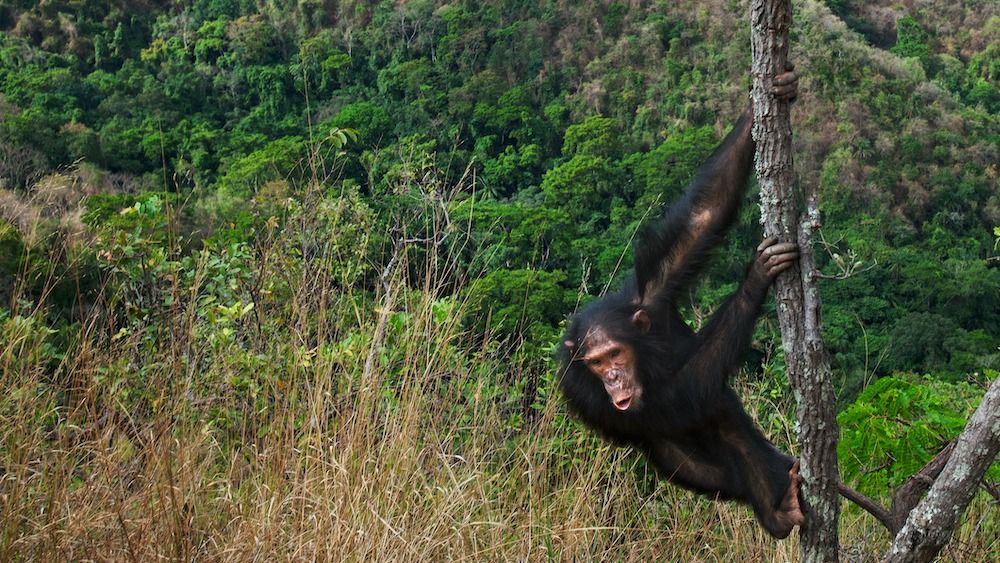
The flexible shoulders and elbows of humans may have evolved as a natural braking mechanism for tree-scaling, thanks to their ape ancestors. Researchers observed chimpanzees and sooty mangabey monkeys climbing up and down trees and found that while both animals ascended trees similarly, they differed in their techniques for descending. Chimpanzees extended their arms above their heads while descending, acting as a braking system to counteract the effects of gravity on their heavier lower bodies. This suggests that flexible shoulder and elbow joints evolved to decrease the risk of falling while descending from treetops. The study also suggests that this flexibility evolved after the divergence of apes and monkeys, proving beneficial for activities such as gathering food, hunting, and self-defense.