Tag

Primates

All articles tagged with #primates

Legs Before Hands: Evolution's Leg-Driven Route to Right-Handedness
science5 days ago

Legs Before Hands: Evolution's Leg-Driven Route to Right-Handedness

A new PLOS Biology study analyzing 2,025 primates across 41 species argues that humans’ near-90% right-handedness arises from the combined effects of rapid brain growth and a long leg-to-arm ratio from sustained bipedalism: with legs freed from locomotion, the hands could specialize in manipulation, and the larger brain provided the cognitive substrate, making humans the extreme outlier among primates.

Two Evolutionary Shifts Forged Humans' Strong Right-Handedness
science9 days ago

Two Evolutionary Shifts Forged Humans' Strong Right-Handedness

A Oxford-led study analyzing 2,025 primates suggests humans' extreme right-handedness arose from two key evolutionary milestones—upright walking and brain expansion—that shifted early hominins from mild to strong right-hand bias, with Homo species showing increasing dominance and Homo floresiensis exhibiting weaker bias; the findings support a two-stage process and raise questions about why left-handedness persists and how culture reinforces right-handedness.

Why Humans Sleep Less: An Evolutionary Trade-Off Behind the Sleep Paradox
science14 days ago

Why Humans Sleep Less: An Evolutionary Trade-Off Behind the Sleep Paradox

Anthropologist David R. Samson argues that humans biologically need about 9.5 hours of sleep but typically get under seven, because ancestral shifts from tree to ground sleeping favored short, deep, REM-rich bouts that free time for foraging, social learning and tool use. Drawing on chimpanzee nest-building and fieldwork with the Hadza and BaYaka, the book frames nest-building as a cognitive catalyst in primate evolution, while highlighting sleep’s broad importance to health and cognition and noting some gaps in the comparison to other species.

Is the Y Chromosome Doomed—or Here to Stay?
science19 days ago

Is the Y Chromosome Doomed—or Here to Stay?

ScienceAlert covers a heated debate: Jenny Graves argues the Y chromosome is degrading and could vanish in millions of years, but this forecast is contested and uncertain. Other researchers, notably MIT’s Jenn Hughes, contend core Y genes are deeply conserved in primates and the chromosome is more likely to persist, even as some species have shed or replaced its sex-determining role. The evidence shows sex-determination systems can evolve rapidly, and while the Y’s fate remains unresolved with wide error margins, males would likely persist if alternative mechanisms arise.

Gibraltar macaques chew dirt to blunt junk-food digestion
science1 month ago

Gibraltar macaques chew dirt to blunt junk-food digestion

Researchers studying 230 Barbary macaques in Gibraltar found those with more access to tourists’ calorie-dense snacks eat dirt about 12 times a week, suggesting geophagy buffers the digestive impact of high-calorie, low-fiber junk food and may aid gut bacteria; the behavior is more common in seasons with more tourists and is absent in groups with no tourist access.

Post-Human Earth: Which Animal Could Claim Dominance?
science2 months ago

Post-Human Earth: Which Animal Could Claim Dominance?

If humans disappeared, Earth would reorganize with certain species gaining advantages. Birds—especially corvids and parrots—show high problem-solving and could rise to prominence, while adaptable mammals like rats or feral cats and dogs might thrive briefly. Primates and large marine mammals face cognitive or physical constraints, and there is no single species poised to fully replace humans as the dominant force on the planet.

Strength Showdown: The World’s Strongest Primates and What They Reveal About Humans
science3 months ago

Strength Showdown: The World’s Strongest Primates and What They Reveal About Humans

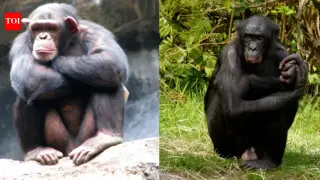
An illustrated tour of the world’s strongest primates—from gorillas and chimpanzees to gibbons, indris, muriquis and the extinct gigantomyth Gigantopithecus—explains how size, leverage, grip, and locomotion shape their power; humans are not built for raw power but excel at throwing, chimp muscles pack more power per kilogram than ours, and popular belief that a fight with a chimp would be winnable persists (22% of US men according to YouGov).

40 Hz Sound May Help the Brain Clear Alzheimer's Toxins in Primates
science4 months ago

40 Hz Sound May Help the Brain Clear Alzheimer's Toxins in Primates

In nine elderly monkeys, daily 40 Hz sound for one week increased cerebrospinal fluid levels of β-amyloid by about 200%, suggesting the brain’s waste-clearance system was more active and the effect lasted five weeks. The results are preliminary, focusing on biomarkers rather than memory outcomes, and human trials are needed to determine real-world therapeutic potential.

Primate same-sex behavior widespread, hinting at social roles in evolution
science4 months ago

Primate same-sex behavior widespread, hinting at social roles in evolution

A Nature Ecology & Evolution study synthesizes data showing same-sex sexual behavior in 59 nonhuman primates (including bonobos, chimpanzees and macaques) with repeated instances in 23 species, suggesting such behavior helps reduce social tension, build bonds, and manage competition under environmental stress—driven by genetics and context rather than reproduction, though not all species are equally studied.