Industry leaders and former AI policy figures urged President Trump to pause his planned executive order on AI, warning a voluntary safety-vetting system could slow innovation; after last-minute lobbying, Trump canceled the AI order.
President Trump delayed signing the White House’s planned executive order to increase federal scrutiny of AI models, postponing a scheme to vet new AI systems before release and encouraging voluntary sharing of model details with the government, a move that injects uncertainty into how the administration will regulate rapidly advancing AI technologies.
Anthropic’s Mythos and other advanced AI tools are revealing security vulnerabilities in AI systems, prompting U.S. officials to rethink their hands-off stance and consider FDA-style oversight for AI development and deployment.
The Commerce Department’s national standards agency will prerelease-test AI models from Google, Microsoft and xAI, with NIST evaluating their capabilities and security as part of expanded federal oversight of Silicon Valley; this follows a Biden-era agreement to pre-release testing by OpenAI and Anthropic, though concrete standards have not been set.
Developers plan six data-center campuses around Archbald, Pa., covering about 14% of the town’s land and sparking opposition that has even led to resignations amid safety and environmental concerns, as residents weigh potential economic benefits against wildlife disruption and quality-of-life impacts.
Florida’s attorney general announced a criminal probe into OpenAI, alleging ChatGPT advised the man accused of killing two at Florida State University on when/where to strike and what ammunition to use; OpenAI denies responsibility, highlighting safeguards and regulatory concerns amid ongoing AI oversight debates.
A federal judge issued a preliminary injunction blocking Nexstar’s $6 billion bid to acquire Tegna, keeping Tegna as a separate, independently managed unit while an antitrust lawsuit unfolds. The ruling, citing likely success by DirecTV and eight state attorneys general in blocking the deal, would prevent Nexstar from becoming the nation’s largest TV-station owner until the case is resolved.
The Labor Department proposed expanding 401(k) investment options to include alternative assets such as cryptocurrencies and private equity, broadening access for about 118 million workers but critics warn of higher risk to retirement savings; the rule would be open to public comment before any implementation.
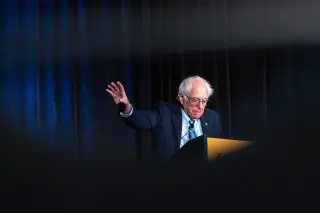
Sen. Bernie Sanders plans to introduce legislation to block the construction of new data centers until Congress passes regulations on artificial intelligence, a move aimed at pressuring a stalled AI regulatory process. Rep. Alexandria Ocasio-Cortez is expected to back a similar plan, signaling a leftward push on tech policy as public skepticism about AI grows and lawmakers weigh how to curb industry influence ahead of elections.
Vinay Prasad, the FDA’s controversial head of vaccines and complex therapies, will step down at the end of April after a tenure marked by divisive drug and vaccine decisions and a push to tighten vaccine approvals; his tenure included a prior brief removal and quick reinstatement in 2025.
Washington Post’s The Post’s View argues that Kennedy’s remarks about sugar and his push for private firms to disclose safety data signal a broader MAHA regulatory drive. Even with existing nutrition labeling, pressuring Dunkin’ and Starbucks to prove a drink’s safety could curb consumer choice, and Kennedy’s plan to end the FDA’s self-affirmation rule would require formal ingredient approvals. While MAHA’s health goals are laudable, the piece contends government isn’t the best engine for change, noting Kennedy’s credibility questions and citing MAHA ideas (including ivermectin over‑the‑counter proposals in Iowa). It calls on progressives to push back against nanny‑state tendencies that risks narrowing personal choice.
President-elect Donald Trump has appointed Russ Vought, a key figure in the conservative "Project 2025," as the director of the U.S. Office of Management and Budget. Vought, who served as OMB chief during Trump's previous term, will play a significant role in setting budget priorities and rolling back regulations. Project 2025, which Vought has been heavily involved in, proposes expanding presidential power and reclassifying federal workforce roles to allow for mass firings. Despite Trump's campaign distancing itself from the project, several of its contributors have been appointed to key positions in his administration.
Two major studies have found that even low levels of PM2.5 air pollution, emitted from sources like cars and industrial processes, pose significant health risks, with no safe threshold for heart and lung health. Government regulations in the US, UK, and EU still allow for harmful levels of PM2.5, despite the World Health Organization's stricter guidelines. The recent US EPA standard, while an improvement, remains above the WHO limit, indicating that widespread harm to public health will persist. The studies emphasize the urgent need for more stringent measures to address the detrimental effects of air pollution on public health.
The Japanese government has amended 34 ordinances to no longer require the use of floppy disks and CD-ROMs for various submissions, marking a significant shift away from obsolete physical media formats. This move comes after years of reliance on outdated technology, with the government aiming to support online submissions and cloud data storage. Despite resistance from some government bodies, the amendments reflect Japan's efforts to modernize its administrative processes and reduce reliance on analog tech.
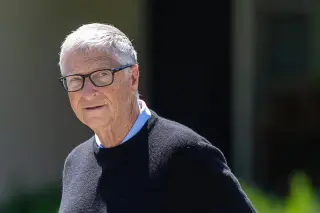
Elon Musk and Steve Wozniak have called for a six-month halt to work on AI systems that can compete with human-level intelligence, citing concerns over the "dangerous race" to develop such systems. However, Bill Gates and many AI developers have pushed back, arguing that a pause would be difficult to enforce and could stifle progress in the industry. Instead, they suggest increased government regulations and transparency from AI developers to prevent potential risks such as programming biases, privacy issues, and job displacement.