Tag

Hpv

All articles tagged with #hpv

Two Lifestyle Habits Drive Almost Half of Preventable Cancers Worldwide
health5 days ago

Two Lifestyle Habits Drive Almost Half of Preventable Cancers Worldwide

A WHO analysis published in Nature Medicine finds about 38% of global cancers in 2022 were preventable by addressing roughly 30 modifiable risk factors. The leading factor is tobacco smoking (responsible for 15% of cancers, 23% in men), with alcohol accounting for roughly 3.2%; together these two factors make up about 48% of preventable cancers. Infections (notably HPV) and air pollution also contribute to cancer risk, while HPV vaccination exists but coverage remains uneven. The study underscores that many cancers could be prevented with sustained political commitment and targeted prevention strategies worldwide.

Wastewater detects all major cancer-causing viruses, signaling new public health monitoring
health6 days ago

Wastewater detects all major cancer-causing viruses, signaling new public health monitoring

A Baylor College of Medicine-led study analysed wastewater from more than 40 sites across 16 Texas cities (May 2022–May 2025) using hybrid-capture sequencing to detect all major oncogenic viruses, including HPV, hepatitis B and C, EBV and Kaposi’s sarcoma–related herpesvirus; the study found increases in HPV, EBV and some polyomaviruses after 2024 and detected all nine HPV types targeted by Gardasil 9 in wastewater, suggesting environmental monitoring could track cancer risk and measure vaccination impact for prevention and health surveillance.

HPV vaccination and lifestyle changes may curb rising head and neck cancers
health9 days ago

HPV vaccination and lifestyle changes may curb rising head and neck cancers

Head and neck cancers, especially oral cavity and pharynx, are rising in the U.S. and globally, with HPV now a leading risk factor. Prevention centers on HPV vaccination (two doses at 11–12 years, can start 9–26, approved up to 45) and lifestyle changes such as quitting smoking and reducing alcohol use, which substantially lower risk. There is no broad screening, and five-year survival is about 70%.

Bioengineered Gum Targets Cancer-Linked Oral Microbes
science24 days ago

Bioengineered Gum Targets Cancer-Linked Oral Microbes

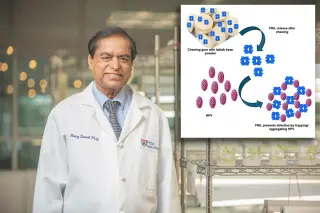
Researchers at the University of Pennsylvania developed a bioengineered chewing gum based on lablab bean gum that carries antiviral FRIL and antimicrobial protegrin. In ex vivo studies with head and neck squamous cell carcinoma patients, the gum extracts reduced cancer-associated microbes—HPV by up to 93% in saliva and 80% in oral rinse—and, with protegrin, brought the harmful bacteria Porphyromonas gingivalis and Fusobacterium nucleatum close to zero while preserving beneficial oral bacteria. The findings suggest a low-cost, accessible adjuvant or preventive therapy that could complement existing treatments or help prevent infection and transmission to curb oral cancer progression, with results published in Scientific Reports.

Bean-Gum Chewing Gum Targets Cancer-Linked Oral Microbes, Trials Ahead
health27 days ago

Bean-Gum Chewing Gum Targets Cancer-Linked Oral Microbes, Trials Ahead

Researchers have developed a chewing gum made from lablab bean proteins that could help fight head and neck cancer by reducing oral microbes linked to the disease. In ex vivo tests, the gum lowered HPV levels by about 93% in saliva, and when bioengineered to include an antimicrobial peptide, it nearly eliminated Porphyromonas gingivalis and Fusobacterium nucleatum without disturbing beneficial mouth bacteria. The approach targets infection locally at the site of cancer risk and could complement existing therapies. Trials are being planned in London and at the University of Pennsylvania in the U.S. to evaluate its effectiveness in HNSCC patients.

Staying Hitched Linked to Lower Cancer Risk in Massive U.S. Study
health27 days ago

Staying Hitched Linked to Lower Cancer Risk in Massive U.S. Study

A large U.S. study of more than 100 million people across 12 states (2015–2022) found cancer rates were about 68% higher among never-married men and 83% higher among never-married women, suggesting marriage is linked to lower cancer risk—potentially due to social and financial support, healthier habits, and better treatment adherence—though the relationship is not universal, with notably higher HPV-related cancers among the unmarried.

HPV vaccine cuts cancer risk for boys and men, new study shows
health1 month ago

HPV vaccine cuts cancer risk for boys and men, new study shows

A large study finds the HPV vaccine halves the risk of HPV-related cancers in men; protection is strongest when vaccinated early (about 42% reduction for ages 9–14 and about 50% for ages 15–26), with catch-up vaccination up to 26 and shared clinical decision‑making for 27–45. Public health guidance emphasizes routine vaccination at ages 11–12 to prevent cancer across sexes and expand protection against multiple HPV strains.

Never Married, Higher Cancer Risk Across Many Cancers, Large US Study Finds
health1 month ago

Never Married, Higher Cancer Risk Across Many Cancers, Large US Study Finds

A large U.S. study of more than 4 million cancer cases across 12 states (2015–2022) finds adults who have never been married carry significantly higher cancer risk than those who are or have been married, across nearly all major cancers and especially those linked to infections, smoking, and reproductive factors. Never-married men are about five times more likely to develop anal cancer and never-married women about three times more likely to get cervical cancer, with overall cancer risk about 70% higher for men and 85% higher for women in the never-married group. The study emphasizes social factors as cancer risk markers, not that marriage protects against cancer, and suggests tailored risk awareness and screening, though lifestyle confounding and the exclusion of long-term unmarried partners are limitations.

Cancer-free Chef Bonnell urges HPV vaccination to prevent cervical cancer
health1 month ago

Cancer-free Chef Bonnell urges HPV vaccination to prevent cervical cancer

Fort Worth chef Jon Bonnell, now cancer-free after treatments for head and neck cancer, is urging widespread HPV vaccination, arguing that vaccinating one generation could nearly eliminate cervical cancer and substantially reduce head-and-neck cancers, with international examples from Australia and Europe cited as evidence.

HPV vaccination may halve men's cancer risk, study suggests
health1 month ago

HPV vaccination may halve men's cancer risk, study suggests

A large retrospective study in JAMA Oncology found that giving the nine-valent HPV vaccine to boys and young men markedly lowers their risk of HPV-related cancers. Analyzing 510,260 vaccinated and an equal number of unvaccinated males aged 9–26 over up to 10 years, researchers reported an overall hazard ratio of 0.54 (about a 46% risk reduction) for those who received at least one dose. Protection appeared in both younger teens (ages 9–14: HR 0.58, ~42% reduction) and young adults (ages 15–26: HR 0.50, ~50% reduction). The authors urge sex-neutral vaccination policies, though they note limitations such as possible misclassification and unmeasured sexual behaviors.

Never-Married Adults Show Higher Cancer Rates in Large US Study
health1 month ago

Never-Married Adults Show Higher Cancer Rates in Large US Study

A University of Miami analysis of over 4 million cancer cases across 12 US states (2015–2022) found never-married adults have higher cancer incidence than those who are married or formerly married—about 68% higher in men and 85% higher in women—though researchers caution this does not prove causation or that marriage protects against cancer. Larger differences appear for HPV-related cancers (anal cancer in men, cervical cancer in women) and are smaller for cancers with widespread screening. The study treats cohabiting partners as unmarried and is cross-sectional, so it signals associations rather than causal effects. Implications point to using marital status as a marker to target cancer risk awareness and screenings, while contexting limitations and other health factors.

Being Never Married Linked to Higher Cancer Risk, Study Finds
science1 month ago

Being Never Married Linked to Higher Cancer Risk, Study Finds

A University of Miami study analyzing over 4 million cancer cases (2015–2022) found that never-married adults have significantly higher cancer rates than those who are or have been married. Never-married men face about 70% higher cancer risk, never-married women about 85% higher, with the strongest association after age 50. The gap may reflect less regular healthcare, financial and social support, and differences in risk factors, including HPV-linked cancers such as anal and cervical cancer. Experts caution that marriage itself does not prevent cancer, but highlight the importance of targeted prevention, awareness, and screenings for unmarried individuals.

FDA clears Waters' at-home HPV screening to speed cervical cancer detection
health1 month ago

FDA clears Waters' at-home HPV screening to speed cervical cancer detection

The U.S. FDA has cleared Waters’ at-home cervical cancer screening kit for use with an approved HPV test, enabling patients to self-collect samples at home and mail them to a laboratory. The kit, tested with BD’s Onclarity HPV assay, targets high-risk HPV types and aims to improve early detection and reduce cervical cancer deaths, with Waters planning nationwide availability by prescription and anticipated insurance coverage.

Vaccines Deliver Wider Community Benefits Beyond Individual Protection
public-health2 months ago

Vaccines Deliver Wider Community Benefits Beyond Individual Protection

The piece argues that vaccines provide substantial indirect benefits that extend beyond the individual, helping protect the broader community and reduce health-system strain. It highlights examples such as rubella vaccination eliminating congenital rubella syndrome, the drop in pneumococcal disease across children and seniors due to vaccination, chickenpox vaccines reducing later shingles risk (with potential links to dementia signals), the herd-immunity effects of HPV vaccination protecting unvaccinated boys, and safeguarding immunocompromised people from measles outbreaks. It also notes vaccines lessen parental work absences and overall economic impact, strengthening the case for high vaccination rates despite debates over medical freedom.