North Korea and Belarus signed a friendship and cooperation treaty during Lukashenko’s Pyongyang visit, signaling closer bilateral ties as both face Western sanctions and back Moscow in the Ukraine war, with plans to expand cooperation across sectors and bolster a multipolar, anti-Western bloc.
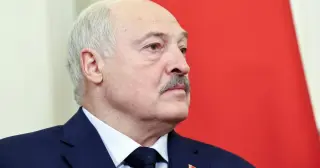
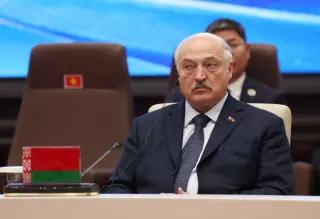
Belarusian President Alexander Lukashenko visited North Korea, where he was greeted by Kim Jong Un and the two leaders signed a friendship and cooperation treaty, underscoring closer Moscow-aligned ties as both nations back Russia’s war in Ukraine despite Western sanctions and rights concerns.
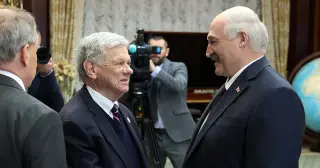
In Pyongyang, North Korean leader Kim Jong Un and Belarusian President Alexander Lukashenko met and signed a friendship treaty, signaling a strengthened bilateral relationship, according to AP News captions accompanying a four-photo set.
North Korea’s Kim Jong Un welcomed Belarusian President Alexander Lukashenko to Pyongyang with a 21-gun salute, a public reception by citizens and soldiers, and a wreath-laying at the Kumsusan mausoleum, where Lukashenko laid a bouquet sent by Putin; KCNA said there were no reported talks, underscoring ongoing ties between the two allies of Russia.
Belarusian President Alexander Lukashenko arrived in Pyongyang for talks with North Korean leader Kim Jong Un, with official photo-ops signaling a formal diplomatic engagement.
North Korea's Kim Jong Un greeted Belarusian President Alexander Lukashenko in Pyongyang with a lavish ceremony to deepen ties between two Kremlin-aligned allies of Vladimir Putin; the leaders plan to sign a friendship and cooperation pact and discuss modest trade growth, as Belarus and North Korea continue to weather sanctions amid Russia's war in Ukraine.
ISW and Ukrainian officials say Russia has begun a Spring-Summer 2026 offensive across Ukraine, intensifying ground attacks (619 strikes over March 17–20) and producing thousands of casualties in a week, but ISW expects only limited territorial gains rather to seize the Fortress Belt in 2026. Moscow is deploying tens of thousands of new forces, betting on spring weather to blunt Ukrainian drones and artillery, and expanding permanent basing in Belarus to support long‑range operations. Russia is also turning to private military companies to defend critical infrastructure amid economic strains, with gold reserves shrinking and energy revenues funding wartime spending. Ukraine continues long-range strikes against Russia’s energy network, and Russia conducted a large drone campaign (about 251 drones) while Ukrainian forces downed roughly 234. Diplomacy includes US–Ukrainian talks in Miami focused on security guarantees and humanitarian issues. The overall picture remains costly and attritional, with uncertain gains for both sides.
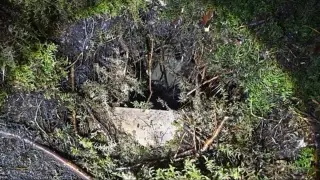
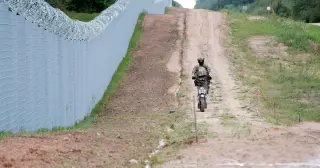
A Telegraph report cites experts, including Dr. Lynette Nusbacher, suggesting Iranian-backed groups such as Hamas or Hezbollah may have built tunnels used to smuggle migrants from Belarus into Poland, though there is no definitive proof. Polish authorities have uncovered four tunnels under the Belarus border, with about 180 migrants—mostly from Afghanistan and Pakistan—emerging in Poland, amid Belarus’s long-running strategy to destabilize Europe.
ISW’s February 23 update flags Moscow's use of Defender of the Fatherland Day to frame and enable limited rolling involuntary mobilization, with Putin and Medvedev pushing a responsibility narrative and Kremlin safeguards to blunt domestic backlash, including tighter internet controls and limited social protections if mobilization expands. On the battlefield, Ukraine continues to liberate southern areas with movements near Kupyansk, Oleksandrivka, and Verbove, though ISW notes contested Russian gains and a fluid front line. Russia aims to bolster intelligence and disrupt satellite communications, while Belarus increases military cooperation and drone activity. Ukrainian strikes hit oil infrastructure in Russia (Tatarstan) and Belgorod, and the war remains marked by heavy attrition and shifting control across Donetsk and Zaporizhzhia directions. ISW will continue monitoring frontline changes and refine its terrain maps as new evidence emerges.
Ukrainian forces remain on the defensive in southern Ukraine with ongoing advances near Kupyansk, Novopavlivka and Oleksandrivka, and Zelensky claiming about 300 km² liberated in the south; ISW cites roughly 169 km² of Ukrainian gains since Jan 1, 2026. Kyiv has intensified long‑range strikes against Russian defense‑industrial and energy assets (including the Votkinsk Plant in Udmurtia and the Neftegorsk gas plant). Russia continues a broad drone and missile campaign and is expanding information controls at home, with a new FSB‑backed law to block Telegram, while Belarus supports drone operations against Ukraine and NATO airspace. The war remains active across multiple fronts (Kharkiv, Donetsk, Zaporizhzhia, Kherson, Sumy), with ongoing infiltration attempts and battlefield interdictors on both sides.
At Milano Cortina 2026, 13 Russian and 7 Belarusian athletes compete under neutral banners as international sports bodies slowly ease bans, a move Ukraine opposes as undermining human rights commitments. Ukrainian skeleton racer Vladyslav Heraskevych recalls his 2022 protest and weighs the implications of Russia’s and Belarus’s broader return to competition, while sports federations navigate legal challenges and IOC verification to keep politics from overshadowing the Games.
At Milano Cortina 2026, athletes with Russian or Belarusian passports compete under the Independent Neutral Athletes (AIN) banner rather than for Russia or Belarus as nations; AIN has its own teal flag and lyric-free anthem and includes some Belarusian competitors banned as a nation in Paris 2024. The ROC was suspended by the IOC in 2023 for actions violating the Olympic Charter and Ukraine’s territorial integrity, so Russian competitors participate under AIN instead of ROC; there are two figure skating quota spots for AIN athletes with Russian passports, but they cannot compete in team events.
On Feb 1, Russian drones struck a Zaporizhzhia maternity hospital and a DTEK bus carrying miners in Dnipropetrovsk, causing multiple civilian casualties, while ISW notes Moscow remains focused on demoralizing Ukraine through civilian strikes. Diplomacy continues with planned trilateral talks in Abu Dhabi (Feb 4–5) as Kyiv and its partners urge negotiations, and Russian officials seek concessions on Donetsk/Luhansk and a frozen or demilitarized frontline; ISW warns ceding Donetsk would be a strategic mistake. SpaceX has restricted Starlink terminals in Ukraine to curb Russian drone use, and Russia is expanding military infrastructure near the Finnish border. Belarusian balloon incursions into Polish and Lithuanian airspace persist as part of a broader Phase Zero, with unidentified drones over German military sites also reported. On the battlefield, Ukrainian forces have made limited gains near Slovyansk and continue to contest multiple fronts (Sumy, Kharkiv, Donetsk, Zaporizhzhia) with no decisive breakthrough; ISW emphasizes the war remains costly and stalemated, while reaffirming that Western reporting on war crimes will be addressed but not detailed in these operational updates.
ISW’s Jan 29 assessment describes modest Russian advances across multiple fronts, a move toward finalized US‑Ukraine security guarantees with the US playing a key role, and Moscow’s rejection of long‑term safeguards or a sustained ceasefire, even as a reported week‑long energy‑strike moratorium circulates. The briefing also highlights Molniya FPV drones, Russia’s recruitment push for unmanned forces, and Belarusian airspace incursions as part of a broader Phase Zero prep for potential NATO confrontation.
ISW notes Moscow remains committed to its original war aims and rejects Western security guarantees as talks with Ukraine and the United States resume in Abu Dhabi; Russia is expanding recruitment for its Unmanned Systems Forces and intensifying mobilization tactics while Ukraine names a defense-tech advisor. Fighting continues across Kharkiv, Donetsk, Zaporizhzhia, and Kherson fronts with broad drone and missile strikes, and Belarus is pulling its military-industrial base closer to Russia. Western pressure could push concessions, but no durable peace breakthrough is evident.