
photography19.075 min read
Octopus clings to Risso’s dolphin captured off Devon, fueling marine research
19 days ago•Source: Digital Camera World

The latest photography stories, each synthesized from multiple sources with added background and context.
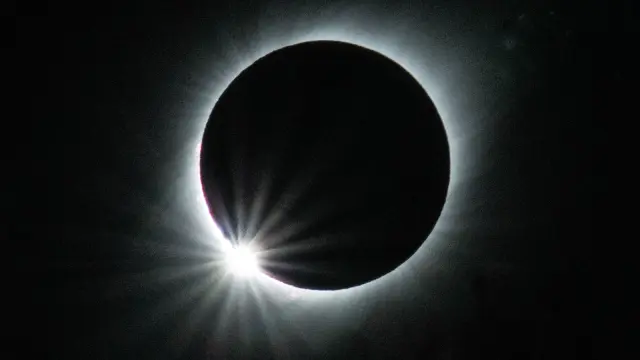
The August 2, 2027 total solar eclipse will bring up to 6 minutes 22 seconds of totality along a track from southern Spain through North Africa to Egypt; for photographers, the key is to be inside the path of totality with a foreground and clear skies, not just chase the longest duration. Use eclipse maps and planning apps to pick a location that suits your shot (sun altitude varies—from about 38° in Spain to 82° near Luxor). Recommended spots include Tarifa, Málaga, Cádiz (Spain); Tangier and Chefchaouen (Morocco); Oran, Mostaganem, M’Sila (Algeria); Tozeur, Sidi Bouhlel, Sfax (Tunisia); and Luxor, Siwa Oasis, Edfu, Kom Ombo (Egypt). Luxor offers the longest totality but will be crowded and near temple sites, so plan early, scout locations, protect gear from heat, and minimize camera operation during totality to maximize your viewing time and capture. Have a Plan B for clouds and consider diverse compositions, including wide landscapes or 360° captures.

PetaPixel•1 month ago
The Guardian•1 month ago

New Zealand-based astrophotographer Tom Rae rappelled about 100 meters into a glow‑worm–lit cave to capture a long‑exposure, star‑tracked night‑sky panorama that won first place in the Capture the Dark 2026 contest's Creatures of the Night category; the shot was filmed, and Rae spoke of challenging humidity and cave lighting.

Europe’s first total solar eclipse in decades occurred on Aug 12, 2026, with the path of totality crossing Greenland, Iceland, Spain and Portugal. Spain witnessed its mainland’s first total eclipse since 1905. Photographers shared striking images—including moments over historic sites like Burgos’ Frías Castle—and videos across social media, highlighting the continent’s rare celestial event.
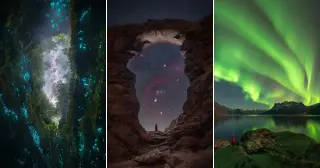
DarkSky International announced the Capture the Dark 2026 winners, a record-setting nighttime photography contest with 31 winning images across nine categories from photographers in more than 30 countries, highlighting the beauty of dark skies while underscoring the increasing impact of light pollution.

Australia and beyond are represented in the 2026 David Malin astrophotography awards, led by The Lunar Apennines on the Moon as the Overall and Solar System winner, with a gallery of Deep Sky, Nightscapes, and Wide-Field images plus honourable mentions—from auroras to nebulae and star clusters—captured by amateur photographers.
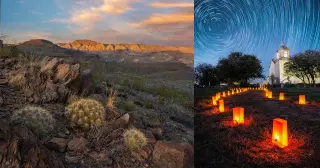
Texas landscape photographer Maegan Lanham spent about six and a half years visiting and photographing every Texas state park, chasing sunrises, revisiting favorite spots for changing light, and prioritizing lightweight gear for backcountry hikes and kayak shoots. Using OM SYSTEM gear (OM-1 Mark II with 12‑40mm and 7‑14mm lenses) and in‑camera tools like Live ND, Live Composite, Starry Sky AF, and focus stacking, she captures both landscape and occasional wildlife while emphasizing the experience and the conservation of public lands.

The Beaker Street Science Photography Prize 2026 has announced 16 finalists spanning endangered species, deep-sea life, dark-sky preservation and other natural phenomena. Highlights include Brett Guy’s The Holy Grail (bioluminescent algae, a subtle aurora, and the Milky Way) and Armando Ochoa Aguilar’s First Day (red handfish hatchlings). The lineup also features images exploring Tasmanian geology, wildlife conservation efforts, and atmospheric/oceanic forces. Public voting is open online, with top images to be shown at the Beaker Street Festival’s August exhibition (Aug 6–17, 2026) and winners announced during the event.

The Nature and Humans Photo Competition’s third edition crowns winners across conservation-themed and general categories, showcasing images that reveal both the beauty of nature and the troubling ways humans interact with animals, with cash prizes and gear vouchers for winners from 49 countries; the fourth edition is now open for entries.

A Guardian gallery showcases a global roster of Milky Way photographs for 2026, featuring remote locations from New Zealand to Argentina and Spain. Photographers describe demanding shoots and sophisticated techniques—long exposures, focus stacking, and post-processing—to reveal the galaxy with extraordinary clarity, amid challenging terrain, harsh weather, and strict light-pollution limits, underscoring the value of dark-sky conservation.

A detailed review of the Chinotechs L.D. Meter, a compact metal device that pairs a laser rangefinder with a light meter for film photographers. Available in Pro (7°) and Lite (30°) versions (plus NYX), it meters ISO 3–8000, supports aperture or shutter priority, and offers single/continuous metering with a 0.1m–50m rangefinder; the reviewer praises build quality, battery life, and versatility, but notes a fiddly control scheme due to few buttons. It’s positioned as a rare all-in-one meter for landscape/panoramic work, with a few alternatives like Keks KM-Q, Voigtlander VC Speed Meter, and Sekonic Speedmaster; price ranges around $119–$179, and it's available on B&H/KEH.

Photographer Angel Fux braved −28°C on Dent d’Hérens near the Matterhorn to capture a rare triple Milky Way arch—winter arc, summer arc, and Gegenschein—using a helicopter lift and a 40-hour workflow of 260 FITS exposures to create a new panoramic image of the Alps.