
Rivian Expands 3D Printing Operations to Accelerate Manufacturing
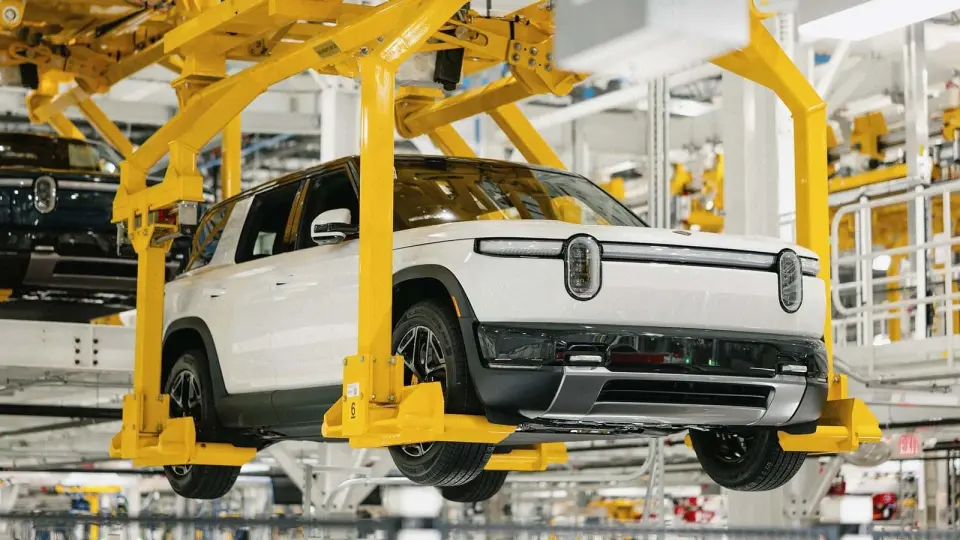
Rivian is scaling its additive manufacturing capabilities by installing new 3D printers at its Normal, Illinois, facility and investing in silicone-capable machines. The company has spent over $5 million on equipment and $1.7 million annually on materials, aiming to reduce production times from weeks to hours. While the technology has generated millions in savings, Rivian emphasizes speed as the primary benefit, allowing engineers to prototype and produce tools on demand without relying on external suppliers.
Key points
- Rivian has invested more than $5 million in 3D printing equipment and spends approximately $1.7 million annually on raw materials.
- The company is adding a new bay of printers at its Normal, Illinois, plant to enable on-demand part production for engineers.
- Additive manufacturing has reduced production times for certain components from weeks to days or even hours.
- Rivian is expanding its capabilities to include flexible silicone parts, moving beyond traditional plastics and metals.
- The technology is primarily used for prototyping, tooling, and internal manufacturing aids rather than final customer vehicle parts.
Background
The adoption of 3D printing in automotive manufacturing has accelerated as the technology becomes more commoditized and precise. While the technology has existed for decades, recent advancements in material properties and machine speed have made it viable for industrial-scale applications. Rivian’s expansion follows a broader industry trend where major automakers are integrating additive manufacturing to enhance agility and reduce dependency on traditional supply chains.
How outlets are covering it
InsideEVs and CNBC highlight Rivian’s strategic shift toward democratizing 3D printing across the company, with leadership citing 'well in the millions' in cost savings. However, Electric Vehicles notes that Rivian’s program is focused on prototypes and factory aids, with no plans to include 3D-printed parts in the official R2 vehicle line. Car and Driver provides specific operational details, noting that Rivian runs 35 industrial printers, mostly from Stratasys, and handles approximately 6,000 print requests annually. Ford and General Motors are also expanding their use of the technology; Ford has deployed 3D labs at over 23 plants and uses vending machines for printed tools, while GM uses 135 3D-printed components in the Cadillac Celestiq. Stratasys’s Fadi Abro notes that GM has successfully standardized the technology before scaling, a model other manufacturers are following.
Why it matters
The expansion of 3D printing in automotive manufacturing signals a shift toward more agile and cost-effective production methods. By reducing reliance on external suppliers and shortening development cycles, companies like Rivian, Ford, and GM can respond more quickly to design changes and production needs. This trend could lead to significant cost savings and improved efficiency across the industry, potentially influencing future vehicle design and manufacturing processes.
What to watch
Rivian plans to continue scaling its 3D printing operations, with the goal of making the technology accessible to all engineers. The company is also testing larger equipment, such as Stratasys’s F870 large-format printer, for advanced prototyping and factory-floor tooling. Ford expects to have 3D labs at more than 23 plants by the end of the year, while GM continues to expand its use of industrial Stratasys printers. The industry is likely to see further integration of additive manufacturing as material properties improve and machines become more economically accessible.
- Rivian Has Invested Millions In 3D Printing. Its Biggest Plans Are Still Ahead InsideEVs
- Automakers like Rivian and Ford are ‘democratizing 3D printing’ to reduce costs and increase speed CNBC
- Rivian Says 3D Printing Savings Run ‘Well in the Millions’ as It Scales Up Electric Vehicles
- How 3D printing is changing the way automakers build cars India Weekly
- Ford Put a Vending Machine on the F-150 Line. It Stocks Time. Business Model Analyst
Want the full story? Read the original reporting
Read on InsideEVs