
Record August Gas Prices Persist as US-Iran Ceasefire Expires and Hormuz Remains Closed
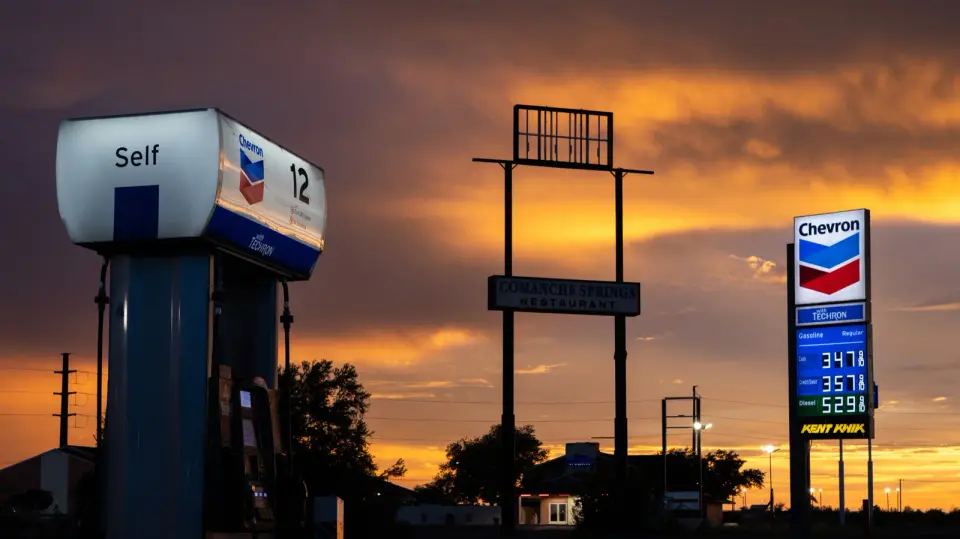
US gasoline prices have reached a record high for mid-August, averaging $4.07 per gallon, while diesel costs have surged to $5.47. This spike is driven by the expiration of the US-Iran ceasefire and the continued closure of the Strait of Hormuz. Although prices are lower than the 2022 peak, they remain significantly higher than a year ago, causing economic strain for households and raising concerns about broader inflation.
Key points
- The national average for regular gasoline reached $4.07 per gallon in mid-August, a record high for that time of year, while diesel averaged $5.47.
- The 60-day US-Iran memorandum of understanding expired on August 17 without a permanent peace deal, and President Trump confirmed no active negotiations are underway.
- The Strait of Hormuz remains closed, disrupting roughly 20% of global oil flows, with shipping traffic far below pre-war levels of 100-130 ships per day.
- Crude oil prices have stayed above $80 per barrel since August 10, with West Texas Intermediate trading around $85, compared to $63 a year ago.
- A July estimate from the Joint Economic Committee suggests higher gas prices have cost American households over $56.4 billion since the conflict began, averaging $477 per household.
Background
Gas prices had already hit mid-August records in early August 2026, driven by the ongoing US-Iran conflict and the US naval blockade. Previous analysis suggested the administration's strategy risked a deeper Middle East quagmire, with limited prospects for a quick resolution. The current situation reflects a continuation of these tensions, with no signs of de-escalation.
How outlets are covering it
Jalopnik emphasizes the political fallout, noting that Republican-controlled states like Alabama and Utah face the highest additional costs, while blue states like Washington and Oregon see lower impacts. KATU and WLUK focus on the logistical and market mechanics, highlighting the closure of the Strait of Hormuz and Ukrainian attacks on Russian refineries as key drivers of price increases. USA Today highlights the broader economic impact, noting that rising diesel costs are increasing prices for groceries and other goods due to higher logistics and shipping costs. All sources agree that the situation is unlikely to improve in the near term, with Iran showing little interest in negotiations and the US refusing to rush a deal.
Why it matters
The sustained high prices of gasoline and diesel are not only affecting drivers but are also contributing to broader inflation by increasing the cost of goods and services. The lack of a resolution to the US-Iran conflict and the continued closure of the Strait of Hormuz suggest that these high prices may persist, potentially impacting the US economy and consumer spending in the coming months.
What to watch
The next 48 hours will likely see continued high gas prices as the US and Iran remain in a stalemate. The expiration of the ceasefire and the lack of active negotiations suggest that the Strait of Hormuz will remain closed, keeping oil prices elevated. There is no immediate sign of a resolution, and the situation may worsen if tensions escalate further.
- August Gas Prices Set New Record As Republicans Sink America Deeper Into The Most Recent Quagmire Jalopnik
- Gas prices are rising, but drivers using this type of fuel have it worse thehill.com
- Gas prices climb in Oregon and nationwide, driven by Hormuz closure amid US-Iran war KATU
- Diesel spikes to $5.41 nationally as closure of Strait of Hormuz pressures prices WLUK
- Gas prices are climbing. How it impacts your wallet USA Today
Want the full story? Read the original reporting
Read on Jalopnik