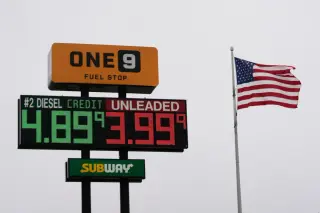
Gas Prices Break the $4 Mark as Iran Conflict Extends
Gas prices rose above $4 per gallon as the Iran war persists, signaling continued volatility in energy markets with potential implications for drivers and policy makers.
All articles tagged with #energy market

Gas prices rose above $4 per gallon as the Iran war persists, signaling continued volatility in energy markets with potential implications for drivers and policy makers.

Chevron’s chief financial officer, Eimear Bonner, said U.S. gasoline prices are likely to decline gradually as crude oil prices ease and Middle East tensions stabilize, noting a lag between oil costs and pump prices and signaling planned production growth of 7–10% this year. The remarks come as President Trump pushes an investigation into big oil for not lowering pump prices quickly enough, arguing prices should be closer to $2.25 per gallon. With the national average around $3.92/gal and crude futures easing, analysts say price declines typically take weeks due to taxes, refining and distribution costs, and market lag.

Oil prices rally after geopolitical shocks, but retail gasoline rises and falls more slowly in a rockets-and-feathers pattern; with 119 days since the Iran war began, the Strait of Hormuz remains volatile, and Iranian actions plus mine clearance keep shipping risk elevated and prices sticky. US regular gas averaged about $3.90 per gallon, still well above year-ago and prewar levels.

Brent crude fell for a fifth straight session to below $79 as markets price in a US‑Iran deal to reopen the Strait of Hormuz, potentially boosting supply; WTI hovered around $76. A 14‑point draft memorandum outlines waivers for Iranian exports and steps to move merchant ships, signaling a gradual resumption of Hormuz traffic. The broader pullback comes as near‑term supply loosens, with US inventories down about 8.3 million barrels, gasoline prices easing, and traders weighing implications for inflation and the Federal Reserve meeting.

US stocks rose on hopes that tentative US-Iran talks could stabilize energy supplies, with the S&P 500 up about 1.7%, Nasdaq up 3.1%, and the Dow near a record; Brent crude fell roughly 5% to just over $83 a barrel as markets priced in calmer energy flows, though officials warned full normalization could take months due to vessel backlogs around the Strait of Hormuz, with Asia also rallying and SpaceX gaining about 19.6% on its historic market debut.

Even with a deal to reopen the Strait of Hormuz, energy experts say it could take months for oil and gas supplies to return to normal as investment slowed by the closure is rebuilt and markets await a durable ceasefire and stable shipping routes before producers ramp up.

Oil is on track for its biggest May decline in six years, bringing relief to drivers as U.S. gas prices dip from May peaks; however, analysts warn that ongoing Strait of Hormuz tensions and uncertain Iran talks could spark a rebound if supply constraints persist, with industry leaders predicting potential price spikes.

China’s opaque strategic reserves and a deliberate cut in imports helped curb price spikes during the Hormuz disruption, as refiners trimmed runs, shifted to coal, and Beijing paused exporting certain refined products; with global inventories draining, analysts warn how long this can last, but China’s continued crude leverage has kept prices from soaring as feared.

Oil rose back above $100 a barrel after US strikes on Iran, with analysts warning the global energy market may be past the 'point of no return' as Hormuz shipping disruptions keep supplies tight; Brent had dipped near $96 earlier, but inventories remain critically low and demand could rise in summer, fueling ongoing volatility and warnings of a possible red zone in July–August, while European gas stores lag and UK energy bills could rise as gas prices climb.
As Memorial Day travel kicks off, AAA reports the national average for regular gas at about $4.56 a gallon, the highest in four years, up 3 cents from last week and roughly $1.38 higher than a year ago, driven by rising demand and tighter supply amid the ongoing Strait of Hormuz disruption; WTI crude settled near $98.26 a barrel as inventories fell and the EIA notes demand rose while supply dropped; EV charging costs remain at about 41 cents per kWh, and regional price gaps persist, with California the most expensive market and Mississippi the cheapest.

Analysts warn that the oil market could reach a critical turning point within a month, with the risk of sharp, non-linear price spikes and panic buying if supply constraints or geopolitical tensions tighten the market.

Gas prices topped $4 per gallon nationwide for the third time in U.S. history as disruptions at the Strait of Hormuz push costs higher; Massachusetts gas-station owners say rising wholesale prices are squeezing margins across the industry, with AAA reporting a 27-cent weekly jump.

The analysis explains how the US blockade and tightening sanctions threaten Iran's oil sector, potentially curbing exports, shrinking government revenue, and impacting global energy markets as Tehran seeks new buyers and navigates sanctions evasion.
Energy analysts warn of a fresh oil-and-gas price spike as global supplies tighten and Trump’s social-media jawboning adds volatility; a summer price shock around Memorial Day is possible, with inflationary spillovers likely even as officials tout strong U.S. production and claims prices will fall after the Iran conflict ends.
A Visual Capitalist map tracks 128–170 countries’ gasoline costs from late February to mid-April 2026, showing dramatic global spikes driven by the Iran conflict and Southeast Asia’s import dependence. Myanmar leads with a 101% jump, the U.S. is up about 35%, and prices range from $0.09/gal in Libya to $15.65/gal in Hong Kong, reflecting subsidies, taxes, and regional supply dynamics. The surge also risks cascading into higher fertilizer and food costs, while in the U.S. monthly gas bills vary widely by state due to driving distance (Wyoming ~$279 vs. New York ~$132).