
Black Friday 2026 Sales Rise 5.8% as Electronics Demand Outpaces Inflation
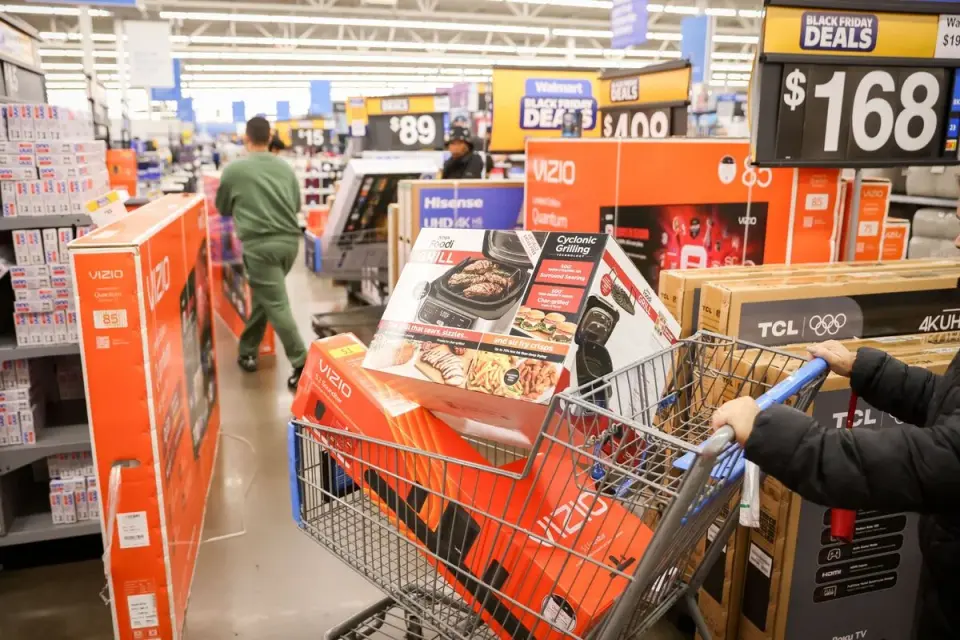
US retail sales excluding autos and gasoline rose 5.8% on Black Friday 2026, driven by strong demand for electronics and software. Online spending grew 13.4% to a record $13.1 billion, while in-store sales rose 3.8%, their strongest since 2022. Shoppers remained active despite elevated inflation and higher costs for essentials, with deep discounts and doorbuster deals attracting foot traffic.
Key points
- Mastercard SpendingPulse reported a 5.8% year-over-year increase in retail sales excluding autos and gasoline, unadjusted for inflation.
- E-commerce spending grew 13.4%, with Adobe Analytics reporting $13.1 billion in online sales, exceeding forecasts and rising 11% from 2025.
- In-store spending rose 3.8%, the strongest Black Friday performance since 2022, though foot traffic declined 2.9% to 4.2% depending on the tracker.
- Electronics and software spending rose nearly 8%, with laptops, televisions, video games, and smartphones among top sellers.
- Deep discounts, including 30% to 50% off, were necessary to attract shoppers, with doorbuster deals drawing early-morning crowds, particularly from Gen Z.
Background
Black Friday 2026 occurred amid elevated inflation, with US consumer prices rising 3.8% annualized in October, the highest since May, driven by energy costs. The spending surge followed a tech-focused holiday season, with earlier sales spikes around November 18-19 and Thanksgiving. Consumer confidence had ticked up in November to its highest since January 2025, despite concerns about AI spending and Nvidia scandals. The event followed a delayed Macy's Thanksgiving Day Parade due to severe weather, which was rescheduled to Saturday.
How outlets are covering it
Bloomberg and The New York Times emphasized the 5.8% overall sales increase and strong electronics demand, noting shoppers remained active despite inflation concerns. AP News highlighted the record online sales of $13.1 billion and the decline in in-store foot traffic, attributing it to a shift toward e-commerce and bad weather. Retail Dive focused on the impact of deep discounts, with Macy's and Bloomingdale's drawing crowds due to aggressive pricing, while off-price stores like T.J. Maxx and Burlington saw less traffic. Salesforce and Adobe Analytics provided differing online sales figures, with Adobe reporting $13.1 billion and Salesforce citing $19.1 billion in US sales, due to different data methodologies.
Why it matters
The 5.8% sales increase signals resilient consumer spending despite inflation, with electronics driving growth. The shift toward e-commerce and the importance of deep discounts suggest retailers must prioritize aggressive pricing to attract shoppers. The strong performance in-store, despite lower foot traffic, indicates that in-person shopping remains significant, especially for doorbuster deals. The data provides insight into consumer behavior during the holiday season, with implications for future retail strategies and economic trends.
What to watch
Retailers will continue holiday promotions through the following Monday, with activity expected to build around shipping cutoffs and a final in-store push before Christmas. The Federal Reserve is expected to hike interest rates for the second time this year at its next meeting, which could impact consumer spending. Full Q4 results will be revealed in months, providing a clearer picture of holiday season performance. The shift toward e-commerce and the importance of deep discounts are likely to continue, with retailers adapting to consumer price sensitivity and budget constraints.
- Black Friday Spending Jumps, Backed by Strong Electronics Demand Bloomberg.com
- Black Friday Shoppers Spend Big on Tech Despite Tight Budgets The New York Times
- US shoppers spent billions on Black Friday while seeking wide-ranging deals AP News
- US Black Friday online spend rises 11% to a new high of $13.1 billion Reuters
- Winners and losers of Black Friday 2026 Retail Dive
Want the full story? Read the original reporting
Read on Bloomberg.com