
Census Data Reveals California’s EV Lead and Homeowners’ Financial Edge
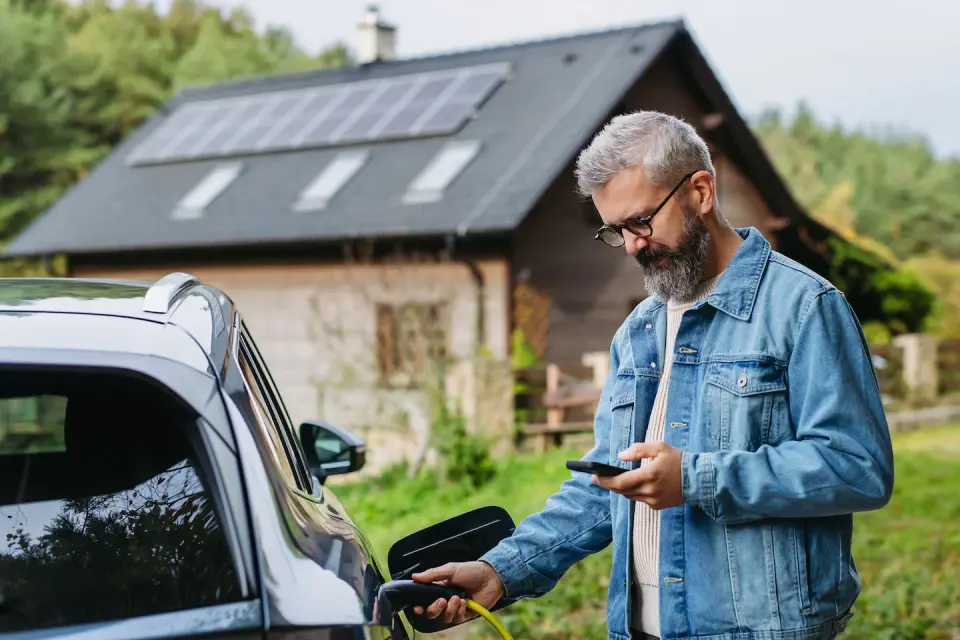
New U.S. Census Bureau data shows that electric vehicle (EV) ownership is highest in California, where 14% of households have an EV, more than double the national average of 5.5%. While EV adoption is concentrated in Western states and major metro areas, The Washington Post notes that homeowners gain a distinct economic advantage from electrifying their homes through solar panels and EV chargers, a benefit not available to renters.
Key points
- California leads the nation in EV adoption, with approximately 14% of households owning or leasing an electric vehicle, compared to the national average of 5.5%.
- Santa Clara County, California, has the highest county-level EV ownership rate at 24%, followed by Boulder County, Colorado, and Loudoun County, Virginia, at 13.9% each.
- The Washington Post highlights that homeowners who install solar panels and EV chargers enjoy a secret economic edge, as these investments increase property value and reduce energy costs, advantages renters do not share.
- EV ownership is significantly higher in major metropolitan areas; for instance, the Austin metro area has a 9.3% adoption rate, more than double Texas’s statewide rate of 4.5%.
- California accounted for nearly 30% of U.S. zero-emission passenger vehicle sales in 2025, despite comprising only 12% of the national population.
Background
This data follows earlier reports in November 2026 regarding the high costs homeowners face for electrical panel upgrades to support modern appliances, such as induction ranges. While some upgrades may be unnecessary, the broader trend of electrifying homes continues to drive infrastructure costs and benefits for property owners.
How outlets are covering it
The Washington Post focuses on the financial incentives for homeowners, arguing that going electric provides a unique economic advantage through asset appreciation and energy savings. In contrast, Axios and VisionMonday emphasize the geographic disparities in EV adoption, highlighting California’s dominance and the concentration of EVs in wealthy metropolitan areas. While the Census Bureau data provides hard numbers on ownership rates, the Washington Post interprets these trends through the lens of personal finance and property value, suggesting that the benefits of electrification are unevenly distributed based on housing status.
Why it matters
Understanding the geographic and socioeconomic distribution of EV adoption is crucial for policymakers and infrastructure planners. The data indicates that EV infrastructure expansion will likely follow high-income, urban, and Western patterns, potentially widening the gap between early adopters and the rest of the country. Additionally, the financial advantages for homeowners may influence housing markets and energy policy, as the economic benefits of electrification are not equally accessible to all residents.
What to watch
Future Census Bureau data will track whether EV adoption rates shift after 2025, the first year the agency asked about EV ownership. Analysts will watch to see if charging infrastructure expansion in lower-income areas can boost adoption rates, and how federal and state policies impact the gap between California and other states.
- Why homeowners who go electric have a secret advantage The Washington Post
- Where electric vehicles are most common Axios
- California Leads U.S. in Electric Vehicle Ownership Rates, Census Bureau Finds VisionMonday.com
- Where EV ownership is most common Mezha.net
Want the full story? Read the original reporting
Read on The Washington Post