Tag

Homeownership

All articles tagged with #homeownership

Census Data Reveals California’s EV Lead and Homeowners’ Financial Edge
economy13 days ago

Census Data Reveals California’s EV Lead and Homeowners’ Financial Edge

New U.S. Census Bureau data shows that electric vehicle (EV) ownership is highest in California, where 14% of households have an EV, more than double the national average of 5.5%. While EV adoption is concentrated in Western states and major metro areas, The Washington Post notes that homeowners gain a distinct economic advantage from electrifying their homes through solar panels and EV chargers, a benefit not available to renters.
New Jersey Homeowners Face $508,000 Lifetime Property Tax Bill, 15x Alabama's
personal-finance1 month ago

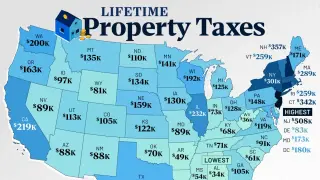
New Jersey Homeowners Face $508,000 Lifetime Property Tax Bill, 15x Alabama's

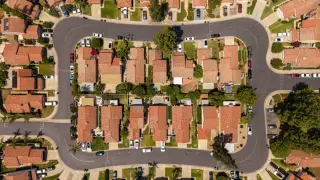
Lifetime property taxes in the U.S. vary dramatically by state, ranging from $34,000 in Alabama to $508,000 in New Jersey over 40 years. Northeastern states dominate the highest-cost rankings, while high home values in California drive costs despite low tax rates. Nationwide, the average lifetime bill is $145,853.

Investopedia Report: American Dream Lifetime Cost Hits $5.3M, Exceeding Typical Earnings by $1.2M
personal-finance1 month ago

Investopedia Report: American Dream Lifetime Cost Hits $5.3M, Exceeding Typical Earnings by $1.2M

A new Investopedia analysis estimates the lifetime cost of the American Dream at $5.3 million in 2026, a 4.1% increase from 2025. This figure exceeds the projected lifetime earnings of a typical bachelor’s degree holder by $1.2 million. Homeownership, vehicle ownership, and retirement are the most expensive components, while rising costs for raising children and college outpace wage growth.

Investopedia: The American Dream's $5.3M Cost Leaves College Grads $1.2M Short
economy1 month ago

Investopedia: The American Dream's $5.3M Cost Leaves College Grads $1.2M Short

Investopedia estimates the lifetime cost of the American Dream at $5.32 million in 2026, a 4.1% increase. Homeownership and child-rearing costs have surged, while private-sector wages grew only 3.1%. A bachelor's degree holder is projected to earn roughly $4.1 million over a lifetime, leaving a $1.2 million shortfall. Despite this gap, 69% of US adults still believe they will achieve the dream.

Financial Experts Urge Borrowers to Abandon the 'Good Debt' Label
personal-finance1 month ago

Financial Experts Urge Borrowers to Abandon the 'Good Debt' Label

Financial advisors are increasingly rejecting the term 'good debt' for mortgages and student loans, arguing that the label obscures significant financial risks. Experts warn that such debt can become burdensome due to unexpected costs, interest rate changes, or over-optimistic income projections. They advise treating borrowing as a strict business decision, prioritizing long-term affordability and emotional stability over societal pressure to acquire assets like homes or degrees.

Mortgage Rates Hit 7.4%, Deepening Housing Divide
economy1 month ago

Mortgage Rates Hit 7.4%, Deepening Housing Divide

The average 30-year fixed mortgage rate has stabilized at 7.4%, marking the highest level since late 2023. This surge, driven by persistent inflation and rising Treasury yields, is severely limiting buyer affordability. While high-income buyers continue to transact, lower-income consumers are being priced out, creating a 'K-shaped' housing market. Fannie Mae has sharply raised its forecast for 2027, predicting rates will remain near 7.5%, while existing home sales and mortgage applications have dropped significantly.

The 2026 American Dream Price Tag Hits $5.3 Million, Outpacing Wage Growth
economy1 month ago

The 2026 American Dream Price Tag Hits $5.3 Million, Outpacing Wage Growth

Investopedia estimates the lifetime cost of the American Dream at $5.3 million in 2026, a nearly $2 million increase from 2023. This figure exceeds the median career earnings of a bachelor's degree holder by nearly $2 million. Homeownership and car maintenance are the largest expenses, while raising children and college costs surged 9%. Despite the financial gap, 69% of US adults believe they will achieve the dream.

economy1 month ago

Lock-in Effect Freezes Housing Market as Sub-4% Mortgages Resist 7% Rate Environment

Homeowners are refusing to sell homes with sub-4% mortgages, freezing the market as new rates exceed 7%. Existing home sales have dropped 25% from pre-pandemic levels. The share of ultra-low-rate mortgages has stalled, with below-3% loans accounting for 19.2% of all outstanding mortgages in Q2 2026. This lock-in effect persists despite rising rates, as the cost difference makes moving financially prohibitive for most owners.

Low-rate homeowners are rushing to pay off mortgages, but experts say they should hold on
personal-finance2 months ago

Low-rate homeowners are rushing to pay off mortgages, but experts say they should hold on

Nearly one in four U.S. homeowners is paying off their mortgage faster than required, but data shows those with the lowest interest rates are the most likely to do so. Financial experts argue this is often a mistake, as low-rate debt is cheaper than most other borrowing. While extra payments can save interest, experts advise prioritizing higher-interest debts or investing instead, especially when mortgage rates are below 4%.

Why Paying Off Your Mortgage Early Might Be a Financial Mistake
personal-finance2 months ago

Why Paying Off Your Mortgage Early Might Be a Financial Mistake

While roughly 25% of mortgage holders make extra payments to save on interest, financial experts argue this strategy is often suboptimal for those with low-rate loans. Paying down a mortgage with a rate below 3% may be less efficient than paying off higher-interest debt or investing in the stock market. The decision depends heavily on individual interest rates, with extra payments being most beneficial for those paying over 6%.

New measure: only about half of U.S. adults own homes
economy4 months ago

New measure: only about half of U.S. adults own homes

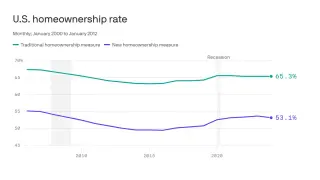
The Federal Reserve Bank of Minneapolis introduces the homeowners-to-population ratio (HPOP), counting adults 18+ who own their home rather than homes that are owner-occupied. This yields a national rate of about 53%—well below the traditional 65%—with even steeper gaps for those under 35 (22% vs 37%). The change stems from counting individuals instead of houses and from multi-generational living in which adult children or others reside in owner-occupied homes. State rates drop to roughly California 41%, Hawaii 42–43%, and New York around 43%. The findings suggest the U.S. housing affordability crisis is broader than the standard measure indicates and could influence future housing policy and programs.

Parental Help Is the New Path to the American Dream
economy4 months ago

Parental Help Is the New Path to the American Dream

The CNN piece argues that the traditional route to wealth—college, work, saving, and buying a home—now increasingly depends on family financial help. With rising costs and debt, many young adults rely on parents for ongoing support, and some households have inherited large sums that jump‑start homeownership or retirement. Fed data show nearly half of adults ages 18–29 received nonresident assistance for recurring expenses, and about as many live with parents, underscoring how access to the “American dream” now hinges on family wealth and support rather than earnings alone.