
Fed Dissenters Warn Inaction Risks Entrenched Inflation
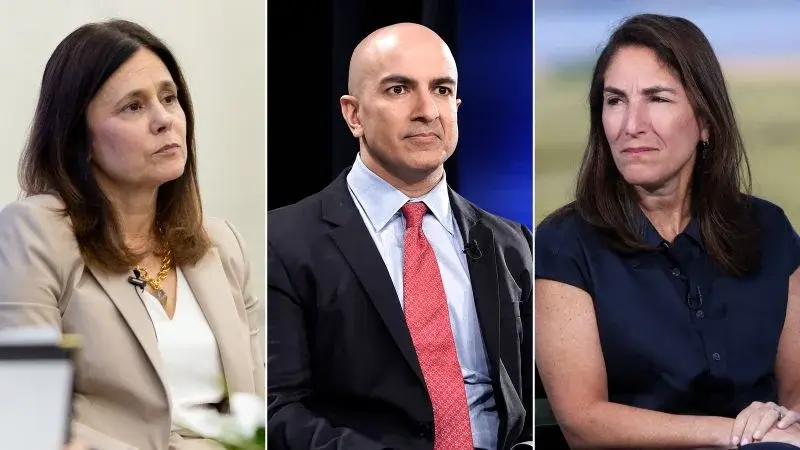
Three Federal Reserve officials dissented from the decision to hold interest rates steady, arguing that inaction risks allowing inflation to become entrenched. They advocated for small rate hikes to address demand-side pressures, even as the broader committee maintained the current stance.
Key points
- Beth Hammack, Neel Kashkari, and Lorie Logan dissented from the FOMC's decision to hold rates at 3.5%-3.75%.
- The dissenters argued that current borrowing costs are not sufficiently restraining the economy to bring inflation down.
- Hammack cited broadening pricing pressures and consumer despair, while Kashkari pointed to AI data center investment as a new demand driver.
- Logan noted that labor and financial market conditions indicate monetary policy is not currently restraining the economy.
- The three officials emphasized that modest rate hikes now could prevent the need for more aggressive tightening later.
Background
The Federal Reserve has held its benchmark lending rate at 3.5%-3.75% for five consecutive meetings in 2026, following three rate cuts in late 2025. This decision comes amid persistent inflation, which has remained above the Fed's 2% target for over five years. Recent inflation pressures have been exacerbated by the Iran war, which destabilized global energy markets, and President Trump's tariffs. While annual inflation fell to 3.7% in June from 4.1% in May, it remains well above the target. The labor market has shown stability, with the unemployment rate holding steady at 4.2% in the first half of 2026, after a weak pace in 2025. Previous dissents under Fed Chair Jerome Powell were rare but increased during the second Trump administration as economic uncertainty rose. Current Fed Chair Kevin Warsh has encouraged open disagreement within the Fed but has not signaled his own stance on future rate moves, leading some to view dissents as the new form of forward guidance.
How outlets are covering it
CNN, CNBC, and Axios all report on the dissent by Hammack, Kashkari, and Logan, but emphasize different aspects of their arguments. CNN highlights the broader inflation pressures, including energy costs and AI spending, and notes the risk of inflation becoming entrenched. CNBC focuses on the dissenters' call for action to stave off inflation, with Hammack emphasizing the need to act now and Kashkari advocating for small moves to prevent larger ones later. Axios underscores the dissenters' focus on the demand side of the economy and the potential for successive supply shocks to lead to entrenched inflation, drawing parallels to the 1970s. All three outlets agree that the dissenters are not calling for aggressive tightening but rather for modest moves to reduce the risk of more significant actions later. The sources also note that the labor market remains stable, which the dissenters argue supports the case for addressing inflation more aggressively.
Why it matters
The dissent by three Fed officials signals a growing concern within the Federal Reserve that inaction on interest rates could allow inflation to become entrenched, potentially leading to more significant economic disruptions. This could impact borrowing costs, consumer spending, and overall economic stability. The dissent also highlights the complexity of addressing inflation in the face of supply-side shocks, such as energy price increases, and the potential for demand-side pressures to exacerbate the issue. The outcome of this debate could influence future Fed policy decisions and have broader implications for the economy and financial markets.
What to watch
The coming months will determine whether the arguments of the dissenters gain traction among other FOMC members. If inflation remains stubborn, there is a possibility that the Fed may reconsider its stance and implement rate hikes. The next FOMC meeting will be a key indicator of whether the dissenters' views are gaining momentum. Additionally, the Fed will continue to monitor economic data, including inflation and labor market indicators, to inform its policy decisions. The outcome of these decisions could have significant implications for borrowing costs, consumer spending, and overall economic stability.
- Fed officials warn not raising interest rates was a mistake CNN
- Fed officials who voted to hike rates say action is needed now against inflation CNBC
- Spooked investors demand clarity on Fed’s anti-inflation strategy The Washington Post
- The Problem With Warsh’s Deference to Markets WSJ
- Fed rates dissenters make their case for higher rates Axios
Want the full story? Read the original reporting
Read on CNN