
Hot October CPI Data Pushes Fed Officials Toward Aggressive Rate Hikes
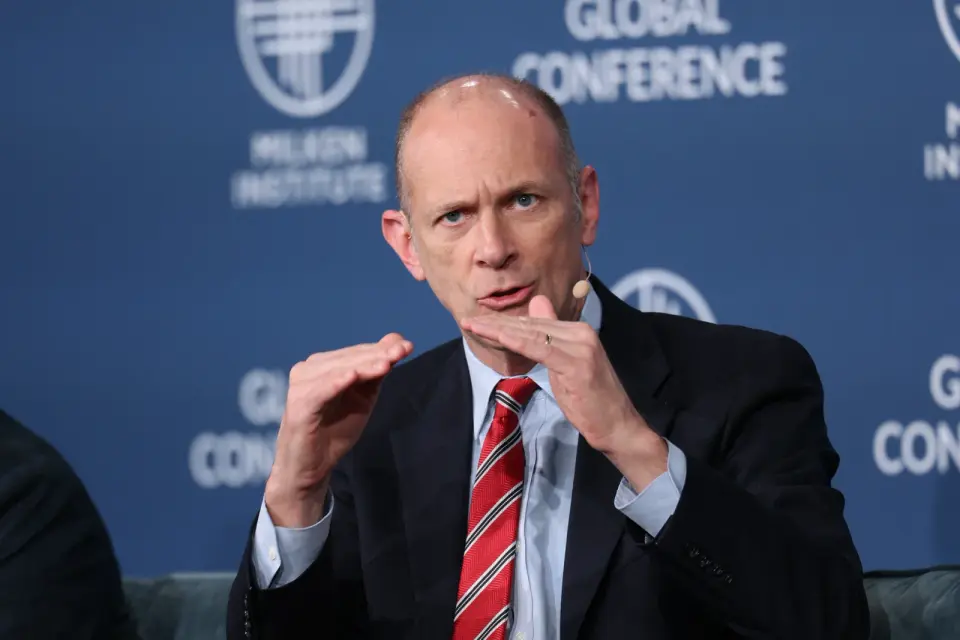
The Federal Reserve faces mounting pressure to raise interest rates more aggressively after October inflation data exceeded expectations. Chicago Fed President Austan Goolsbee called the report 'borderline disturbing,' while Governor Christopher Waller confirmed his openness to a 50 basis point hike. Market odds for a larger rate increase have risen, reflecting concerns over persistent price pressures from tariffs, energy, and AI infrastructure spending.
Key points
- October Consumer Price Index rose 0.4%, higher than the 0.3% expected by analysts, marking the third consecutive month of outsized price increases.
- Core CPI, which excludes volatile food and energy costs, also climbed 0.3%, matching the threshold cited by Fed Governor Christopher Waller as justification for a larger rate hike.
- Chicago Fed President Austan Goolsbee described the data as 'distressing' and noted that tariff-driven price increases have not faded as anticipated, while services inflation remains stubbornly high.
- Dallas Fed President Lorie Logan indicated support for two additional quarter-point hikes, suggesting the Fed may move more rapidly this winter than in previous months.
- Market expectations have shifted, with the probability of a 50 basis point hike in December rising to 13.2%, up from near zero, while a 25 basis point hike remains the most likely outcome at 86.8%.
Background
The Federal Reserve held interest rates steady at 3.75% to 4.00% in October after a 25 basis point hike in September. Prior to the October CPI release, Governor Christopher Waller had signaled that a 50 basis point increase was possible if inflation data remained elevated, warning that a smaller hike could damage the central bank's credibility. This debate follows a period of persistent inflation driven by the Iran conflict, AI infrastructure spending, and tariff impacts, which have kept price pressures above the Fed's 2% target.
How outlets are covering it
While all sources agree on the hawkish shift in Fed rhetoric, they emphasize different drivers. International Business Times and CNBC focus on the immediate reaction to the CPI data and Waller's conditional stance. Yahoo Finance highlights a broader structural concern, with Goolsbee warning that AI data center investment is causing 'demand overheating' that could sustain inflation beyond technology sectors. Seeking Alpha notes a 'K-shaped' economy, where AI and energy costs persist even as other factors like tariffs may fade. There is slight divergence in market expectations: CME FedWatch data cited by IBT and CNBC shows a 13.2% to 15% chance of a 50 basis point hike, while Deutsche Bank analysts expect hikes in December, January, and March, viewing a 50 basis point move as unlikely in their base case.
Why it matters
The shift toward potentially larger rate hikes signals that the Federal Reserve is prioritizing inflation control over economic growth, risking a slowdown in consumer spending and business investment. If the Fed fails to act decisively, it risks losing credibility, which could lead to higher long-term interest rates and increased borrowing costs for households and corporations. The debate over the pace of hikes also reflects uncertainty about whether current inflation is driven by transitory factors like tariffs or structural issues like AI-driven demand, which will determine the duration of tight monetary policy.
What to watch
The Federal Reserve will decide on interest rates at its December meeting, with markets now pricing in a near-certain hike. The key question is whether the increase will be 25 or 50 basis points. Analysts will monitor November inflation data and further comments from Fed officials, including Philadelphia Fed President Anna Paulson and Fed Governor Michelle Bowman, who have noted persistent AI-related price pressures. A 50 basis point hike would be the first since 2022 and could signal a more aggressive stance in the coming year.
- A Fed Governor Called the Latest Inflation Data 'Borderline Disturbing.' A Half-Point Hike is Now Firmly on the Table. International Business Times
- Fed's Goolsbee calls inflation report 'borderline disturbing' as central bank weighs more hikes CNBC
- Fed’s Goolsbee Says October CPI Report ‘Borderline Disturbing’ Bloomberg.com
- Fed’s Goolsbee Warns AI Data Center Boom Is Starting to Look Like ‘Demand Overheating,’ Says Central Bankers Must Be ‘Aggressive Up Front’ Yahoo Finance
- Fed Speak Turns Hawkish Seeking Alpha
Want the full story? Read the original reporting
Read on International Business Times