
Mortgage rates forecast to stay above 7% through 2027, suppressing US housing activity
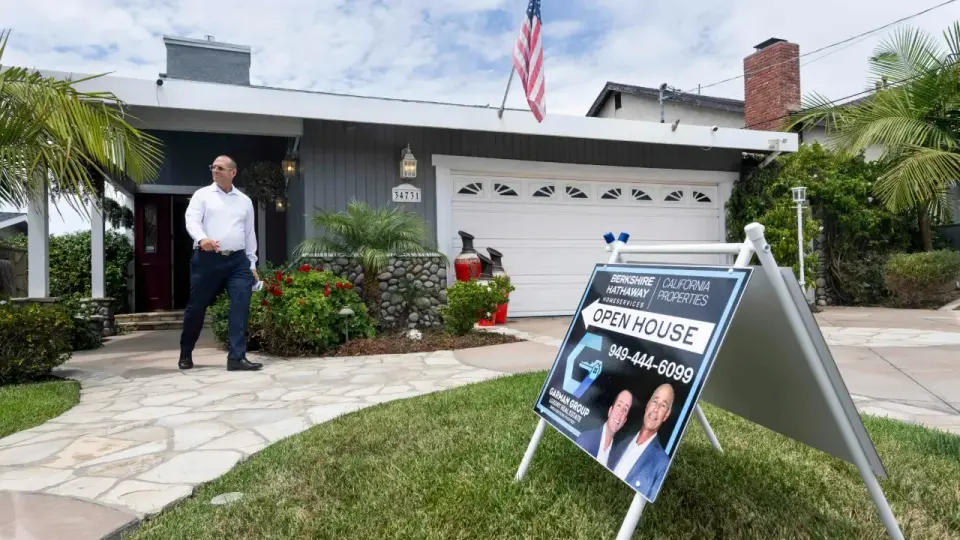
The Mortgage Bankers Association forecasts 30-year fixed mortgage rates will remain above 7% throughout 2027, a level that is currently suppressing home sales and refinance applications. While Goldman Sachs expects rates to ease slightly to 6.4% next year, affordability challenges will persist, leading to a projected decline in existing home sales and anemic price growth. The high-rate environment is creating a 'lock-in' effect where homeowners with lower rates avoid selling, while new buyers face steep affordability hurdles despite some seller concessions.
Key points
- Mortgage Bankers Association chief economist Mike Fratantoni projects 30-year fixed mortgage rates will stay above 7% for all of 2027, citing geopolitical tensions, oil prices, and federal deficits as key drivers.
- Home purchase applications have fallen approximately 15% year-over-year, while refinance applications have dropped further due to the lack of incentive to swap existing low-rate loans for current market rates.
- Goldman Sachs Research forecasts existing home sales will total 3.9 million in 2027, down 26% from 2019 levels, with home price growth expected to slow to just 0.8% year-over-year.
- The 'lock-in' effect is severe, with over 95% of mortgage borrowers holding rates below current market levels, discouraging mobility and reducing inventory in the housing market.
- The Federal Reserve maintained its benchmark interest rates on October 28, signaling that economic activity remains strong and inflation control remains a priority, which keeps borrowing costs elevated.
Background
Mortgage rates have risen significantly since the start of 2026, climbing from 6.16% in January to a peak of 7.4% in early October, the highest level since late 2023. This surge follows a period of rapid rate increases in 2022 that created a 'lock-in' dynamic as homeowners with pandemic-era low rates avoided selling. Recent data shows a modest decline in rates in late October, but forecasts from Fannie Mae and other institutions indicate that rates will remain elevated through 2027 due to persistent inflation and geopolitical uncertainties.
How outlets are covering it
Outlets differ on the trajectory and impact of high rates. The Mortgage Bankers Association, via Mike Fratantoni, emphasizes that rates will remain above 7% through 2027, highlighting the negative impact on affordability and the 'lock-in' effect. Goldman Sachs offers a slightly more optimistic view on rates, forecasting a decline to 6.4% in 2027, but agrees that affordability will remain a dominant headwind, leading to a drop in home sales and anemic price growth. Yahoo Finance highlights a counterintuitive perspective from a mortgage lender, suggesting that high rates are a 'good sign' of the Federal Reserve effectively combating inflation, which may eventually lead to rate cuts. Business Insider focuses on practical solutions for buyers, such as seller-funded temporary rate buydowns, to mitigate the impact of high rates on monthly payments. Overall, while there is consensus that high rates are suppressing activity, there is divergence on the speed of rate decline and the immediate strategies available to buyers.
Why it matters
Sustained high mortgage rates are reshaping the US housing market by reducing mobility, slowing sales, and pressuring home prices. The 'lock-in' effect is limiting inventory, which could keep prices elevated despite slowing demand. For buyers, the affordability crisis is intensifying, particularly for first-time buyers, as high rates and high prices outpace wage growth. The Federal Reserve's stance on interest rates and its impact on inflation will be critical in determining when mortgage rates might begin to decline, affecting the broader economy and household wealth.
What to watch
The Federal Reserve is expected to vote on interest rates again in December 2026. Mortgage rates are sensitive to developments in the Middle East, oil prices, and the path of the Federal Reserve. Goldman Sachs expects housing activity to begin recovering in the second half of 2027 as mortgage rates decline, but this recovery will be gradual. Homebuilders are expected to see a decline in single-family starts in 2027, and the homeowner vacancy rate is projected to rise slightly. Buyers may increasingly look to seller concessions and temporary rate buydowns to manage affordability in the near term.
- A key hurdle for homebuyers may stick around through 2027 Fox Business
- The Outlook for US Housing in 2027 amid Rising Mortgage Rates Goldman Sachs
- Mortgage Professional Says High Rates Could Have an Unexpected Benefit for Homebuyers Yahoo Finance
- Mortgage rates are high, but buyers can still negotiate a break. A real estate investor and agent explains how. Business Insider
- Rates are up... now what? Chino Valley Champion
Want the full story? Read the original reporting
Read on Fox Business