
Mortgage Rates Reach 7.4% as Housing Market Faces Triple Squeeze
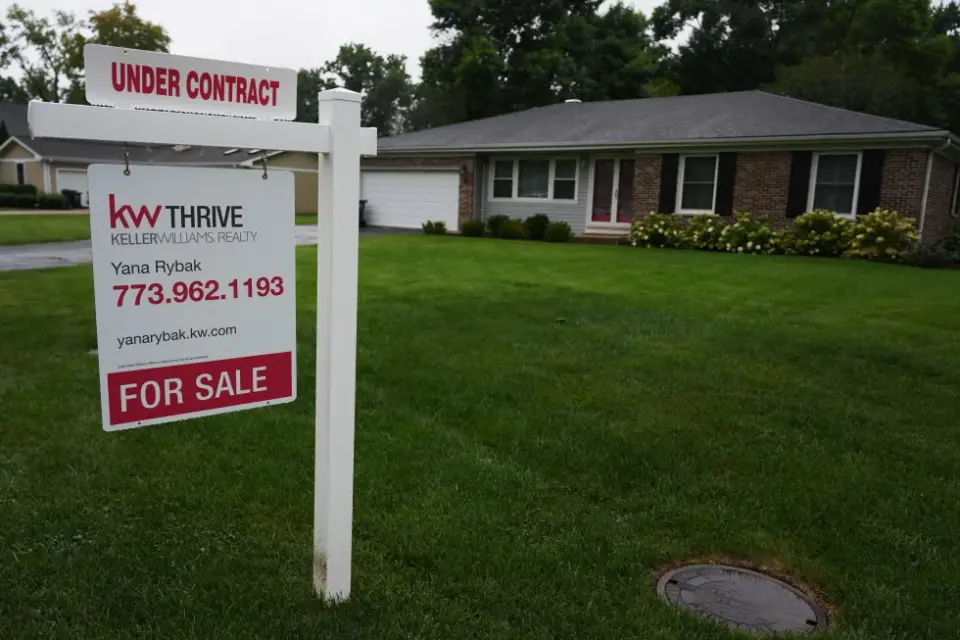
The average 30-year fixed mortgage rate has climbed to 7.4%, marking the highest level in nearly three years. This surge is freezing the housing market, with existing home sales slowing to their lowest pace in over a year and mortgage applications dropping for the fifth consecutive week. The rise in rates is attributed to persistent inflation and geopolitical tensions, including the war in Iran, which have pushed Treasury yields higher. Consequently, refinance applications have fallen to their lowest levels since January 2025, while potential buyers are delaying purchases due to unaffordable costs.
Key points
- Freddie Mac reported the average 30-year fixed mortgage rate at 7.4% on October 8, 2026, up from 7.28% the previous week.
- The National Association of Realtors noted existing home sales fell 2% in August to a seasonally adjusted annual rate of 3.98 million units, the slowest pace in over a year.
- Mortgage applications fell for the fifth straight week, with refinance applications dropping to less than half of last year's volume.
- The rate is the highest since November 2023, having dipped below 6% in February 2026 before rising again due to inflation and the Iran war.
- Homeowners with low rates are reluctant to sell, keeping inventory tight and prices high, while renters continue to face elevated costs.
Background
Mortgage rates had previously peaked at 7.58% in September 2026, driven by multi-year high Treasury yields and oil prices. In late September, the 10-year Treasury yield reached 5.293%, its highest since 2007. Experts noted that while the Federal Reserve influences short-term rates, long-term mortgage rates are primarily driven by Treasury yields, which are sensitive to inflation and geopolitical risks. Recent coverage indicated that buyers were exploring adjustable-rate mortgages and rate buydowns to mitigate the impact of rising costs.
How outlets are covering it
The New York Times emphasizes the 'unwelcome combination' of surging rates and climbing home prices, citing Zillow economist Kara Ng on the loss of affordability optimism. AP News highlights the broader market freeze, noting that the rise in rates is keeping homeowners from refinancing and buyers from purchasing. ClickOnDetroit provides a local perspective, noting that the 30-year rate hit 7.49% earlier in the week, and explains how the 'lock-in effect' of low-rate homeowners is keeping inventory tight. All sources agree that the Iran war and continued inflation are primary drivers of the rate increase, though they differ in emphasis: NYT focuses on the affordability crisis for buyers, AP on the volume of applications, and ClickOnDetroit on the structural market dynamics.
Why it matters
The rise in mortgage rates to a three-year high is significantly impacting the U.S. housing market by reducing affordability and slowing sales. This trend affects not only potential buyers but also homeowners considering refinancing or selling, leading to a tighter inventory and sustained high home prices. The situation underscores the sensitivity of long-term borrowing costs to inflation and geopolitical events, with potential long-term effects on the broader economy and consumer spending.
What to watch
Market analysts suggest that mortgage rates are likely to remain elevated unless inflation moderates and long-term Treasury yields fall. Homebuyers are advised to optimize credit scores and down payments to secure lower rates, while some are turning to adjustable-rate mortgages or rate buydowns. The Federal Reserve's future policy decisions on short-term rates may indirectly influence long-term rates, but the primary driver remains the 10-year Treasury yield. Continued monitoring of inflation data and geopolitical developments will be crucial for predicting future rate movements.
- Average long-term US mortgage rate at highest level in nearly 3 years after 7th weekly rise in a row AP News
- Highest Mortgage Rates in 3 Years Chills the Housing Market The New York Times
- Here's the latest sticker shock: Borrowing for a mortgage — or a car NPR
- Mortgage rates hit 7.49% — what it means for buyers, sellers and renters ClickOnDetroit | WDIV Local 4
- Who would buy a home at today's mortgage rates? Yahoo Finance
Want the full story? Read the original reporting
Read on AP News