
Spider-Man Costumes Cost 17 Times More Than Inflation-Adjusted 1974 Price
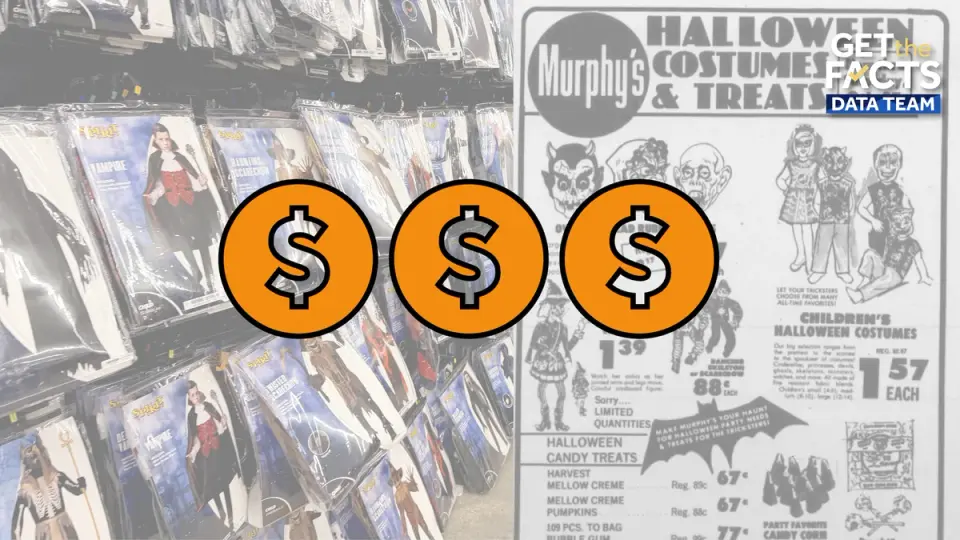
U.S. consumers are expected to spend an average of $59.29 on Halloween costumes in 2026, with total industry revenue reaching $13.5 billion. A data analysis by WTAE reveals that basic Spider-Man costumes have increased from $2.94 in 1974 to $49.99 today, far exceeding the inflation-adjusted price of $19.39. Seventy-nine percent of shoppers report expecting higher prices this year due to tariffs, according to the National Retail Federation.
Key points
- Average U.S. adult spending on Halloween costumes is projected at $59.29 for 2026, per the Halloween and Costume Association.
- Total U.S. Halloween spending is expected to reach $13.5 billion, with approximately $4.4 billion allocated specifically to costumes, according to the National Retail Federation.
- A 1974 newspaper advertisement listed a Spider-Man costume at $2.94; adjusted for inflation to 2026 dollars, this equals $19.39.
- The current price for a basic children's Spider-Man costume on Spirit Halloween's website is $49.99, significantly higher than the inflation-adjusted historical cost.
- Seventy-nine percent of shoppers surveyed by the National Retail Federation expect Halloween prices to be higher this year due to tariffs.
- Spider-Man was the most popular children's costume in 2026, according to the National Retail Federation, mirroring its popularity in 1974.
Background
Previous coverage from our archive highlights the same pricing trends, noting that current costs far exceed inflation-adjusted historical values. Additionally, earlier reports have discussed the 'Halloween body' trend, where social media pressure to achieve thinness for costumes contributes to disordered eating behaviors among young adults. Another recent story detailed Heidi Klum's 2026 Halloween costume, featuring grotesque prosthetics, illustrating the high-end, elaborate nature of modern costume culture.
Why it matters
The significant gap between inflation-adjusted historical prices and current retail prices for basic costumes indicates that consumer costs are rising faster than general inflation. This trend, compounded by tariff-related price increases, impacts household budgets during a major seasonal shopping period. The data highlights how specific product categories, like costumes, may experience price surges beyond broader economic indicators, affecting consumer behavior and spending patterns.
What to watch
Consumers may continue to face elevated prices for Halloween items as tariffs and supply chain factors persist. Retailers like Spirit Halloween may adjust pricing strategies or introduce more budget-friendly options to compete. The National Retail Federation and other industry groups will likely monitor spending trends through the end of the year to assess the full impact of price increases on overall Halloween revenue.
Want the full story? Read the original reporting
Read on WTAE