
Spider-Man Costumes Now Cost 17 Times More Than 1974 Prices
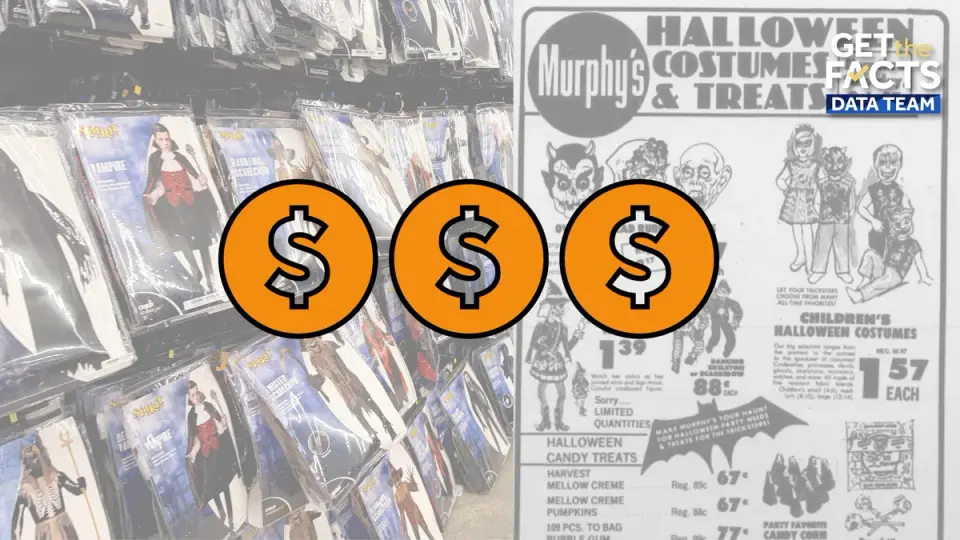
U.S. consumers are expected to spend an average of $59.29 on Halloween costumes in 2026, contributing to a total industry revenue of $13.5 billion. A data analysis reveals that basic Spider-Man costumes have risen from $2.94 in 1974 to $49.99 today, far exceeding the inflation-adjusted price of $19.39. Seventy-nine percent of shoppers report expecting higher prices this year due to tariffs, according to the National Retail Federation.
Key points
- Adults plan to spend an average of $59.29 on costumes in 2026, per the Halloween and Costume Association.
- Total U.S. Halloween spending is projected to reach $13.5 billion, with $4.4 billion allocated specifically for costumes.
- A basic Spider-Man costume cost $2.94 in 1974, which adjusts to $19.39 in 2026 dollars, but currently sells for $49.99 at Spirit Halloween.
- Seventy-nine percent of shoppers expect prices to be higher this year, citing the impact of tariffs.
- Spider-Man remains the most popular children's costume in 2026, according to the National Retail Federation.
Background
Recent coverage has highlighted the significant price increases in Halloween costumes, with multiple outlets noting that current prices far exceed inflation-adjusted historical costs. Additionally, social media trends have introduced new pressures, such as the 'Halloween body' phenomenon, which links costume aesthetics to eating disorder risks among young adults.
Why it matters
The substantial gap between inflation-adjusted historical prices and current retail costs indicates that Halloween costumes are becoming a more expensive luxury, driven by factors beyond general inflation, such as tariffs and increased product variety. This trend impacts household budgets during a season already associated with high discretionary spending.
What to watch
Consumers may continue to face elevated prices for seasonal goods as tariff impacts persist. Retailers might introduce more premium variants, further driving up average spending, while shoppers may seek budget-friendly alternatives or second-hand options to manage costs.
Want the full story? Read the original reporting
Read on WBAL-TV