
Treasury's Bond Buybacks Fail to Curb Yields as Inflation Pressures Persist
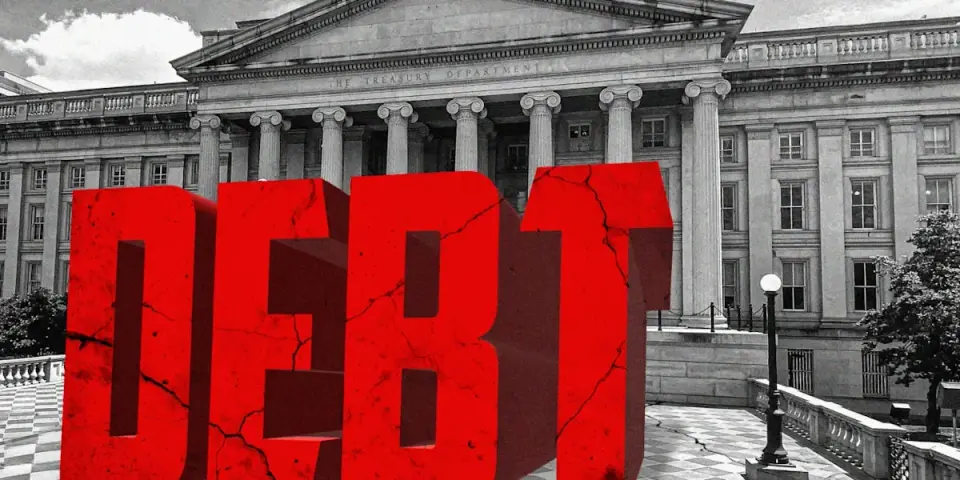
Treasury Secretary Scott Bessent's efforts to lower long-term bond yields through buybacks and currency interventions have failed, with 30-year yields hitting levels not seen since 2007. Critics argue that inflationary policies, including trade wars and tax cuts, are driving rates higher, while the Treasury's limited market interventions are seen as ineffective compared to Federal Reserve actions.
Key points
- Treasury Secretary Scott Bessent's bond buyback program, aimed at easing long-end yield curve pressure, has not succeeded in lowering interest rates.
- The 30-year Treasury yield reached levels not seen since 2007, while the 10-year yield remained elevated at 4.704%.
- Bessent's interventions, including a euro-yen currency swap and short-term bond sales, have had minimal impact on bond markets.
- Critics argue that inflationary policies, such as trade wars and tax cuts, are driving rates higher, limiting the Federal Reserve's ability to cut rates.
- The Treasury's bond buybacks are seen as a tiny fraction of the $32 trillion debt held by the public, making them ineffective compared to Federal Reserve quantitative easing.
Background
In August 2026, the Treasury unveiled plans to double the size of long-term bond buybacks to remove illiquid issues, aiming to keep yields contained. This move was interpreted as a potential pivot away from strict strong-dollar orthodoxy, reigniting debate over the U.S. stance on currency value amid fiscal pressures and policy uncertainty. Earlier interventions, including a joint US-Japan yen intervention, briefly steadied the dollar-yen exchange rate but did not provide lasting relief for bond markets.
How outlets are covering it
CNBC reports that Treasury yields declined after reports that the Treasury could use its $1 trillion General Account to fund bond buybacks, with the 10-year yield falling to 4.704% and the 30-year yield dropping to 5.234%. However, The American Prospect argues that Bessent's interventions are ineffective, comparing them to Federal Reserve quantitative easing but noting they are a tiny fraction of the debt held by the public. The Prospect also highlights that inflationary policies, including trade wars and tax cuts, are driving rates higher, limiting the Federal Reserve's ability to cut rates. AP News emphasizes the broader impact of rising bond yields on the economy, noting that interest costs on the national debt now outstrip military spending.
Why it matters
The failure of the Treasury's bond buybacks to lower long-term yields has significant implications for the U.S. economy, as rising interest rates increase borrowing costs for businesses and consumers. This could lead to higher inflation and reduced economic growth, particularly if the Federal Reserve is unable to cut rates due to persistent inflationary pressures. The situation also raises concerns about the sustainability of the U.S. national debt, which is projected to grow significantly as interest costs continue to rise.
What to watch
The Federal Reserve's Jackson Hole Symposium this week will be closely watched, with Federal Reserve Chair Kevin Warsh's keynote address expected to provide insights on future monetary policy. Traders are also awaiting fresh economic data, including the July core PCE price index and the second-quarter GDP estimate, which could influence the Federal Reserve's decision on interest rates. The Treasury may continue to explore additional bond market interventions, but their effectiveness remains uncertain given the current inflationary environment.
- The Treasury’s bond-market intervention isn’t working. So what comes next? Yahoo Finance
- Yields decline on CNBC report Treasury could use General Account to fund buybacks CNBC
- Why the bond market is flexing its muscles, and why everyone needs to care AP News
- The Perils of an Interventionist Treasury and a Passive Fed Bloomberg
- Why Scott Bessent Can’t Fix the Bond Market The American Prospect
Want the full story? Read the original reporting
Read on Yahoo Finance