
Trump claims U.S. could see 20% GDP growth, defying Fed rate hike logic
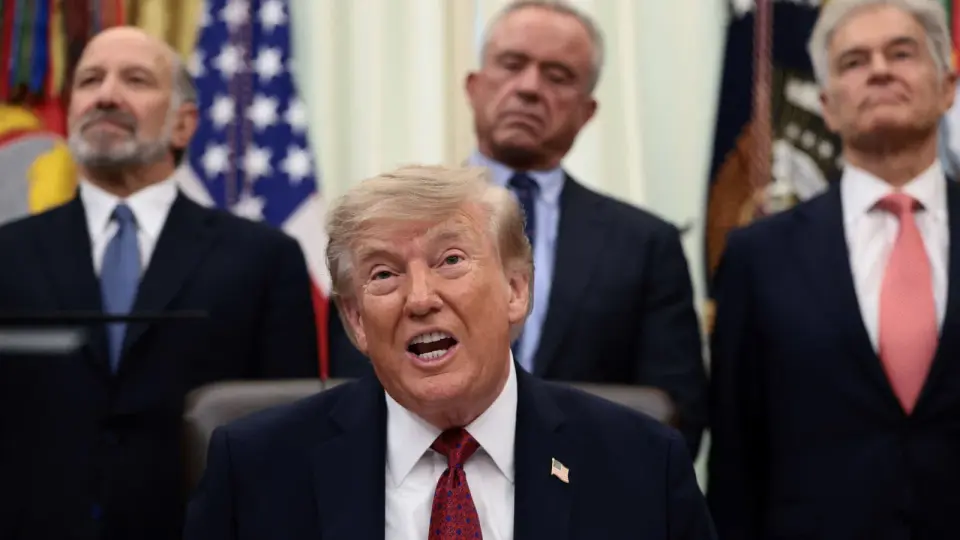
President Donald Trump asserted that the U.S. economy could achieve annualized GDP growth rates of up to 20%, arguing that such expansion should not trigger Federal Reserve interest rate hikes. This claim contrasts sharply with current economic data, which shows Q2 2026 growth at just 1.5% annualized, and historical records where 20% growth occurred only once since 1947. Trump maintains that strong growth does not inherently cause inflation, challenging the Fed’s current stance on maintaining higher rates to combat persistent price pressures above the 2% target.
Key points
- Trump stated during an Oval Office event that U.S. GDP could reach 14%, 15%, 16%, or even 20% annualized growth rates.
- The president argued that rapid economic growth does not automatically lead to inflation, suggesting the Federal Reserve should lower rather than raise interest rates.
- Current economic data shows real GDP grew at a 1.5% annualized rate in Q2 2026, down from 2.1% in Q1 2026.
- Inflation remains above the Federal Reserve’s 2% target, leading many economists to expect a rate hike at the September meeting.
- Historical data from the Bureau of Economic Analysis shows only one quarter since 1947 reached 20% annualized growth: Q3 2020 at 34.9% following the pandemic shutdowns.
Background
Recent coverage indicates the Federal Reserve has been navigating a complex policy environment. In July 2026, the Fed held its benchmark rate steady at 3.5% to 3.75%, with three policymakers dissenting in favor of a hike. Market expectations have shifted between holding rates and potential increases, driven by sticky inflation and energy cost volatility. Earlier analyses suggested a 37% chance of a rate move, reflecting internal divisions among officials like Loretta Mester and Kevin Warsh over the balance between inflation control and growth support.
Why it matters
Trump’s assertion challenges conventional economic orthodoxy by decoupling growth from inflationary pressure. If the economy were to approach 20% annualized growth, it would represent an unprecedented surge in productive capacity, potentially validating his argument that rate hikes are unnecessary. However, current indicators show modest growth and persistent inflation, creating tension between the administration’s optimistic outlook and the Federal Reserve’s data-driven caution. This debate influences global financial markets and borrowing costs, as investors weigh the likelihood of tighter monetary policy against political pressure for lower rates.
What to watch
The Federal Open Market Committee is expected to meet in September, where it may decide on a rate hike if inflation remains above target. Market participants will closely watch inflation data and GDP reports to assess whether the economy is moving toward the high-growth scenario Trump described or remaining in the current moderate growth phase. The outcome will determine whether the Fed continues its restrictive stance or pivots to support expansion.
Want the full story? Read the original reporting
Read on CNBC