
Fed Chair Warsh Rejects Forward Guidance, Highlights Global Monetary Synchronization
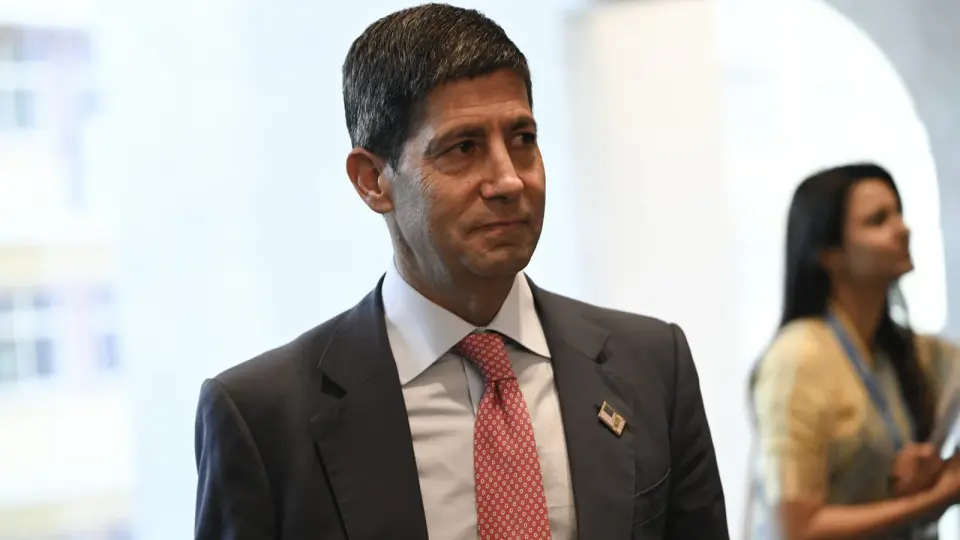
Federal Reserve Chair Kevin Warsh declined to signal future interest rate moves during a speech in Bangkok, emphasizing a new era of data-driven policy without forward guidance. He described a synchronized global tightening of monetary policy, noting that no central bank is acting as a 'free rider.' Warsh expressed optimism about AI’s long-term productivity benefits but warned of a bumpy transition, while acknowledging persistent inflation driven by energy costs and AI investment.
Key points
- Warsh refused to preview the Fed’s October 27-28 decision, stating he does not 'prejudge meetings' and that the Fed has moved away from forward guidance.
- He characterized global monetary policy as a 'synchronous tightening,' where central banks are independently raising rates to combat inflation, leaving no 'free riders.'
- Warsh identified AI as a potential positive supply shock that could boost productivity, but warned the transition would be 'very bumpy' with uncertain near-term employment effects.
- Inflation pressures are being driven by surging energy costs from the Iran war and a boom in AI investment, while global public debt is on track to exceed 100% of GDP.
- Market traders currently assign a 72.3% probability to a rate pause in October, with the majority expecting a 25 basis point hike in December.
Background
The Fed raised rates to 3.75%-4.00% in September 2026, its first hike since 2023, to combat inflation that has remained above the 2% target for over five years. Recent minutes indicated most policymakers expect one additional hike by year-end, though timing remains uncertain. This follows a broader global tightening trend, including rate hikes by the Bank of Japan and the European Central Bank, while the Swiss National Bank held rates at 0% due to low domestic inflation.
How outlets are covering it
CNBC and Investing.com both report Warsh’s refusal to provide forward guidance and his optimism about AI’s long-term benefits, though Investing.com emphasizes the Fed’s commitment to price stability and the use of external task forces to assess AI’s impact. Seeking Alpha frames Warsh’s AI comments as a 'positive supply shock' narrative, contrasting with the immediate inflationary pressures. All sources agree on the 'synchronous tightening' theme, but CNBC highlights the geopolitical context of the Iran war and energy costs, while Investing.com notes the resilience of the global economy despite these tensions. No source reports disagreement on the core facts, but they emphasize different aspects of Warsh’s speech: CNBC focuses on the lack of forward guidance, Investing.com on AI’s economic implications, and Seeking Alpha on the supply shock perspective.
Why it matters
Warsh’s stance signals a shift in Fed communication strategy, potentially increasing market volatility as investors must interpret data rather than rely on explicit guidance. The synchronized global tightening suggests a coordinated effort to combat inflation, which could impact borrowing costs and economic growth worldwide. The AI discussion highlights a long-term productivity opportunity but raises concerns about near-term employment and financial stability, influencing investment strategies and policy decisions.
What to watch
The Fed’s next meeting is scheduled for October 27-28, 2026, where traders expect a rate pause. A potential 25 basis point hike is anticipated in December. The Fed’s external task force on AI and productivity will hold its first field hearing in the San Francisco Bay Area on November 16, 2026, providing further insights into the technology’s economic impact.
- Fed's Warsh withholds Fed rate signal, praises recent global tightening with 'no free riders' CNBC
- Warsh Vows Price Stability as A.I. Delivers ‘Shock’ to Economy The New York Times
- Emerging-Market Stocks Gain as Fed’s Warsh Backs AI Optimism Bloomberg
- Fed's Warsh sees AI as positive supply shock, avoids October rate signal (SPY:NYSEARCA) Seeking Alpha
- Fed’s Warsh says AI boom could boost growth, but warns of bumpy transition Investing.com
Want the full story? Read the original reporting
Read on CNBC