
U.S. Unveils Historic Iran Sanctions as Oil Markets Brace for Prolonged Supply Shock
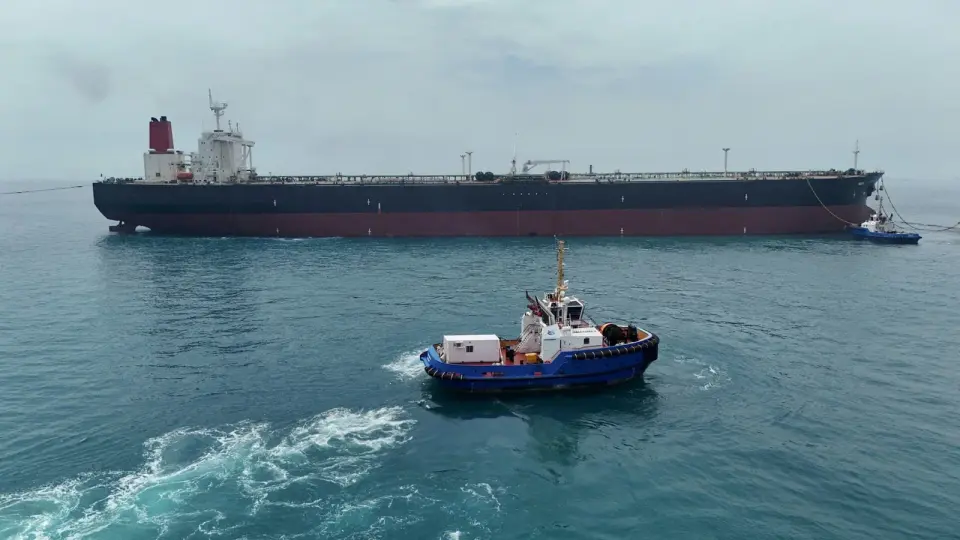
Oil prices dipped slightly on Monday as investors awaited the release of what the U.S. Treasury called its most severe sanctions package against Iran. While Washington aims to collapse the Iranian economy through financial isolation, Tehran has dismissed the threats, claiming it can maintain economic ties with other nations. Meanwhile, energy experts warn that the physical disruption of oil production in the Persian Gulf may persist for months, regardless of political resolutions, creating a long-term supply crisis.
Key points
- WTI crude fell 1.3% to $85.93 per barrel, and Brent crude dropped 1.24% to $93.22 per barrel on Monday.
- U.S. Treasury Secretary Scott Bessent is set to announce a new sanctions regime, described by the administration as the 'single greatest financial offensive' against an adversary.
- President Trump has warned of steep penalties for countries aiding Iran in evading sanctions, framing the effort as unprecedented economic warfare.
- Iran’s Islamic Revolutionary Guard Corps stated that Tehran can easily establish economic relations with other countries to counter the adverse effects of U.S. pressure.
- Commonwealth Bank of Australia expects Brent crude to trade between $70 and $100 per barrel in the second half of 2026, depending on the success of U.S. isolation efforts and potential Iranian retaliation.
Background
This escalation follows a volatile period in 2026 marked by intense U.S.-Iran hostilities. In July, Brent crude briefly topped $100 per barrel amid Red Sea tensions and U.S. strikes on Iran. By August, oil prices had settled around $82 per barrel as Iran considered banning U.S. and Israeli ships from the Strait of Hormuz. The current sanctions announcement represents a shift from kinetic military strikes to a comprehensive financial and economic containment strategy.
How outlets are covering it
Outlets diverge on the primary driver of future oil volatility. CNBC focuses on the immediate impact of the new U.S. sanctions package, noting that prices fell as investors awaited details, suggesting the market may be pricing in the potential for successful economic isolation. Conversely, Fox News highlights a more structural, physical supply crisis. Citing petroleum geologist Art Berman, Fox News argues that the reopening of the Strait of Hormuz will not solve the problem because millions of barrels of production remain shut in underground. Berman warns that restarting wells is a complex, high-risk process that could take months, and that some production may never fully recover, making the energy shock a 'world-changing event' independent of political agreements. While CNBC emphasizes the financial weaponization of sanctions, Fox News emphasizes the enduring technical challenges of restoring physical oil flows.
Why it matters
The outcome of this sanctions campaign will determine whether global oil markets stabilize or face prolonged volatility. If U.S. measures successfully isolate Iran, it could reduce supply, potentially pushing prices higher despite the initial dip. However, if the sanctions fail to curb Iranian support for regional proxies, the risk of renewed violence in the Strait of Hormuz could trigger a sharp price spike. Furthermore, the technical difficulty of restarting shut-in wells in the Persian Gulf means that even a political resolution may not immediately restore pre-war supply levels, keeping global energy prices elevated and impacting inflation and consumer costs for an extended period.
What to watch
Investors will monitor the specific details of the sanctions package unveiled by Treasury Secretary Bessent later on Monday. Markets will also watch for any immediate Iranian retaliation, such as increased violence in the Strait of Hormuz, which could disrupt the modest recovery of oil flows. Additionally, analysts will track whether the U.S. can successfully pressure its allies to cut economic ties with Tehran, as the effectiveness of the sanctions relies on global compliance rather than just U.S. enforcement.
- Oil prices fall as investors await 'toughest' U.S. sanctions on Iran CNBC
- US Futures Edge Lower With AI Spending in Focus: Markets Wrap Bloomberg.com
- Hormuz crisis hides a deeper oil threat that could outlast the war Fox News
- Oil surges to three-week high as Iran war stalemate and UAE trade freeze tighten supply qz.com
- Oil falls ahead of US announcement on new Iran sanctions Reuters
Want the full story? Read the original reporting
Read on CNBC