
Falcon 9 dominance leaves Europe trapped between costly domestic tech and US reliance
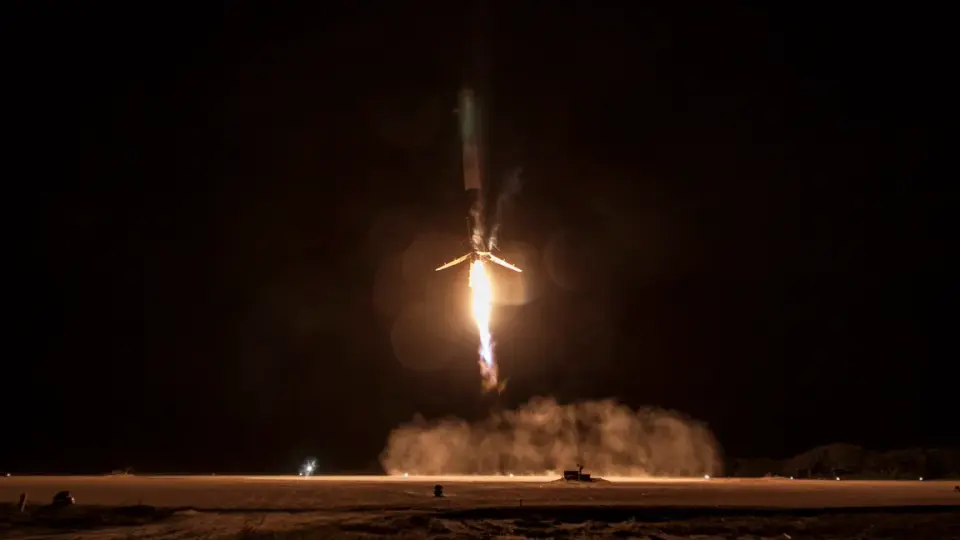
New research published in Economics Letters reveals that SpaceX’s Falcon 9 reuse and high launch cadence have drastically shifted global orbital mass shares, with the US now accounting for over 82% of global payload. This dominance has created a policy dilemma for Europe, which faces a choice between relying on cheaper American launches or using expensive, less scalable domestic rockets. The study highlights a significant cost disparity, with European launch costs now three times higher than US costs, threatening the continent's ability to expand space operations competitively.
Key points
- A study analyzing over 6,700 launches from 1960 to 2025 shows the US share of global payload to orbit peaked at over 82% in 2024, up from a low of under 20% in the early 2000s.
- The US now has more than doubled Russia’s cumulative payload to orbit since 1990, reversing a trend that began after the 2003 Space Shuttle Columbia accident.
- The average cost to send a kilogram to orbit in the US is $3,225, while Europe’s cost is $9,897, making European launches three times more expensive than US equivalents.
- Other nations face higher costs: Japan ($5,287), China ($5,809), Russia ($6,682), and India ($15,000), with India’s high cost attributed to small rocket sizes limiting fixed cost amortization.
- Europe is described as being stuck between a rock and a hard place, forced to choose between depending on lower-cost US technology or using expensive, poorly scalable domestic options to maintain strategic presence.
- The European Space Agency’s Themis program, intended to demonstrate small suborbital hops by 2022, has yet to achieve its first flight, highlighting slow progress in European reusable launch technology.
Background
This development follows a decade of SpaceX’s Falcon 9 reuse, which began with regular landings in 2015 and accelerated to hundreds of launches per year in recent years. The archive contains no relevant background on space policy or launch economics, so this context is derived solely from the primary source’s historical data.
Why it matters
The economic and strategic implications of launch cost disparities could hinder Europe’s ability to expand satellite constellations and other space-based operations. Reliance on US launches may compromise strategic autonomy, while domestic alternatives remain prohibitively expensive and technologically behind, potentially slowing Europe’s space sector growth.
What to watch
Spacefaring nations are expected to prioritize developing modern, reusable launch capabilities to remain competitive. The US and China are currently leading in this area, while Europe faces pressure to accelerate its own technological advancements to reduce dependence on foreign launch providers.
Want the full story? Read the original reporting
Read on Ars Technica