
NOAA Warns of G2 Geomagnetic Storm as CME Arrives Oct 9
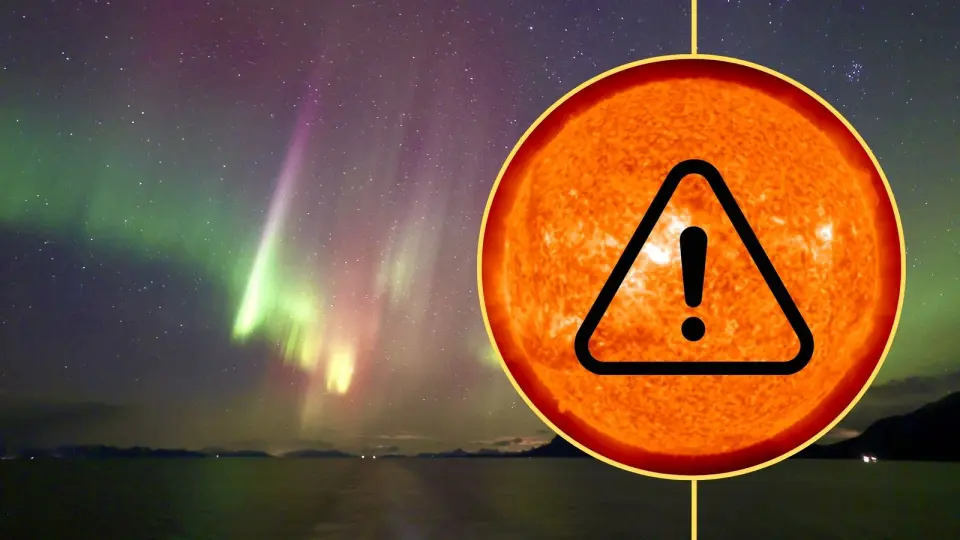
NOAA has issued a G2 geomagnetic storm watch for October 9, following a coronal mass ejection (CME) launched by the Sun on October 6. The CME, traveling at approximately 560 km/s, is expected to reach Earth in the early hours of October 9, potentially triggering visible auroras as far south as Idaho and New York. This event follows an M1.4-class solar flare from sunspot region AR4549, which is currently positioned near the center of the Earth-facing side of the Sun. While exact arrival timing remains uncertain, forecasters anticipate moderate geomagnetic activity that could enhance northern lights visibility across the northern United States.
Key points
- NOAA’s Space Weather Prediction Center issued a G2 geomagnetic storm watch for October 9.
- The CME originated from an M1.4 solar flare on October 6 from sunspot region AR4549.
- Belgium’s Solar Influences Data Analysis Center estimates the CME is traveling at 560 km/s.
- Auroras may be visible as far south as Idaho and New York if conditions align.
- Current models predict CME arrival in the early hours of October 9 UTC, though timing uncertainty persists.
Background
This event follows a pattern of increased solar activity observed in late August and September 2026. In late August, an M6.9 flare from sunspot AR4513 triggered a CME that potentially caused auroras in the northern US and Canada, with NOAA issuing G1 and G2 storm watches. In September, a minor geomagnetic storm was forecast for Michigan, though visibility was hindered by rain and clouds. The current October event is part of this ongoing period of solar variability, with previous instances demonstrating that aurora visibility depends heavily on CME interaction with Earth’s magnetic field and local weather conditions.
Why it matters
A G2 geomagnetic storm can cause minor to moderate disruptions to power grids, satellite communications, and radio signals. For the public, it offers a rare opportunity to observe auroras in mid-to-northern latitudes, such as Idaho and New York, which are typically outside the primary auroral oval. Accurate forecasting helps skywatchers plan viewing sessions and allows infrastructure operators to prepare for potential technical impacts.
What to watch
NOAA and other space weather agencies will monitor the CME’s arrival and the resulting geomagnetic activity in real-time. Updates on the Kp index and aurora forecasts will be issued as the CME interacts with Earth’s magnetosphere. If the CME’s magnetic field is oriented southward, auroral activity could intensify, potentially exceeding the G2 threshold. Public visibility will depend on clear skies and low light pollution in northern US states.
- Powerful solar eruption is heading for Earth and could supercharge the northern lights over the US this week Space
- G2 (Moderate) Geomagnetic Storm Watch for 09 Oct NOAA Space Weather Prediction Center (.gov)
- Monday Northern Lights Forecast: 9 States May See The Aurora Borealis Tonight Forbes
- Locals could see Northern Lights in the Valley WKBN.com
- How to Watch the Northern Lights Tonight People.com
Want the full story? Read the original reporting
Read on Space