Tag

Solar Activity

All articles tagged with #solar activity

Earthward CME from M1.9 flare prompts August 2 geomagnetic watch
space-weather24 days ago

Earthward CME from M1.9 flare prompts August 2 geomagnetic watch

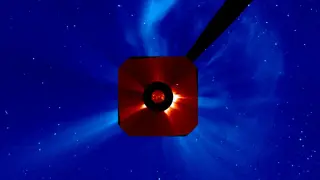
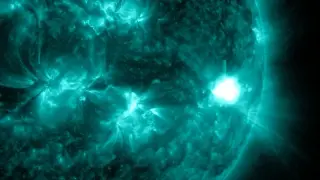
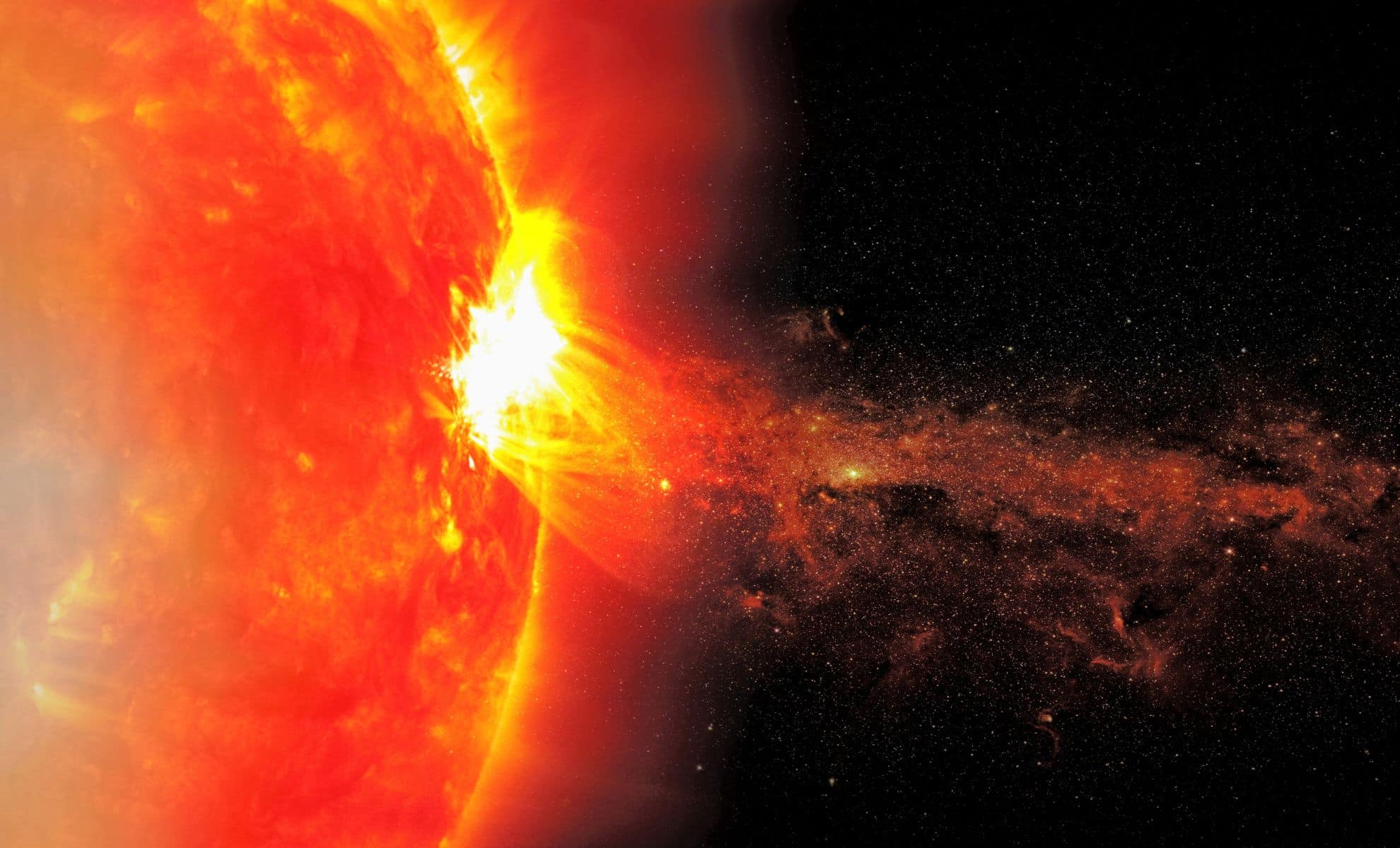
A long-duration M1.9 solar flare from Active Region 4492 on July 30, with an associated filament eruption, produced an Earth-directed partial-halo CME and a minor solar radiation storm. WSA-Enlil model runs place the CME’s arrival at Earth around August 2, with NOAA’s Space Weather Prediction Center forecasting G1–G2 (Minor–Moderate) geomagnetic storm conditions. Solar wind parameters have been mostly nominal, but disturbances from July 26–27 CMEs and the July 30 CME could arrive; increased drag, potential voltage alarms on power systems, spacecraft orientation corrections, and radio fade are possible, with auroras potentially visible as far south as New York and Idaho under favorable conditions.

X1.1 solar flare after M5.8 storm warning raises CME-space-weather prospect
space-weather1 month ago

X1.1 solar flare after M5.8 storm warning raises CME-space-weather prospect

A moderate M5.8 solar flare from AR 4475 on June 29 prompted an S1 solar radiation storm warning (issued 16:00 UTC, canceled 16:36 UTC) with no CME detected at that time, though Western-limb location kept Earth at risk for energetic particles. Later, an Earth-facing X1.1 flare from AR 4479 near the solar disk center at 20:50 UTC produced a strong radio blackout (R3) and emitted Type II and IV radio bursts, with analysts awaiting coronagraph data to confirm any Earth-directed CME. Space‑weather conditions were quiet for now, but CME activity from later flares could bring unsettled to active conditions on June 30 into July 1, potentially triggering minor geomagnetic activity on approach of any CME.

Solar Activity Quickens Space Debris Decay in Low Earth Orbit
space3 months ago

Solar Activity Quickens Space Debris Decay in Low Earth Orbit

A 36-year study of 17 debris objects in low Earth orbit shows that when solar activity rises to a certain level, heating of the thermosphere expands the atmosphere and increases drag, causing debris to lose altitude faster. The researchers identify a transition threshold near two-thirds of solar maximum and note stronger extreme ultraviolet emissions around solar peaks, with practical implications for satellite operators who may need more frequent orbit corrections and greater fuel reserves during active solar phases.

Sun's 94-Day 'Monster' Active Region Unleashed Earth-Impacting Space Weather
space7 months ago

Sun's 94-Day 'Monster' Active Region Unleashed Earth-Impacting Space Weather

A 94-day observation of solar active region NOAA 13664 by Solar Orbiter and SDO captured its evolving magnetic field, revealing the Sun's strongest geomagnetic storms in over two decades and causing auroras visible as far south as Switzerland along with disruptions to satellites and railway signaling; the study, published in Astronomy & Astrophysics, marks a major advance in understanding space weather.

NASA's Parker Probe Reveals New Details of the Sun's Dynamic Atmosphere
science8 months ago

NASA's Parker Probe Reveals New Details of the Sun's Dynamic Atmosphere

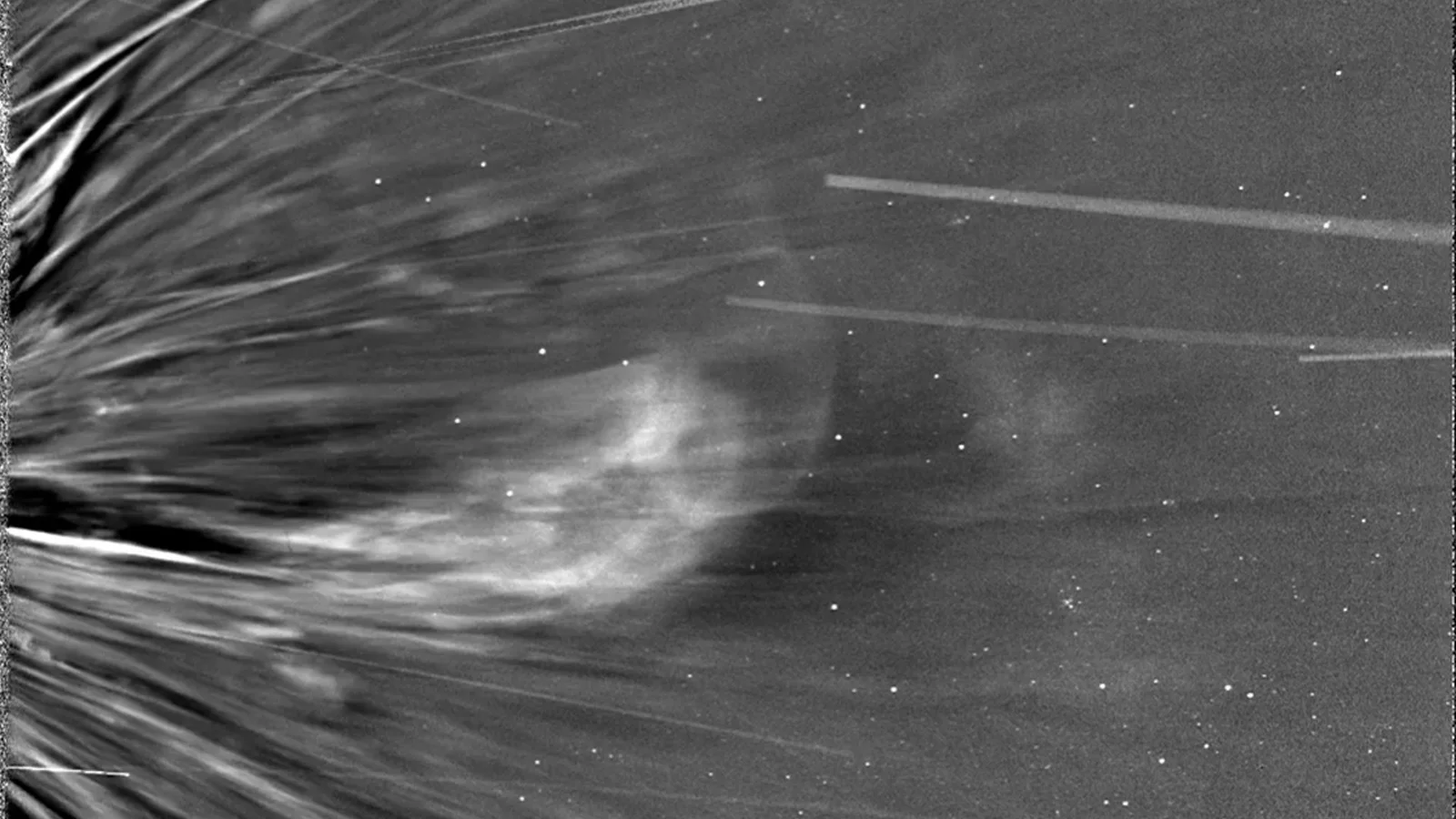
NASA's Parker Solar Probe captured unprecedented close-up images of the Sun's magnetic activity during its 22nd flyby, revealing new details about magnetic 'tadpoles', the tearing of the heliospheric current sheet, and the formation of magnetic in/out pairs, advancing our understanding of solar phenomena.

India’s Aditya-L1 to Observe Sun’s Peak Activity in 2026
science8 months ago

India’s Aditya-L1 to Observe Sun’s Peak Activity in 2026

India's Aditya-L1 solar mission is poised to observe the Sun during its maximum activity cycle in 2026, a period marked by increased solar storms and coronal mass ejections (CMEs). The mission aims to study these phenomena to better understand solar behavior and improve space weather forecasting, which is crucial for protecting Earth's infrastructure and satellites. Aditya-L1's unique instrumentation allows continuous observation of the Sun's corona, providing valuable data during this intense solar period.