
Amazon Leo recovers with 36-satellite launch as rivals face delays
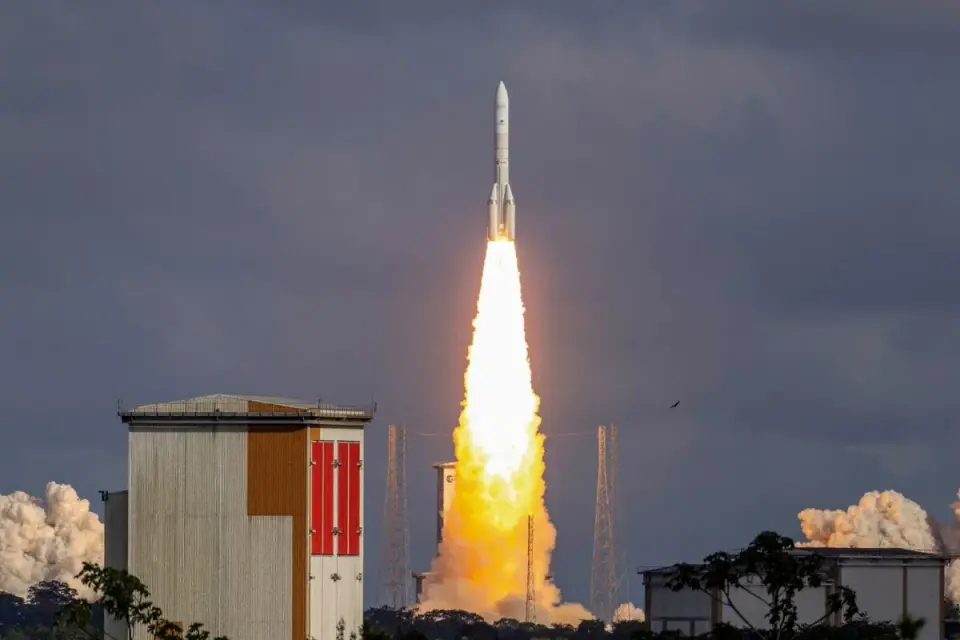
Amazon successfully launched 36 satellites for its Leo broadband network on an Ariane 6 rocket, marking a recovery after recent setbacks. The launch brings the total orbital fleet to 432 satellites. Amazon is accelerating its reliance on SpaceX Falcon 9 rockets after United Launch Alliance and Blue Origin suffered major failures, while European officials debate increasing Ariane 6 production to meet commercial demand.
Key points
- Arianespace launched 36 Amazon Leo satellites on an Ariane 6 rocket from French Guiana on November 24, 2026, bringing the total orbital fleet to 432.
- The launch occurred nine days after a United Launch Alliance Vulcan rocket failure destroyed 40 Amazon Leo satellites, marking ULA's first total mission failure since 2006.
- Amazon is accelerating its use of SpaceX Falcon 9 rockets, moving the next launch to December 2026, as SpaceX opens up capacity by transitioning Starlink launches to Starship.
- Blue Origin's New Glenn rocket remains grounded until early 2027 after an explosion destroyed a launch pad and rocket in May 2026, delaying Amazon's planned flights.
- European governments are considering increasing Ariane 6 production capacity, currently limited to about 10 flights per year, to meet surging commercial demand from Amazon and other clients.
Background
Amazon Leo has faced significant launch delays since 2023, relying on new rockets from United Launch Alliance, Arianespace, and Blue Origin. The company secured 108 launch contracts to deploy 3,232 first-generation satellites, with a second-generation constellation approved for the 2030s. Recent setbacks include a Vulcan rocket failure in November 2026 and a Blue Origin New Glenn explosion in May 2026, forcing Amazon to pivot toward SpaceX Falcon 9 launches, which previously carried 24 satellites per mission in 2025.
How outlets are covering it
Bloomberg highlights the Ariane 6 launch as a critical success for Amazon amid scaling challenges. Ars Technica emphasizes Amazon's strategic pivot to SpaceX Falcon 9, noting that SpaceX is opening up launch slots as Starlink transitions to Starship, while questioning Europe's ability to scale Ariane 6 production. Spaceflight Now details the technical failures of ULA's Vulcan and Blue Origin's New Glenn, noting that Amazon lost 40 satellites in November and faces a significant gap in 2027. SpaceNews confirms the launch as the first for Amazon Leo in four and a half months, underscoring the urgency of the situation.
Why it matters
The launch demonstrates Amazon's ability to adapt to supply chain disruptions in the satellite broadband market, where Starlink holds a dominant position with over 11,000 satellites. Amazon's reliance on SpaceX creates a complex dynamic, as SpaceX is both a competitor and a launch provider. The success of Ariane 6 and the potential for increased European production could shift the balance of power in the global satellite industry, while the failures of ULA and Blue Origin highlight the risks of relying on new rocket technologies for critical infrastructure.
What to watch
Amazon plans to launch additional Falcon 9 missions in rapid succession after December 2026, with hundreds of satellites in storage waiting for deployment. Blue Origin aims to resume New Glenn flights in early 2027, but Amazon may face difficulties securing launch slots due to Blue Origin's prioritization of NASA's Artemis program. European governments are expected to make a decision on increasing Ariane 6 production capacity in December 2026, though a ramp-up in launch cadence will take time. Amazon must deploy its full first-generation constellation by July 30, 2029, as required by the FCC.
- Amazon Launches Satellites for Network to Rival Starlink Bloomberg
- Why Amazon’s Rival to Starlink Is Struggling to Catch Up With SpaceX WSJ
- Amazon discovers Falcon 9 and Ariane 6 can deliver when nobody else can Ars Technica
- Arianespace launches 36 Amazon Leo sats amid rocket crunch Spaceflight Now
- Ariane 6 launches fourth set of Amazon Leo satellites SpaceNews
Want the full story? Read the original reporting
Read on Bloomberg