
Grape-Sized Stone in 5,300-Year-Old Russian Burial Reveals Chronic Kidney Disease
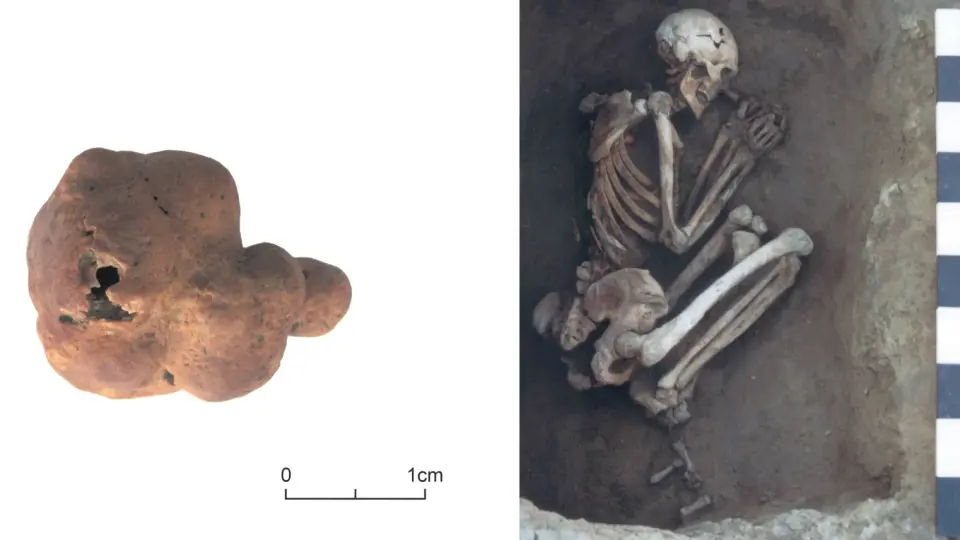
Researchers identified a 5,300-year-old kidney stone in the remains of a Bronze Age man buried in southwestern Russia. The discovery, published in September 2026, indicates the individual suffered from chronic urinary tract infections and significant physical trauma throughout his life.
Key points
- A 5,300-year-old kidney or bladder stone, roughly the size of a grape, was found in the burial of a man in his 40s in the Stavropol Upland region of Russia.
- The stone contained whitlockite, a rare calcium salt associated with bacterial infections, suggesting the man suffered from chronic urogenital infections that likely caused constant pain.
- The burial was part of a kurgan cemetery, a steppe tradition involving large dirt mounds, and included a flint arrowhead near the man's pelvis.
- The skeleton showed signs of a physically demanding life, including degenerative joint disease and multiple healed fractures in the shoulders, ribs, and forearms.
- The study, led by Natalia Berezina of Lomonosov Moscow State University, was published in the journal Archaeological and Anthropological Sciences on September 30, 2026.
Background
This finding adds to recent archaeological insights into Bronze Age life in the Black Sea and Mediterranean regions. While a 2026 discovery off Turkey identified a 4,400-year-old shipwreck as the oldest known, this new finding highlights the health challenges faced by steppe societies. The man's injuries align with previous studies of nearby cemeteries, where individuals suffered from wagon-related accidents, indicating a lifestyle centered on cattle herding and heavy labor.
Why it matters
The discovery provides rare direct evidence of chronic disease in the Early Bronze Age, demonstrating that ancient populations suffered from conditions like urinary tract infections that could lead to fatal complications before the advent of antibiotics. It also highlights the physical toll of steppe societies, where individuals faced significant risks from labor and transportation.
What to watch
Researchers are continuing to analyze the chemical composition of the stone and the man's skeletal remains to better understand the specific mechanisms of stone formation and the impact of chronic infections on ancient populations. Further studies may reveal more about the prevalence of such conditions in Bronze Age societies.
Want the full story? Read the original reporting
Read on Live Science