
Mount Sinai Study Identifies Three Neural Pathways Critical for Deep Brain Stimulation Success in Depression
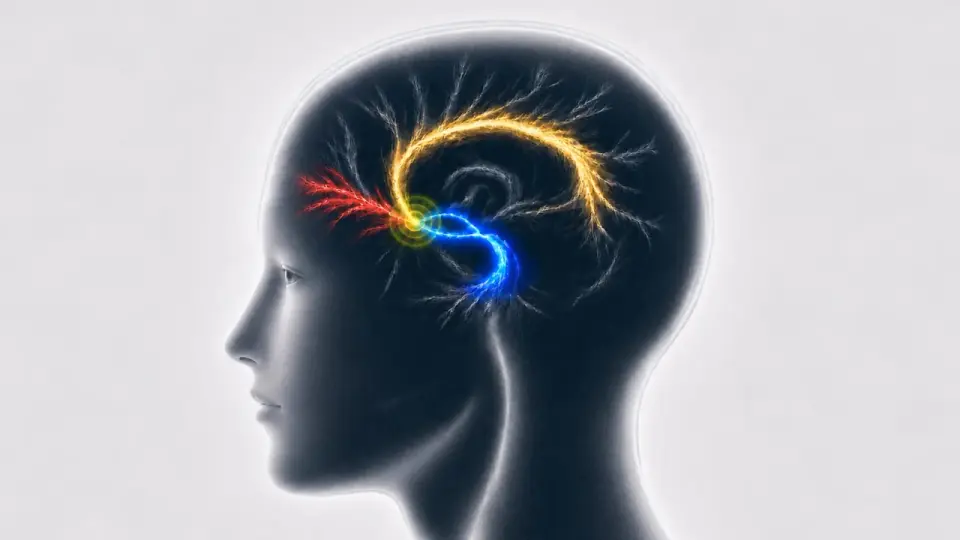
Researchers at Mount Sinai have identified three specific white matter pathways that are essential for long-term relief in patients with severe depression treated via deep brain stimulation (DBS). Published in the American Journal of Psychiatry, the study analyzed the largest multicohort group to date, including data from the BROADEN trial and the University of Toronto. The findings indicate that successful outcomes depend on stimulating the cingulum bundle, forceps minor, and medial uncinate fasciculus/ventral amygdalofugal pathway. Patients who failed to improve after two years consistently showed insufficient engagement of the left cingulum bundle. This suggests that precise, connectivity-based electrode placement is more critical than general anatomical positioning. The results support the use of individualized brain maps to guide surgical targeting, potentially improving the efficacy of this experimental therapy for those who do not respond to conventional treatments.
Key points
- The study, led by Helen Mayberg and colleagues at Mount Sinai, examined the largest group of patients receiving subcallosal cingulate DBS for treatment-resistant depression to date.
- Sustained clinical improvement was consistently linked to electrical stimulation reaching three specific white matter pathways: the cingulum bundle, forceps minor, and medial uncinate fasciculus/ventral amygdalofugal pathway.
- Patients who did not respond to treatment after two years across multiple centers shared a common pattern: a lack of stimulation engagement with the left cingulum bundle.
- The research supports 'connectome-based targeting,' a strategy that uses individualized brain connectivity maps to guide electrode placement rather than relying solely on anatomical landmarks.
- The findings are relevant to the ongoing Abbott TRANSCEND clinical trial, which utilizes individualized brain connectivity maps to guide SCC DBS treatment.
- Researchers noted that while pathway engagement is critical, it is not the sole determinant of success; future studies must address patient selection and long-term stimulation parameter adjustments.
Background
Recent research has expanded the understanding of depression beyond traditional neurotransmitter theories. In September 2026, a study in Molecular Psychiatry linked gut microbiota metabolites to adolescent depression via the aryl hydrocarbon receptor pathway, while another review highlighted the vulnerability of immature hippocampal neurons to stress. Additionally, October 2026 research suggested that prenatal mental health interventions can influence infant hippocampal development. These studies, alongside the current findings on deep brain stimulation, reflect a broader scientific shift toward identifying specific neural circuits and structural biomarkers for depression, moving away from generalized symptom-based treatments toward precision medicine approaches.
How outlets are covering it
Both the primary source (ScienceDaily) and the secondary source (UA.NEWS) report on the same study published in the American Journal of Psychiatry, agreeing on the core finding that three specific white matter pathways are linked to lasting depression relief. However, the primary source provides significantly more detail on the clinical implications, specifically mentioning the Abbott TRANSCEND trial and the potential for 'connectome-based targeting' to improve surgical precision. The secondary source offers a more concise summary, focusing on the general finding and noting the study's limitations regarding individual diffusion MRI data. Neither source presents conflicting data, but the primary source offers a deeper dive into the technical methodology and the broader context of neuromodulation research, while the secondary source serves as a brief news update. Both sources acknowledge that while pathway engagement is important, it is not the only factor in treatment success, and further research is needed to determine patient suitability and optimal stimulation parameters.
Why it matters
This research is significant because it moves deep brain stimulation for depression from a trial-and-error approach to a more precise, connectivity-based strategy. By identifying specific neural pathways that must be engaged for lasting relief, clinicians can potentially improve surgical outcomes and reduce the number of patients who do not benefit from the procedure. This could lead to more personalized treatment plans, where electrode placement is guided by individual brain maps rather than generic anatomical landmarks. Furthermore, the findings may help explain why some patients fail to respond to treatment, offering a potential avenue for adjusting stimulation parameters or repositioning electrodes in non-responders. As depression remains a leading cause of disability worldwide, any advancement in the treatment of severe, treatment-resistant cases could have a substantial impact on public health and quality of life for millions of individuals.
What to watch
Future research will focus on determining which patients are most likely to benefit from subcallosal cingulate DBS and how stimulation parameters should be adjusted over time. Researchers plan to explore additional brain imaging measurements, including white matter integrity and functional connectivity, to identify suitable patients and improve electrode placement. The findings will also inform the ongoing Abbott TRANSCEND clinical trial, which uses individualized brain connectivity maps to guide treatment. Further studies are needed to establish the value of patient-specific imaging and to develop more detailed models for setting patient-specific stimulation parameters, including amplitude, frequency, and pulse width, for precision medicine.
- Scientists uncover 3 key brain pathways linked to lasting depression relief Science Daily
- Sustained improvement with DBS linked to stimulation of three pathways — News-Medical UA.NEWS
- Study identifies brain pathways linked to sustained improvement in those receiving deep brain stimulation for treatment-resistant depression EurekAlert!
Want the full story? Read the original reporting
Read on Science Daily