Tag

Brain Connectivity

All articles tagged with #brain connectivity

Wearable Eye Lenses Deliver Depression Relief Comparable to Prozac in Mice
science13 days ago

Wearable Eye Lenses Deliver Depression Relief Comparable to Prozac in Mice

Researchers developed flexible, drug-free contact lenses with ultrathin electrodes that use temporal interference to stimulate mood-regulating brain circuits via the retina. In depressed mice, 30-minute daily sessions for three weeks improved behavior, restored hippocampus–prefrontal cortex connectivity, and shifted biomarkers (serotonin up ~47%, corticosterone down ~48%, reduced brain inflammation) to levels similar to fluoxetine, suggesting the eye could noninvasively influence brain mood networks. The approach is not yet ready for humans and will require safety testing, wireless integration, and personalized tuning before clinical trials.

Hidden Brain Wiring Predicts Behavior Across Multiple Networks
neuroscience1 month ago

Hidden Brain Wiring Predicts Behavior Across Multiple Networks

A Yale-led study published in Nature Human Behavior shows that the 90% of brain connections usually labeled as noise can predict behavior as accurately as the top 10%; predictive information is widely distributed across multiple, non-overlapping networks, revealing brain redundancy and functional flexibility. This challenges the idea of a single correct network, with implications for psychiatry (e.g., depression) and for biomarkers and treatments, which should target overlooked circuits to improve precision medicine.

Common neural fingerprint linked to five psychedelics, study suggests
science1 month ago

Common neural fingerprint linked to five psychedelics, study suggests

A multinational reanalysis of 11 datasets (267 participants, 519 brain scans) across five psychedelics—psilocybin, LSD, mescaline, DMT and ayahuasca—identified a shared neural fingerprint: increased cross-network communication and selective reductions within certain networks across cortical and subcortical regions, suggesting a flattening of the brain's hierarchy. The pattern was most similar for psilocybin and LSD. While promising for understanding psychedelics and potential therapies, the study emphasizes the need for standardized, larger trials and notes that existing datasets used varied methods and doses.

Lifelong Exercise Reconfigures Trauma-Linked Brain Wiring
science2 months ago

Lifelong Exercise Reconfigures Trauma-Linked Brain Wiring

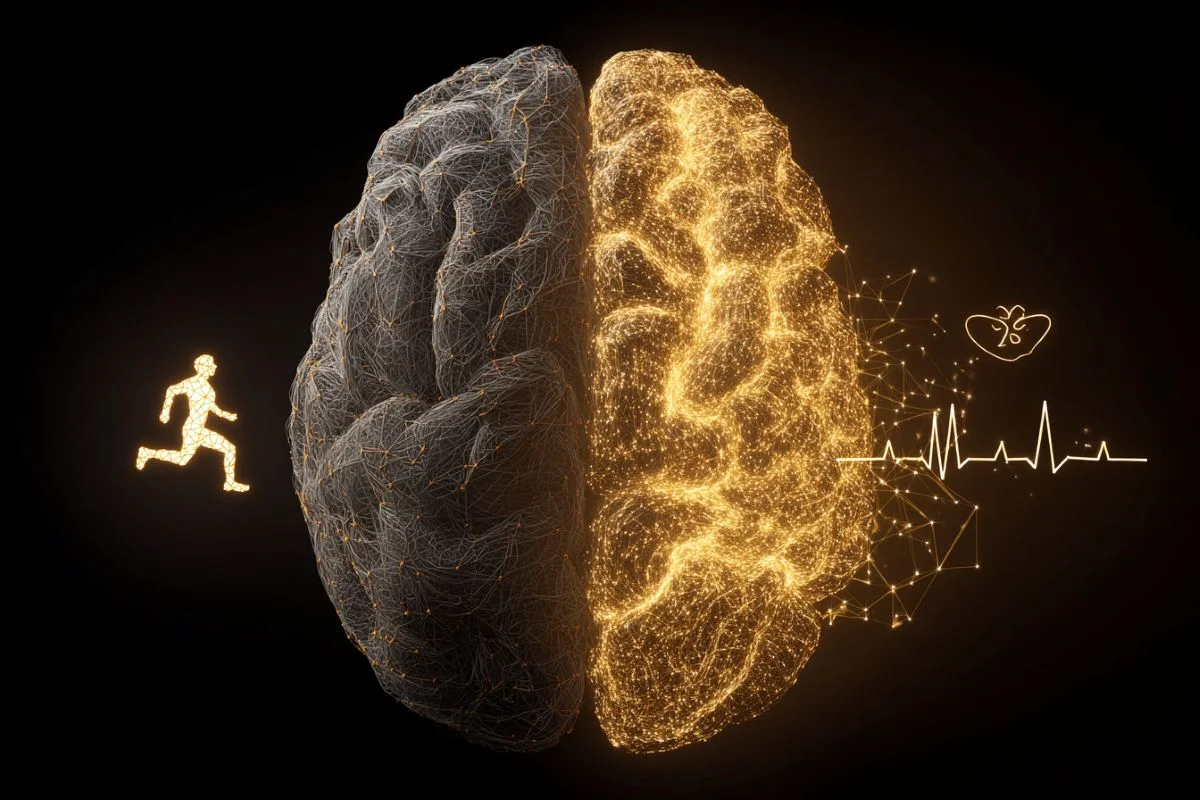
A study shows that lifetime physical activity can reshape brain connectivity affected by childhood adversity, creating a crossover where higher activity strengthens links between emotion, memory, and cerebellar networks. The strongest effects occur around 150–390 minutes per week, suggesting exercise fosters neural resilience rather than fixed damage.

Intelligence Emerges from Coordinated Whole-Brain Networks
science2 months ago

Intelligence Emerges from Coordinated Whole-Brain Networks

Researchers propose the Network Neuroscience Theory: general intelligence arises from system-wide coordination across distributed brain networks rather than a single region. Analyzing data from 831 adults in the Human Connectome Project and 145 in the INSIGHT SHARP study, the team found that intelligence reflects how efficiently and flexibly networks communicate, relying on long-distance integration via hubs and a balance between local specialization and global integration. No one network explains intelligence; rather, system-wide coordination underpins flexible cognition, with implications for aging, brain injury, development, and biologically inspired AI.

Puberty sharpens sex-based brain-network differences
science3 months ago

Puberty sharpens sex-based brain-network differences

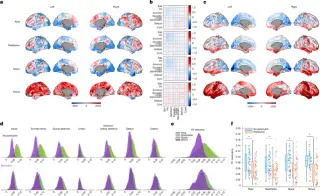
A study of 1,286 people aged 8–100 using MRI finds sex differences in brain connectivity are minimal in early life but widen at puberty and persist into adulthood, in both structural and functional networks. The timing roughly tracks sex-hormone changes and may relate to differing risks of mental-health disorders between men and women. The work is a bioRxiv preprint and relies on birth sex data; some scientists caution that differences may reflect gender roles or a mosaic of brain features rather than a binary sex, so conclusions are preliminary.