
AI and Precision Medicine: From Personalized Cancer Vaccines to Off-Label Drug Matches
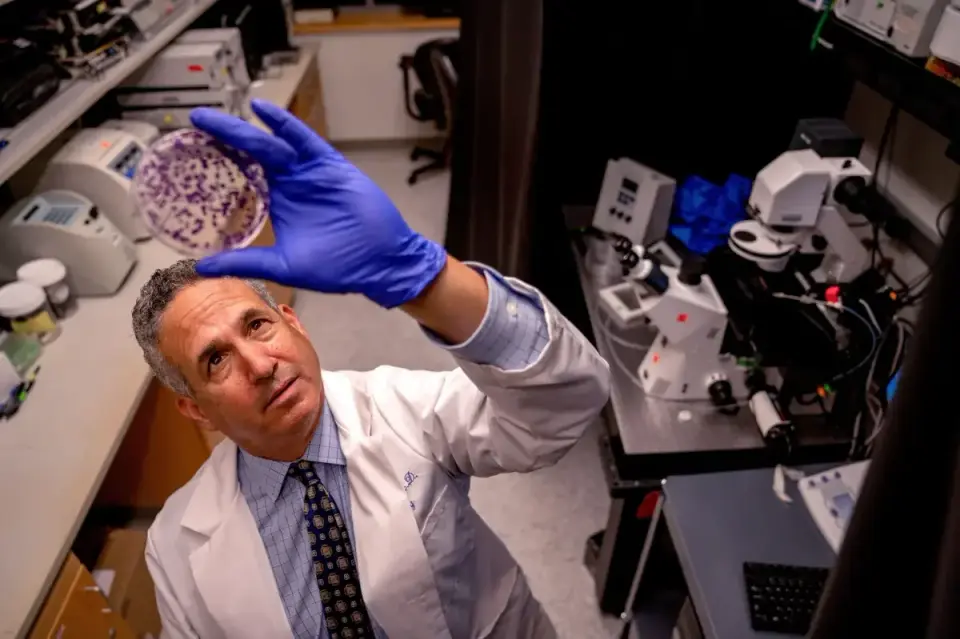
Artificial intelligence is accelerating medical breakthroughs, particularly in oncology, by enabling personalized treatments and off-label drug matches. Recent developments include a landmark melanoma vaccine trial, AI-driven drug-disease matching for rare diseases, and advanced tumor profiling. While experts express optimism about a 'golden age' of medicine, challenges remain in scaling AI infrastructure and integrating complex data.
Key points
- Moderna and Merck announced a landmark melanoma vaccine trial involving 1,100 patients, using AI to analyze tumor tissue for personalized vaccines.
- Dr. David Fajgenbaum’s AI system matches 4,000 drugs with 18,000 diseases, identifying off-label treatments like Ruxolitinib for Castleman disease.
- AstraZeneca is leveraging AI and multimodal data to combine therapies, including antibody-drug conjugates and immune checkpoint inhibitors, for more durable cancer responses.
- Columbia University’s STAR system uses AI and microscopes to isolate sperm in cases of severe male infertility, a task previously impossible for humans.
- UCLA is combining 3D bioprinting and AI to create lab-grown tumor replicas for customized drug protocols, moving away from one-size-fits-all chemotherapy.
Background
Previous coverage noted that while AI holds promise for curing cancer, infrastructure challenges like chip shortages and data-center rollouts may slow progress. Earlier reports also highlighted the broader integration of AI in healthcare, from personalized vaccines to diagnostic tools, though concerns about data privacy and the complexity of modeling DNA markers persist.
How outlets are covering it
The New York Post emphasizes AI’s role in creating personalized vaccines and matching off-label drugs, highlighting individual patient success stories. New Scientist focuses on AstraZeneca’s strategic use of AI to combine multiple therapies and detect cancer earlier through blood tests. Cure Today highlights the shift toward precision oncology, where genomic profiling allows for long-term, targeted treatments that improve survival rates. While all sources agree on AI’s transformative potential, the Post focuses on individual breakthroughs, New Scientist on corporate strategy, and Cure Today on patient outcomes and quality of life.
Why it matters
AI is shifting cancer treatment from a one-size-fits-all approach to highly personalized medicine, potentially saving millions of lives. By analyzing vast datasets, AI can identify off-label drug uses, predict disease onset, and create custom vaccines, offering hope for previously untreatable conditions. However, the pace of progress depends on overcoming infrastructure and data integration challenges.
What to watch
Expect more AI-driven clinical trials and the expansion of personalized vaccines to other cancer types. AstraZeneca and other firms will continue to develop multimodal AI models to accelerate drug discovery. Challenges in chip supply and data privacy may influence the speed of adoption, but the trend toward precision medicine is likely to accelerate in the coming years.
- AI is unlocking a new ‘golden age’ in medicine, with personalized treatments to cure cancer and potential to save billions of lives New York Post
- The science behind an ambitious cancer strategy New Scientist
- How Is AI Advancing Tumor Boards, Care Coordination, and Treatment Planning? CancerNetwork
- From Precision Medicine to AI: The Future of Cancer Care Cure Today
- Most oncology AI research overlooks critical patient safety and privacy News-Medical
Want the full story? Read the original reporting
Read on New York Post