
Lab Study Shows Bleached Corals Recover in Weeks via Tissue Fusion with Healthy Neighbors
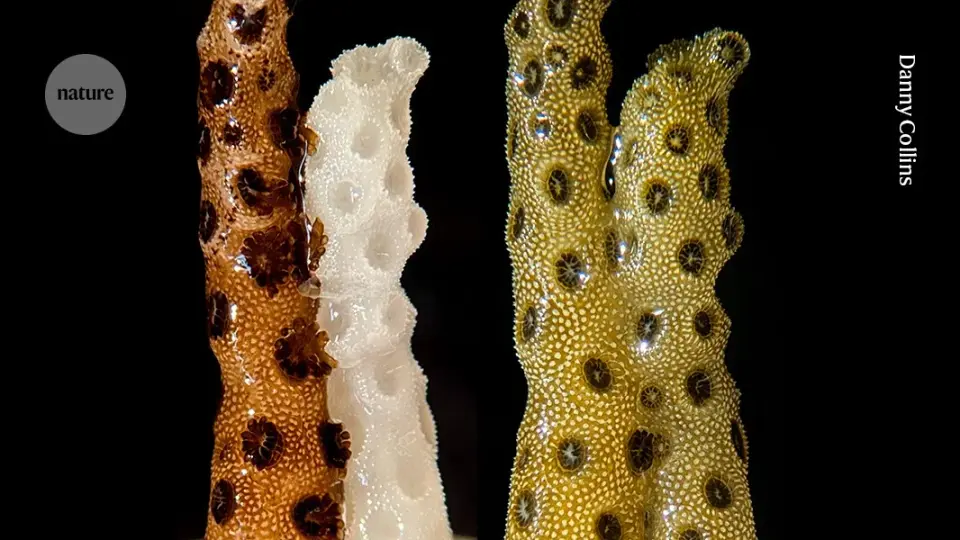
Researchers at Stanford University have demonstrated that bleached coral fragments can fully recover within weeks when physically fused with healthy fragments from the same genetic individual. The study, published in Science Advances, reveals that direct contact allows symbiotic algae to transfer via a tissue bridge, a process that is significantly faster than natural recovery in the wild. While promising for reef restoration, the method requires genetic compatibility and remains untested in open ocean environments.
Key points
- Bleached Pocillopora damicornis corals recovered fully within eight weeks after touching healthy fragments from the same colony.
- The recovery process relies on the formation of a tissue bridge that transfers symbiotic algae (Symbiodiniaceae) and nutrients between the two fragments.
- Only one week of contact was necessary to initiate recovery; the bleached coral could then sustain itself independently.
- Fragments from different species or different individuals of the same species did not fuse or recover, indicating a strict genetic requirement.
- Separated fragments, even those placed millimeters apart, died within 20 weeks, proving that direct physical contact is essential for the transfer.
Background
Coral bleaching, caused by rising sea temperatures, forces corals to expel the algae that provide them with nutrients and color. Without these algae, corals typically starve and die. Previous archive coverage has not addressed coral biology, but this development follows broader concerns about climate tipping points and the increasing frequency of bleaching events. The current study offers a potential biological intervention to counteract these losses, complementing existing efforts to monitor and protect reef systems.
How outlets are covering it
Nature and ScienceAlert both highlight the speed of recovery, noting that the lab results are an order of magnitude faster than natural recovery times observed in the wild. While Nature emphasizes the 'incredible' nature of the result and its potential for scalable solutions, ScienceAlert frames the discovery as 'emergency medicine' for reefs. ScienceAlert explicitly questions the practicality of this method at scale if bleaching events continue to expand due to fossil fuel use, whereas Nature focuses more on the scientific mechanism of the tissue bridge and the optimism expressed by co-author Fiorenza Micheli. Both outlets agree that the technique currently works only for genetically identical fragments from the same colony, a limitation that may hinder widespread application.
Why it matters
This discovery provides a potential tool for rapid reef restoration, offering a way to save corals that are on the brink of death. If scalable, this method could help maintain biodiversity and ecosystem services in vulnerable marine environments. However, the strict requirement for genetic compatibility and the lack of field testing in open oceans suggest that this is currently a laboratory breakthrough rather than a ready-made solution for global coral decline.
What to watch
Researchers will likely move toward testing whether this fusion technique works in natural reef environments rather than controlled labs. The next step is determining if the method can be applied to genetically diverse corals or if it remains limited to clones from the same colony. Additionally, scientists will assess the long-term viability of recovered corals and whether they can withstand future bleaching events without further intervention.
- ‘Incredible’: bleached corals thrive within days when touching healthy neighbour Nature
- Bleached Coral Rebounded After Touching Healthy Coral, Study Finds The New York Times
- Healthy corals help bleached neighbors regain color: Study Phys.org
- Stanford discovers way to save ghostly corals from the brink SFGATE
- Healthy Coral Reversed Bleaching in Its Neighbor With Just 1 Week of Contact ScienceAlert
Want the full story? Read the original reporting
Read on Nature