Tag

Coral Bleaching

All articles tagged with #coral bleaching

Lab Accident Reveals How Touch Can Reverse Coral Bleaching in Weeks
science1 month ago

Lab Accident Reveals How Touch Can Reverse Coral Bleaching in Weeks

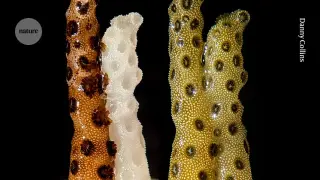
Stanford researchers discovered that bleached corals can fully recover within weeks if placed in direct physical contact with healthy, genetically identical clones. The contact allows beneficial algae to transfer via fused tissues, a process described as 'helping hands.' While promising for restoration, the method requires identical genetics and does not address the underlying cause of warming oceans.
Stanford Study: Brief Contact Between Healthy and Bleached Corals Triggers Rapid Recovery
science1 month ago

Stanford Study: Brief Contact Between Healthy and Bleached Corals Triggers Rapid Recovery

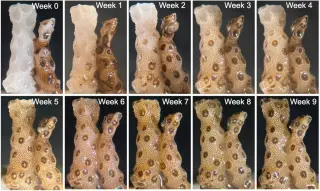
Stanford researchers discovered that bleached corals can recover within weeks through physical contact with healthy clones, facilitating the transfer of beneficial algae. While this 'symbiont transfer' offers a rapid restoration method, it is limited to genetically identical specimens and does not address the root cause of climate-driven bleaching.

Stanford Study: Brief Contact Between Healthy and Bleached Corals Triggers Rapid Recovery
science1 month ago

Stanford Study: Brief Contact Between Healthy and Bleached Corals Triggers Rapid Recovery

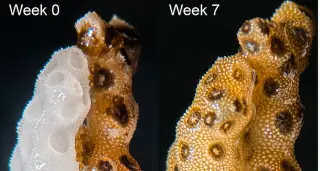
Stanford researchers discovered that bleached corals can fully recover within seven weeks after brief physical contact with healthy, genetically identical clones. The contact allows beneficial algae to transfer via fused tissues, offering a potential rapid restoration method, though it currently requires identical specimens.

Stanford Study: Brief Contact Between Healthy and Bleached Corals Triggers Rapid Recovery
science1 month ago

Stanford Study: Brief Contact Between Healthy and Bleached Corals Triggers Rapid Recovery

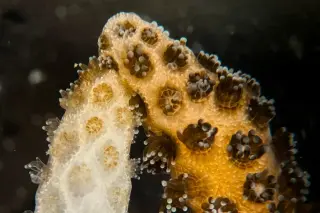
A new study published in Science Advances reveals that bleached corals can fully recover within seven weeks after brief physical contact with healthy, genetically identical clones. Lead author Danny Collins and colleagues at Stanford University found that when healthy and bleached corals touch, their tissues fuse, creating a bridge that allows beneficial algae to transfer from the healthy coral to the damaged one. This transfer initiates rapid algae reproduction, with populations doubling every four days, far faster than natural recovery rates. While the method offers a promising tool for reef restoration, it currently requires genetically identical specimens, limiting its immediate scalability.

Stanford Study Finds Bleached Corals Can Recover in Seven Weeks via Tissue Fusion
science1 month ago

Stanford Study Finds Bleached Corals Can Recover in Seven Weeks via Tissue Fusion

A Stanford University study published in Science Advances demonstrates that bleached corals can fully recover within seven weeks when physically touching healthy clones of the same genetic lineage. The rapid recovery is driven by the transfer of beneficial algae through fused tissues, offering a potential new restoration method, though it currently requires identical specimens and does not address the root cause of warming oceans.

Lab Study Shows Bleached Corals Recover in Weeks via Tissue Fusion with Healthy Neighbors
science-and-environment1 month ago

Lab Study Shows Bleached Corals Recover in Weeks via Tissue Fusion with Healthy Neighbors

Researchers at Stanford University have demonstrated that bleached coral fragments can fully recover within weeks when physically fused with healthy fragments from the same genetic individual. The study, published in Science Advances, reveals that direct contact allows symbiotic algae to transfer via a tissue bridge, a process that is significantly faster than natural recovery in the wild. While promising for reef restoration, the method requires genetic compatibility and remains untested in open ocean environments.

Soundscapes Offer Hope for Jamaica's Bleached Reefs
science5 months ago

Soundscapes Offer Hope for Jamaica's Bleached Reefs

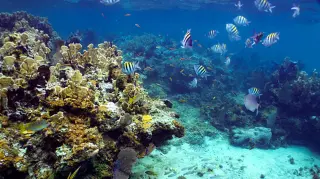
Jamaican researchers are testing underwater speakers that play healthy reef sounds to attract fish to bleached corals, following a similar Great Barrier Reef study that boosted fish on sound-equipped artificial reefs; the effort also involves 3D-printed artificial reefs and lab-grown coral with the Alligator Head Foundation, but it's too early to know if Jamaica will see recovery, and volunteers can support via the foundation.

Scientists Warn of Rising Ocean Temperatures and Coral Reef Deterioration
environment1 year ago

Scientists Warn of Rising Ocean Temperatures and Coral Reef Deterioration

Scientists warn that unprecedented marine heatwaves, likened to 'underwater bushfires,' are causing severe coral bleaching at Ningaloo Reef and the Great Barrier Reef, driven by global warming and local fossil fuel projects, threatening marine ecosystems and local economies. Efforts are underway to monitor and develop resilient corals, but urgent action to reduce emissions is critical to prevent irreversible damage.

Cursola's Tale Highlights Coral Reef Crisis
environment2 years ago

Cursola's Tale Highlights Coral Reef Crisis

The Pokémon Cursola, an evolution of Galarian Corsola, symbolizes the devastating impact of coral reef bleaching, a process exacerbated by climate change and human activities like CO2 emissions and ocean pollution. Coral reefs, vital marine ecosystems, are turning white and dying due to rising ocean temperatures and acidity, largely driven by industrialization. The article highlights the urgent need to protect these ecosystems, using Cursola as a metaphor for the environmental damage caused by humans.