
Proteomics Reveals Moringa and Cereals in Ancient Egyptian Paint Binders
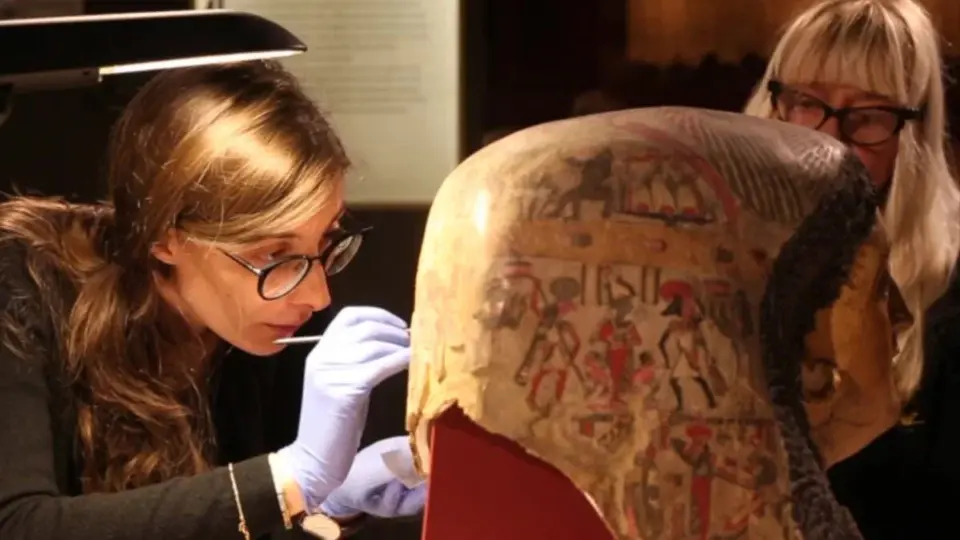
A new study reveals that ancient Egyptian artists used plant-based ingredients, including moringa and cereals, in their paint binders. This finding challenges previous assumptions that adhesives were solely animal-derived and suggests that material choices held deep religious and symbolic significance for artisans.
Key points
- An international team analyzed 28 paint and adhesive samples from 14 artifacts dating between 1425 BCE and 40 CE using proteomics.
- The study identified unexpected plant proteins, specifically from moringa and sesame, alongside cereals and pollen allergens in the adhesives.
- Moringa was linked to the deity Ptah, the patron of craftsmen, suggesting its use was a deliberate ritual choice to protect or dedicate the work.
- The research provides the first direct chemical proof of moringa in Egyptian art, moving beyond previous textual evidence from the Greco-Roman period.
- Findings were consistent across two separate museum collections, indicating that these plant-based materials were widely used across different workshops.
Background
Recent archaeological and scientific discoveries have increasingly highlighted the complexity of ancient Egyptian material culture. For instance, 2026 research on the Masripithecus moghraensis fossil reshaped understanding of ape evolution in North Africa, while analysis of the Hillsborough meteorite revealed how ancient brines preserved organic compounds. Similarly, this new study on paint binders adds to a growing body of evidence that ancient societies utilized sophisticated chemical knowledge and symbolic systems in their daily and artistic practices, moving beyond simple visual observations to detailed molecular analysis.
Why it matters
This research fundamentally alters the understanding of ancient Egyptian artistic practices by proving that plant-based materials were integral to their craft. It demonstrates that material selection was not merely functional but deeply embedded in religious and symbolic frameworks, offering a new lens for interpreting the intent behind ancient artworks. Furthermore, the successful application of proteomics to such fragile artifacts provides a non-invasive method for future studies, allowing scientists to extract detailed historical data without damaging irreplaceable cultural heritage.
What to watch
The study serves as a foundational platform for further investigation into the chronology, regionalism, and specific workshop preferences in ancient Egypt. Researchers plan to explore patterns in material usage based on pigments and substrates, potentially revealing how different regions or time periods influenced artistic choices. This data may also shed light on ancient trade routes and the broader cultural practices that governed the production of art in the ancient world.
Want the full story? Read the original reporting
Read on Gizmodo