A 2024 study in Nature Metabolism reveals that seven days of water-only fasting causes coordinated biological changes across multiple organs, with significant molecular shifts emerging only after approximately three days of calorie restriction.
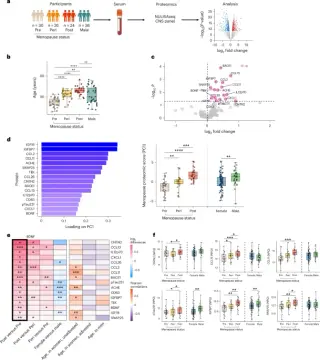
Two major studies published in September 2026 link the timing and biological markers of menopause to long-term brain health. An 18-year longitudinal study of 2,603 women found that earlier natural menopause is associated with faster cognitive decline and increased white matter damage. A separate proteomics study identified 16 blood proteins that spike during menopause, correlating with a 15% higher risk of Alzheimer's disease decades later. These findings suggest menopause is a critical midlife window for identifying dementia risk.
A new study in Nature Medicine identifies specific blood protein changes during menopause that correlate with brain aging and dementia risk. Researchers found that hormonal shifts, rather than chronological age, drive these biological changes, which involve inflammatory and synaptic processes. While a separate study suggests menopause may temporarily pause age-related brain shrinkage, this proteomic evidence highlights a midlife window for potential interventions to protect long-term cognitive health.
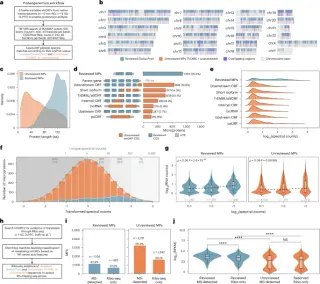
A Nature Aging study mapped more than 4,300 brain microproteins in post-mortem dorsolateral prefrontal cortex samples, validating 1,067 with high confidence through deep learning; 3,217 microproteins were previously uncharacterized. Several microproteins show altered expression in Alzheimer's, creating a comprehensive atlas that could reveal new aging and neurodegeneration mechanisms and guide future validation.
Researchers built a frontal cortex microprotein atlas by integrating transcriptomics, mass spectrometry, and deep-learning predicted spectra across 600+ postmortem brains with and without Alzheimer’s disease, identifying 1,067 MPs not present in UniProt and showing that several are differentially expressed in AD. A key finding is the MKKS-derived 63–aa micropeptide micro-MKKS63, which is the predominant translation product, downregulated in AD, and whose loss impairs microglial mitochondrial respiration, implicating MPs in microglial bioenergetics. The atlas expands the brain proteome, reveals decoupling of smORF/MORF expression at some loci, and provides an open-access resource (spectra, sequences, and a browsable app) for studying MPs in aging and neurodegeneration.
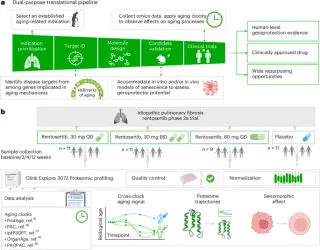
In a small 12-week study of rentosertib for idiopathic pulmonary fibrosis, six independent aging clocks all indicated the patients' blood appeared biologically younger, with four-week reductions of about 2.7–3.5 years on some clocks, but the findings are limited by the small sample size and potential disease-improvement effects, so they do not prove anti-aging effects and require larger, longer trials.
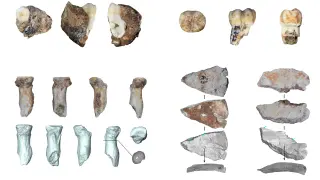
Archaeologists in Yunnan, China, report Denisovans used the Bianfu Cave for roughly 190,000 to 70,000 years, with five fossils dated to 134,000–167,000 years ago, including two teeth and three bone fragments identified as Denisovan via ZooMS proteomics (the radius fragment is the only Denisovan radius found to date). The site yielded about 1,400 stone artifacts, hundreds of animal bones, and bone tools, indicating Denisovans hunted large game in a forested eastern Asia landscape and used bone tools, revealing new details about their biology and culture.
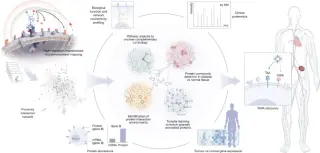
Researchers developed an industrialized surface-protein micromapping workflow to map membrane-protein proximities around 12 RTKs across 28 cancer models, built MetaMap to infer relationships among non-targeted proteins, and defined tumor-associated proximity antigens (TAPAs). They validated EGFR-CDCP1 as a proximity-defined co-target pair that enhances tumor cell killing with bispecific ADCs and TCEs, demonstrating that spatial organization, not just expression, can guide multispecific cancer therapeutics.
Six proteomic aging clocks applied to serum from a phase 2a rentosertib IPF trial consistently show slowed biological aging in treated groups, but disentangling aging modulation from anti-fibrotic effects remains challenging. The authors use pathway and external aging-data analyses (including UK Biobank) to identify potential anti-aging shifts in senescence and metabolism, supporting the idea of dual-purpose trials that integrate aging endpoints with disease outcomes.
A proteomics analysis of 28 paint and adhesive samples from 14 Egyptian artifacts found plant-based binders, including sesame and moringa proteins, suggesting ancient artists chose materials with religious or symbolic meaning and indicating moringa may have been deliberately associated with craftsmen and the craft of painting.
Rockefeller University researchers found that six 30-second all-out sprints trigger rapid, widespread changes in blood proteins and metabolites—far more than 90 minutes of moderate cycling—with many affected proteins linked to lower risk of obesity, diabetes, and cardiovascular disease, illustrating how brief, high-intensity bursts can drive powerful interorgan signaling that persists with training.
Two Denisovan leg bones dredged from the Penghu Channel in Taiwan were assigned to Denisovans via ancient proteomes, and initial estimates suggest they were tall (about 1.8–1.9 meters), but with no secure dating or geological provenance the species-wide height is uncertain and caution is advised in interpreting Denisovans as taller than other ancient humans.
Proteomic analysis of two Denisovan leg bones (Penghu 2 and Penghu 3) from the Penghu Channel near Taiwan suggests some Denisovans were among the Ice Age’s giants, with Penghu 2 around 176–179 cm (≈83 kg) and Penghu 3 potentially up to ~189–190 cm (≈91 kg). Placed in the Denisovan lineage via collagen proteins, these bones reveal a mix of archaic and modern features and imply a diverse, widespread population across Asia, possibly with different hunting adaptations and interbreeding with modern humans. DNA wasn’t recoverable, so proteins provided the link; the findings complement prior genetic work (e.g., Harbin skull, Penghu 1) and highlight Denisovans as a more varied lineage than once thought.
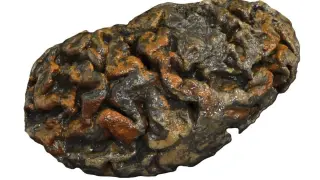
A University of Oxford study proposes that ancient brain preservation occurs when waterlogged, low-oxygen conditions reroute brain decay into crosslinking brain proteins, forming tough, decay-resistant aggregates. Oxygen-rich environments accelerate degradation, while hypoxic settings slow it, a conclusion supported by experiments burying mouse brains under varying conditions and tracking protein decay with mass spectrometry. The findings illuminate why brains are disproportionately preserved in archaeology and may offer clues about peptide fingerprints similar to those seen in neurodegenerative diseases like Alzheimer's.
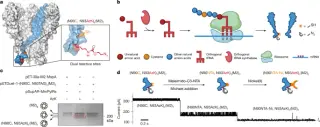
Researchers introduce transient pore analyte looping (tPAL), pairing a dual-modified MspA nanopore with an NTA-Ni adapter to anchor a peptide for repeated re-reads of the N-terminus. An anchored aminopeptidase then shortens the peptide one amino acid at a time, producing narrow, stepwise, sequence-dependent signals that enable single-amino-acid resolution and detection of mutations, post-translational modifications, and noncanonical amino acids, aided by a machine-learning decoder to reconstruct the sequence.