
AI models in genomics need iterative feedback to bridge prediction and biological reality
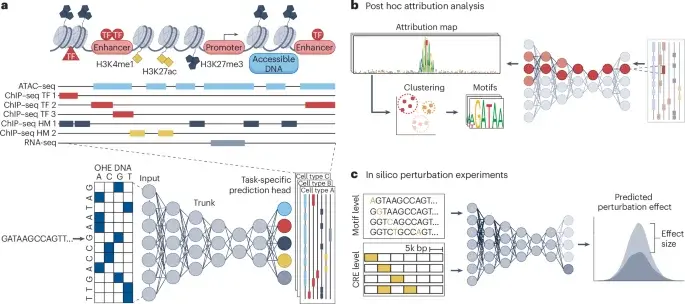
A new review in Nature Genetics argues that current AI models for predicting gene regulation from DNA sequence lack robust generalization across different genetic and cellular contexts. The authors propose shifting from static models to dynamic systems that integrate experimental data through continuous feedback loops to improve both predictive accuracy and mechanistic understanding.
Key points
- Sequence-to-function (seq2func) models can predict molecular regulatory outcomes from DNA but often fail to generalize across diverse genetic variations and cell types.
- High predictive accuracy on held-out data does not guarantee a robust understanding of regulatory mechanisms, highlighting a gap between statistical performance and biological insight.
- The review suggests reframing AI models as continually refined systems that couple targeted perturbation experiments with iterative model updates.
- This 'AI-experiment feedback loop' aims to create self-improving models that deepen mechanistic understanding and support more reliable biological discovery.
- Interpretability methods and systematic evaluation are crucial for identifying failure modes and elucidating cis-regulatory organization.
Background
This review builds on prior work in deep learning for genomics, such as the development of models like Basset and AlphaGenome, which have shown promise in predicting gene expression and variant effects. Earlier studies have highlighted challenges in generalizing these models across species and cell types, prompting a need for more robust evaluation frameworks and integration with experimental validation.
Why it matters
Improving the generalizability and interpretability of AI models in regulatory genomics is critical for translating computational predictions into actionable biological insights. This approach could accelerate the discovery of disease mechanisms and the design of synthetic regulatory elements for therapeutic applications.
What to watch
Future research will likely focus on developing standardized benchmarks for evaluating seq2func models and implementing automated pipelines for AI-experiment feedback loops. This could lead to more reliable and interpretable AI tools for genomic research and clinical applications.
Want the full story? Read the original reporting
Read on Nature