
Alathar Footprints Reveal Failed Human Migration in Ancient Saudi Arabia
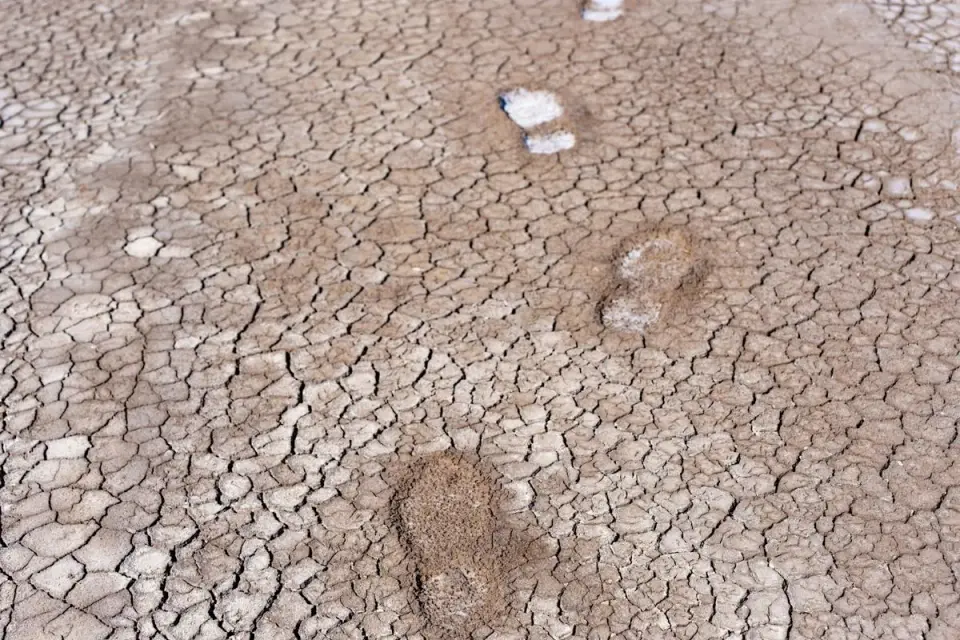
Seven human footprints dated to 120,000 years ago in Saudi Arabia's Nefud Desert confirm early Homo sapiens presence during wet 'Green Arabia' periods. New research suggests these early migrants likely died out as the climate dried, with modern non-African populations descending from later migrations.
Key points
- The Alathar site in Saudi Arabia preserves seven human footprints dated between 112,000 and 121,000 years ago, making them the oldest known human tracks on the Arabian Peninsula.
- The footprints were found alongside animal tracks, including elephants and camels, in a muddy lake shore that has since become desert.
- Researchers believe these early humans likely died out as the climate became too dry, with modern populations outside Africa descending from later migrations around 50,000 to 80,000 years ago.
- The 'Green Arabia' hypothesis suggests humans entered the peninsula during wetter periods but were forced to retreat or perish as water sources disappeared.
- Finding definitive proof of these early populations is difficult due to poor preservation conditions in hot, arid environments.
Background
This story builds on previous archaeological discoveries, such as the 2020 publication of the Alathar footprints in Science Advances and a 2021 Nature study on ancient lake deposits in the Nefud Desert. Recent findings in New Mexico's White Sands National Park, which revealed human presence during the Last Glacial Maximum, also highlight how footprints can provide insights into human survival amid climate shifts, though the Alathar site predates those by over 100,000 years.
Why it matters
The Alathar footprints provide rare direct evidence of early Homo sapiens in Arabia, challenging previous assumptions about human migration patterns. They illustrate how climate cycles drove population movements and extinctions, offering a glimpse into the precarious survival of early humans in a changing environment.
What to watch
Researchers, including Michael Petraglia, are searching for more evidence in Saudi Arabia, such as securely dated human fossils or stratified sequences showing human occupations across wet and dry periods. Ancient DNA analysis is also being explored, though hot climates limit its effectiveness.
Want the full story? Read the original reporting
Read on Yahoo