
Ancient gut microbes traveled with humans from Africa to the Americas, study finds
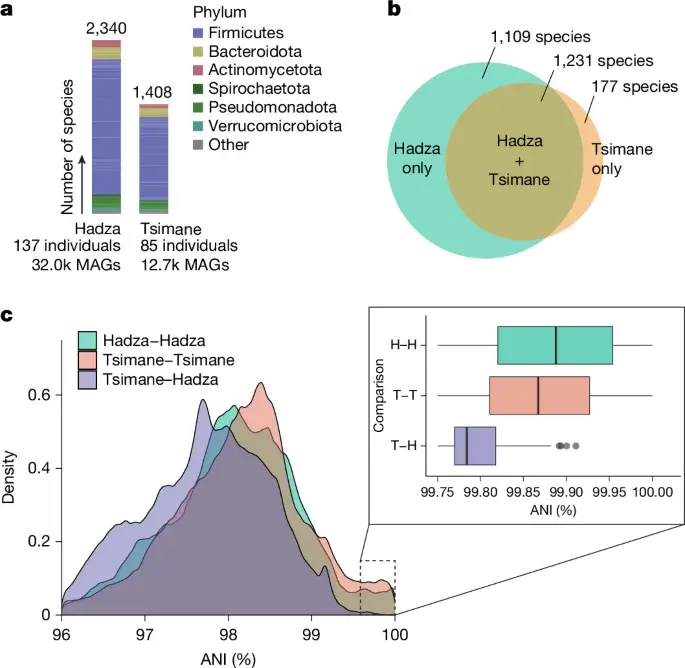
A new study in Nature reveals that many gut bacteria co-migrated with humans out of Africa and into the Americas tens of thousands of years ago. Researchers compared the microbiomes of the Tsimane people in Bolivia and the Hadza in Tanzania, finding 1,231 shared microbial species. Most of these species are rare or absent in industrialized populations, suggesting a long-term co-evolution that is now being disrupted by modern lifestyles.
Key points
- Researchers analyzed deep metagenomic sequencing data from 85 Tsimane adults in Bolivia and compared it with data from 137 Hadza hunter-gatherers in Tanzania.
- The two groups share 1,231 microbial species, with 60% of these species being rare or absent in industrialized populations.
- Genetic analysis of 636 shared species indicates microbial divergence patterns consistent with human migration out of Africa and into the Americas over the past 100,000 years.
- The study suggests that a diverse gut microbiome has persisted globally for millennia but is now vanishing in industrialized societies, with uncertain consequences for human health.
- Data from the Tsimane cohort is stored in the European Genome-Phenome Archive under strict ethical guidelines to protect Indigenous data sovereignty.
Background
Previous research, including a 2023 study on Hadza hunter-gatherers, has highlighted the loss of microbial diversity in industrialized populations. Additionally, recent findings in August 2026 showed that gut microbes can convert vegetable nitrates into heart-protecting molecules, underscoring the link between diet, microbiome, and health. This new study expands on those findings by tracing the evolutionary history of these microbes across continents.
Why it matters
Understanding the evolutionary history of gut microbes can reveal which species are integral to human health and physiology. The disappearance of these ancient microbes in industrialized populations may contribute to the rise of chronic diseases, highlighting the need to preserve microbial biodiversity for public health.
What to watch
Further research is needed to determine the specific health consequences of losing these ancient gut microbes. Scientists may explore interventions to restore microbial diversity in industrialized populations or investigate how modern diets and lifestyles affect the persistence of these co-evolved species.
Want the full story? Read the original reporting
Read on Nature