
Bidirectional brain implant restores hand movement and touch in quadriplegia
TL;DR
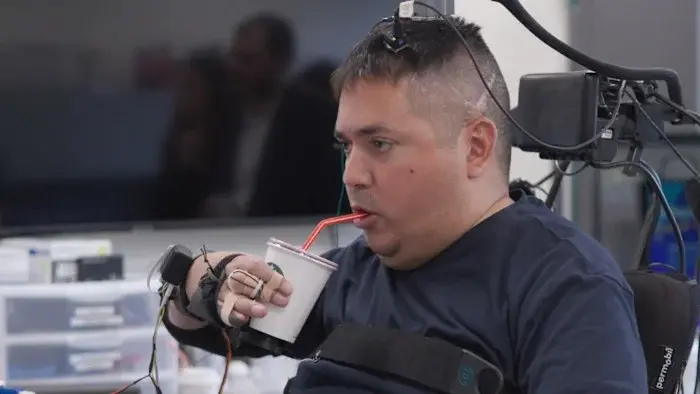
A single paralysed patient with quadriplegia regained voluntary hand movement and partial touch using a bidirectional brain-computer interface: implanted brain microelectrodes plus skin-stimulation patches translated his intended movements into nerve stimulation, with sensors providing touch feedback. Over 35 weeks he showed substantial arm-strength gains (87% in one measure reported as 86%/62% in the study) and could perform tasks like feeding himself and wiping his mouth; the work, published in Nature Medicine, marks a significant advance in neuroprosthetics but remains preliminary with one participant.
Topics:healthscience#brain-computer-interface#medical-science#neuroprosthetics#neurotechnology#science#spinal-cord-injury
- Paralysed man regains hand function through novel brain technology Financial Times
- A neuroprosthesis for restoring hand movement and sensation in a person with complete tetraplegia Nature
- Paralyzed Man Feels Sensation Again With Brain Stimulation Device the-scientist.com
- Neurostimulation restores feeling in paralysed hand for months after New Scientist
- Brain stimulation safely restores sense of touch for up to decade Medical Xpress
Want the full story? Read the original reporting
Read on Financial Times