
New Study Links Multiple Sclerosis Genetics to Specific Brain and Immune Cell Types Across Populations
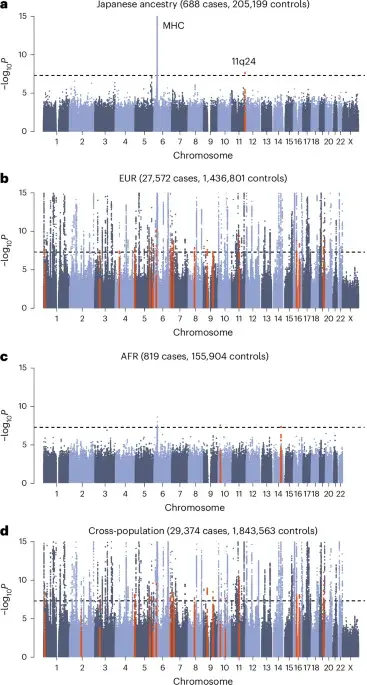
A large-scale genetic study reveals that multiple sclerosis risk is driven by specific immune and brain cell types, with new findings in Japanese populations and 22 novel genetic loci identified across diverse ancestries.
Key points
- Researchers analyzed 688 Japanese multiple sclerosis cases and 205,199 controls, identifying a population-specific risk variant near the ETS1 gene.
- A cross-population meta-analysis involving nearly 30,000 cases and 1.8 million controls from four ancestral groups discovered 22 new susceptibility loci.
- Integration of genetic data with single-cell sequencing showed that risk factors are concentrated in CD4+ T helper cells, regulatory T cells, and endothelial cells.
- Spatial transcriptomics of brain lesions demonstrated that genetic risk associations vary significantly across different regions and time points within the brain.
Background
Previous genome-wide association studies for multiple sclerosis had largely focused on European populations, leaving significant gaps in understanding genetic risks for East Asian individuals. While earlier research identified over 200 genetic associations, the specific cellular mechanisms and non-immune cell contributions remained unclear. This study builds on recent advances in spatial transcriptomics and single-cell sequencing to provide a more detailed map of how genetics influence disease pathology in the central nervous system.
Why it matters
Understanding the specific cell types and spatial patterns of genetic risk in multiple sclerosis could lead to more targeted therapies and better explanations for why disease prevalence varies so widely across different global populations.
What to watch
Future research will likely focus on validating these 22 new loci in larger, more diverse populations and exploring how the identified cell types can be targeted for therapeutic interventions to prevent or slow disease progression.
Want the full story? Read the original reporting
Read on Nature