
Cultured Asgard archaea reveal physical traits linking microbes to complex life
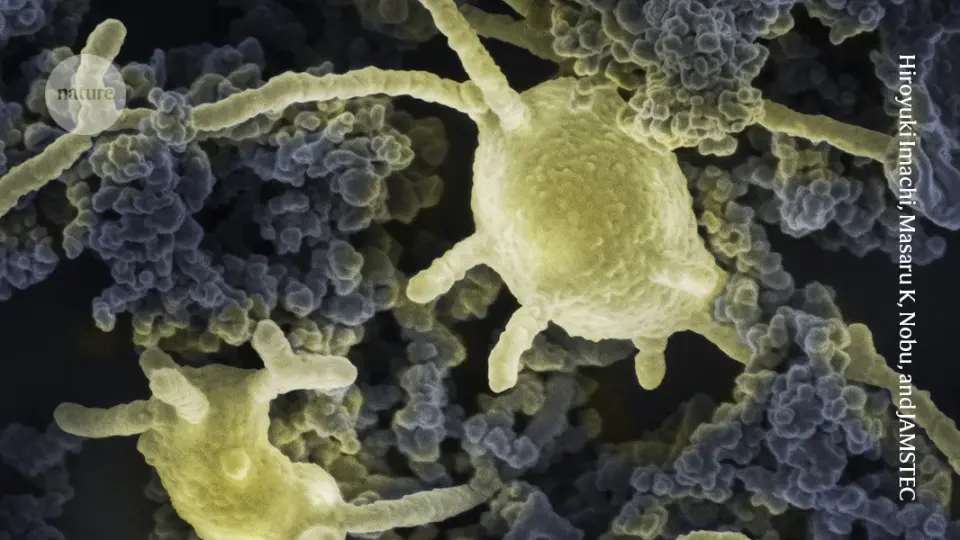
Researchers have successfully cultured several Asgard archaea, single-celled microbes identified in 2015 as the likely ancestors of all complex life. By growing these slow, fickle organisms in labs, scientists are observing unique physical features, such as tentacle-like protrusions and cytoskeletons, that were previously only inferred from DNA. These observations support theories that these microbes possessed complex cellular machinery before the endosymbiotic event that created mitochondria, offering new insights into the origin of eukaryotes.
Key points
- Asgard archaea, discovered via DNA in 2015, are now being cultured in labs, with at least four new cultures reported since 2025.
- Cultures allow researchers to observe physical traits like protrusions, cytoskeletons, and membrane structures that were previously only known from genomic data.
- These features, including actin-like proteins and microtubules, suggest Asgard archaea had complex cellular machinery before the rise of eukaryotes.
- Some cultures show physical interactions with partner microbes, such as protrusions attaching to methane-producing partners or vesicle chains, hinting at early endosymbiosis.
- The findings support the 'inside-out' model of eukaryogenesis, where protrusions may have helped trap bacterial partners to form mitochondria.
Background
Asgard archaea were first identified in 2015 from DNA in North Atlantic sediments, reshaping the understanding of eukaryotic origins. Prior to recent culturing efforts, knowledge was limited to genomic analysis due to the microbes' low abundance and difficulty in isolation. The archive notes other microbial studies, such as bioplastic digestion by animals and subglacial marine microbes, but these are unrelated to the Asgard archaea breakthrough.
Why it matters
Culturing Asgard archaea provides direct physical evidence of the cellular features that led to the emergence of complex life, bridging the gap between genomic inference and observable biology. This could redefine the tree of life and clarify the evolutionary transition from prokaryotes to eukaryotes.
What to watch
Researchers are working on additional Asgard cultures, including unpublished strains from Oregon and other environments. Future studies will focus on the functions of protrusions, the nature of microbial interactions, and how these features facilitated the endosymbiotic event that created mitochondria.
Want the full story? Read the original reporting
Read on Nature